
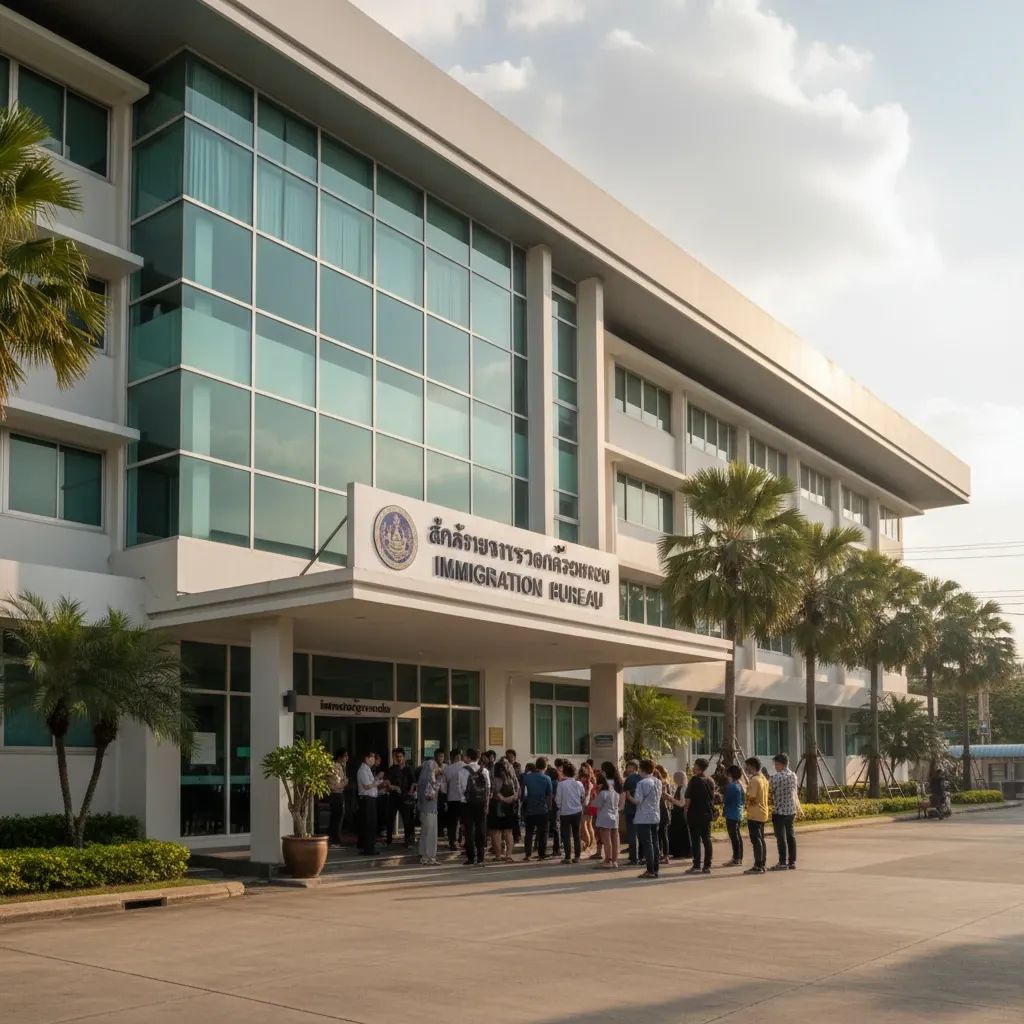
When Tourist Behavior Crosses the Line: What Thailand's New Enforcement Reality Means for Residents
Thailand has shifted its approach to managing tourism's darker side. No longer content with warnings or negotiated settlements, Thailand's Border Police and provincial authorities are now executing a policy of immediate expulsion—applying permanent blacklist bans and visa revocations within 48 hours of incidents involving public indecency, drug use, or conduct deemed culturally offensive. For residents in Pattaya and Phuket, this marks a significant change in daily life in major tourism zones.
Why This Matters
• Instant deportation now replaces fines: First offense involving public sexual conduct or serious misbehavior results in permanent entry ban; no appeals process exists.
• Transport workers face new concerns: Tuk-tuk and baht bus operators report they may face consequences if passengers engage in misconduct aboard their vehicles—leading many to adopt more selective passenger policies.
• Visa scrutiny intensifies across the board: All immigration processing, not just problem tourists, now faces enhanced questioning; long-term residents report extension interviews lasting significantly longer.
• Your neighborhood becomes more monitored: Increased police presence in Pattaya and Patong beach districts is visible, with spot-checks becoming more frequent in popular areas.
The Incidents Sparking Official Response
Recent weeks revealed a pattern of high-visibility misbehavior that catalyzed official action. A video surfaced online showing foreign nationals engaging in explicit sexual conduct in Pattaya Bay despite repeated interventions from Thai beachgoers. A local resident recorded the incident and circulated it online, expressing frustration that authorities appeared slow to respond. "This has happened before," the resident told local media. "We're trying to build a better image for Pattaya, and then this destroys it."
In a separate incident, Phuket police arrested tourists after video evidence showed them engaged in public sexual conduct aboard a moving tuk-tuk through crowded Patong streets. The response was swift: formal charges for violating Thailand's public indecency statute, visa revocation, permanent blacklist placement, and deportation—all completed within 48 hours. The individuals are now barred from Thailand indefinitely.
A third incident unfolded when a foreign tourist attempted an acrobatic stunt from a moving vehicle on Pattaya Beach Road in the early morning hours. He escaped with minor injuries, but the incident illustrated a broader phenomenon: some tourists treat Thailand's public spaces as consequence-free stages for reckless behavior.
These incidents, amplified across social media and Thai news outlets, created momentum for policy change. Officials issued directives instructing immigration authorities, the Tourism Ministry, and provincial police to abandon discretionary enforcement in favor of mandatory zero-tolerance protocols.
How the New System Operates
The enforcement machinery operates through multiple layers. Provincial authorities have intensified foot patrols in nightlife and beach zones. Pattaya and Patong (Phuket's main tourist district) both experienced noticeable increases in uniformed police presence, with officers conducting random identity checks and compliance inspections at licensed establishments.
The policy also introduced new concerns for transport operators. While historically no statute held tuk-tuk drivers or baht bus operators responsible for passenger misconduct aboard their vehicles, new enforcement guidance suggests drivers may face scrutiny if they knowingly permit lewd acts. This warning has translated into visible behavioral changes: several drivers in Pattaya now exercise caution about passenger selection. A baht bus operator installed a dashboard camera "as proof," he explained, should authorities later investigate based on social media footage.
Ripple Effects for Daily Residents
The crackdown is producing measurable changes in how residents navigate tourism zones, though effects are unevenly distributed.
Late-night transport availability has tightened. Fewer baht buses operate during late-night hours as drivers exercise heightened caution about passenger selection. Residents and tourists relying on affordable public transport during these hours report longer waits and occasional refusals. Some have migrated to ride-hailing apps as an alternative; others simply avoid going out late.
Visa extension interviews have become substantially longer and more intrusive. Long-term residents on retirement, marriage, or education visas report extension appointments now include detailed questioning about employment status, Thai family relationships, property ownership, and residential history—protocols ostensibly aimed at catching visa abusers but which create friction for legitimate residents. A retiree in Pattaya reported his 90-day reporting requirement interview extended from 15 minutes (historical norm) to 45 minutes of questioning about personal and financial details.
Police checkpoints in beach districts have become more frequent. Uniformed and plainclothes officers conduct spot-checks in Pattaya Beach Road areas and Patong's entertainment zones. For residents, this creates minor delays but also a visible signal that authorities are actively managing public order.
The blacklist carries consequences beyond immediate tourism impact. According to immigration lawyers, individuals deported from Thailand for public indecency have subsequently encountered difficulties at neighboring border crossings. While formal government-to-government data-sharing protocols remain officially unconfirmed, the pattern suggests Thai blacklist information may circulate regionally—though the extent of cross-border integration remains unclear.
Social Media as Primary Evidence
Thai authorities have normalized using viral videos as evidentiary foundation for enforcement actions. In recent beach incidents, police initiated investigations based entirely on circulated social media footage, without waiting for formal complaints from identified victims. This approach accelerates enforcement but creates new dynamics for residents navigating public spaces.
For residents, this shift means public spaces operate under continuous digital surveillance—not through government cameras, but through civilian smartphones. Behavior that might have gone unnoticed years ago now reaches authorities within hours if shared online.
Economic and Policy Considerations
Thailand's approach to tourism management prioritizes eliminating high-visibility incidents that generate negative publicity. Officials operating within the framework of promoting family-oriented tourism have emphasized swift, visible enforcement as deterrence. The underlying logic assumes that reducing viral video incidents improves confidence among affluent, family-oriented travelers compared to budget backpacker segments.
The risk, however, is that enforcement perceived as unwelcoming deters legitimate visitors across all demographics. Police checkpoints, tighter visa scrutiny, and refusals of transport service create friction that may discourage repeat visits or generate negative word-of-mouth among potential travelers.
Regional Context: Thailand's Approach vs. Neighboring Models
Thailand's zero-tolerance, exclusion-based model differs from neighboring enforcement philosophies. Some regional destinations implement conduct guidelines and warnings for first-time offenders before escalating to deportation. Others employ preventive approaches—such as multilingual etiquette guidance to arriving visitors—rather than enforcement-heavy models.
Thailand's model prioritizes deterrence through expulsion; alternative approaches seek behavioral change through ubiquitous guidance or tiered penalties. Both objectives theoretically coexist, though different enforcement philosophies create different operational outcomes for tourism volumes and resident friction levels.
The Driver Liability Concern
Thai criminal statutes define public indecency broadly to encompass conduct "offensive to public morals"—a formulation encompassing not only sexual acts but also severe public drunkenness and disruptive behavior. This breadth grants authorities substantial discretion in enforcement.
The emerging concern involves tuk-tuk and baht bus drivers. Prior to recent policy changes, no statute held transport operators responsible for passenger conduct aboard their vehicles. The new enforcement environment has introduced ambiguity by warning drivers they may face scrutiny if passengers engage in misconduct. Drivers have begun adopting defensive responses—refusing service to potentially problematic passengers—which effectively privatizes enforcement. The practical effect shifts responsibility to private operators, creating new friction points for residents attempting to use public transport.
What to Expect Moving Forward
The policy remains in early implementation, and operational adjustments are likely as authorities measure effects. Provincial officials have expressed interest in multilingual signage explaining behavioral expectations to arriving tourists. Officials are also exploring integration of the national blacklist with airline reservation systems, creating upstream filtering that prevents banned individuals from booking tickets to Thailand.
For residents, the immediate reality is a more visible state apparatus in public spaces and cultural messaging that authorities are serious about public decency standards. Whether enforcement consistency sustains long-term will depend on continued political commitment and whether tourism businesses adjust business models accordingly.
Practical Information for Residents
If your visa extension interview is longer than usual: Extended questioning about employment, family relationships, and property is now standard procedure for all visa categories during extension processing, not an indication of problems with your application.
If you're using late-night transport: Anticipate longer waits or occasional refusals from drivers during late-night hours, particularly if traveling with groups or in casual beach attire. Ride-hailing apps provide an alternative.
If you encounter police checkpoints: Checkpoints in beach areas are routine; carry identification and remain cooperative. Spot-checks typically require only identification verification and take 5-10 minutes.


