
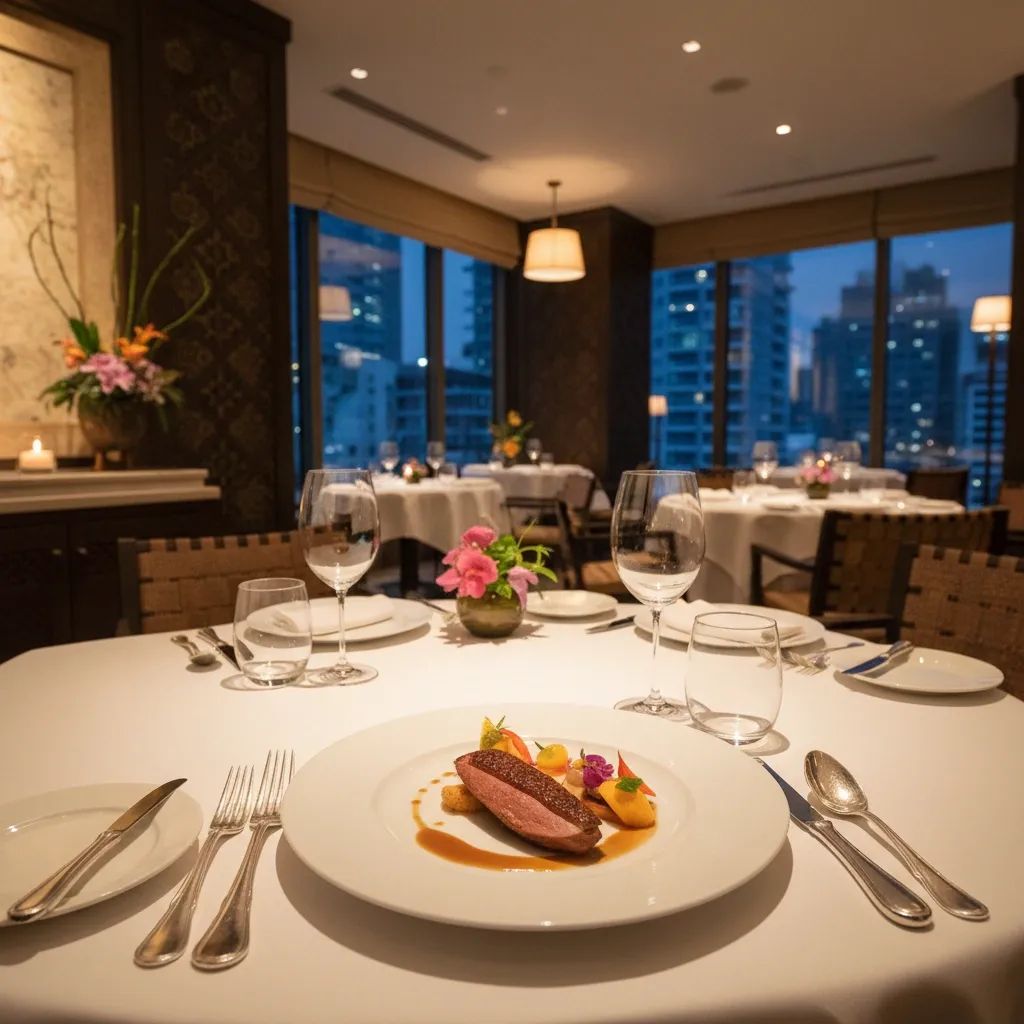
The Thailand arm of the MICHELIN Guide has upgraded the country’s culinary scoreboard to 43 starred restaurants, a shift that immediately lifts Bangkok—and, by extension, Thailand’s tourism wallet—into a higher‐spending bracket.
Why This Matters
• 43 restaurants now carry stars, up from 36 last year—more competition for reservations and higher prestige pricing.
• Two venues hold the coveted three-star status; one of them, Sühring, climbed a tier, signalling that upward mobility is possible for local chefs.
• Sustainability gets its own spotlight with 5 new Green Stars, a nudge for diners who follow eco-labels.
• Greater regional spread—Phang-nga, Phuket, Chiang Mai and the Northeast all keep representation, hinting at travel corridors beyond the capital.
Snapshot of the 2026 Roll-Call
Bangkok still dominates, but the top line figures look different this year:
3 Stars (2 restaurants) – Sorn retains, while Sühring jumps up.
2 Stars (8 restaurants) – Promotions for Anne-Sophie Pic at Le Normandie and INDDEE headline the tier.
1 Star (33 restaurants) – Seven newcomers enter, including street-legend-turned-fine-diner Bo.lan and Korea-forward Juksunchae.
For quick reference, Green Star ecology nods went to Baan Tepa, GOAT, Haoma, Phuket’s PRU, and its sister concept Jampa.
What This Means for Residents
• Table shortages and price shifts: Expect reservation lead times at popular spots to stretch from a week to a month. Many one-star winners have already signalled a 10-15 % menu hike.• Domestic tourism bump: Provincial winners—especially in Phuket, Phang-nga and Ubon Ratchathani—are bundling dining packages with hotels. Locals planning a food-trip should watch for bundled rates in baht rather than euro-denominated ‘chef’s journeys.’• Job market ripple: Culinary schools in Bangkok, Chiang Mai and Khon Kaen report a 20 % uptick in enrolments; hospitality employers may need to sweeten salaries to keep talent from jumping to star kitchens.• Importer attention: Premium seafood and European dairy suppliers are increasing shipments. Grocers in urban centres could see niche items—think French Bordier butter or Japanese kegani crab—appear on shelves, albeit at luxury-tax pricing.
How Michelin Decides – The Five Non-Negotiables
The MICHELIN inspection team for Thailand repeats the same global rubric:
• Ingredient integrity – seasonality and sourcing transparency.
• Technique & flavour mastery – not plating, but how the food eats.
• Chef identity on the plate – signature voice.
• Value relative to cost – yes, even at ฿6,000 + per head.
• Consistency – multiple anonymous visits, lunch and dinner alike.
Décor, sound systems and Instagrammable toilets do not sway the star count, though they might earn a separate spoon-and-fork comfort symbol.
Trendlines to Watch
Bangkok as a two-star factory: Promotions for Anne-Sophie Pic and INDDEE suggest that once a venue hits one star, a second may follow in 18-24 months if the kitchen shows measurable evolution.
Plant-forward fine dining: Green Star recipients such as Haoma double down on closed-loop farming; expect copy-cat ventures in Thong Lor and Ari before year’s end.
Rising regional capitals: After Chiang Mai’s brief moment in 2025, Khon Kaen and Udon Thani are lobbying the guide for inclusion; if successful, 2027 could see Isan cuisine in the star league.
Booking Hacks for Ordinary Diners
Lunch over dinner: Starred venues often run a set menu at 30 % below dinner pricing.
Weekday advantage: Tuesdays and Wednesdays are the slowest; waiting lists shrink.
Hotel concierge clout: Five-star hotels frequently hold soft allocations—worth the extra service charge if you’re set on a table at Mezzaluna or Gaa.
Credit-card tie-ups: At least 3 major Thai banks are negotiating priority booking portals; keep an eye on platinum card mailers.
Investor Angle
With tourism authorities projecting an additional ฿2.5 B in F&B tourist spend, mall developers are scouting for chef-driven concepts outside central Bangkok. Lease incentives—rent holidays of up to 9 months—are on the table for operators bringing Michelin cachet to suburban nodes like Bang Na or Rangsit.
Bottom Line for Thailand’s Food Scene
A second three-star and seven new one-stars demonstrate that culinary ambition is monetising well inside Thailand’s borders. For residents, that means higher dining bills but also richer career and travel possibilities. For investors, the message is simple: world-class gastronomy is no longer a Bangkok-only story; chase the forks into the provinces while leases are still negotiable.


