
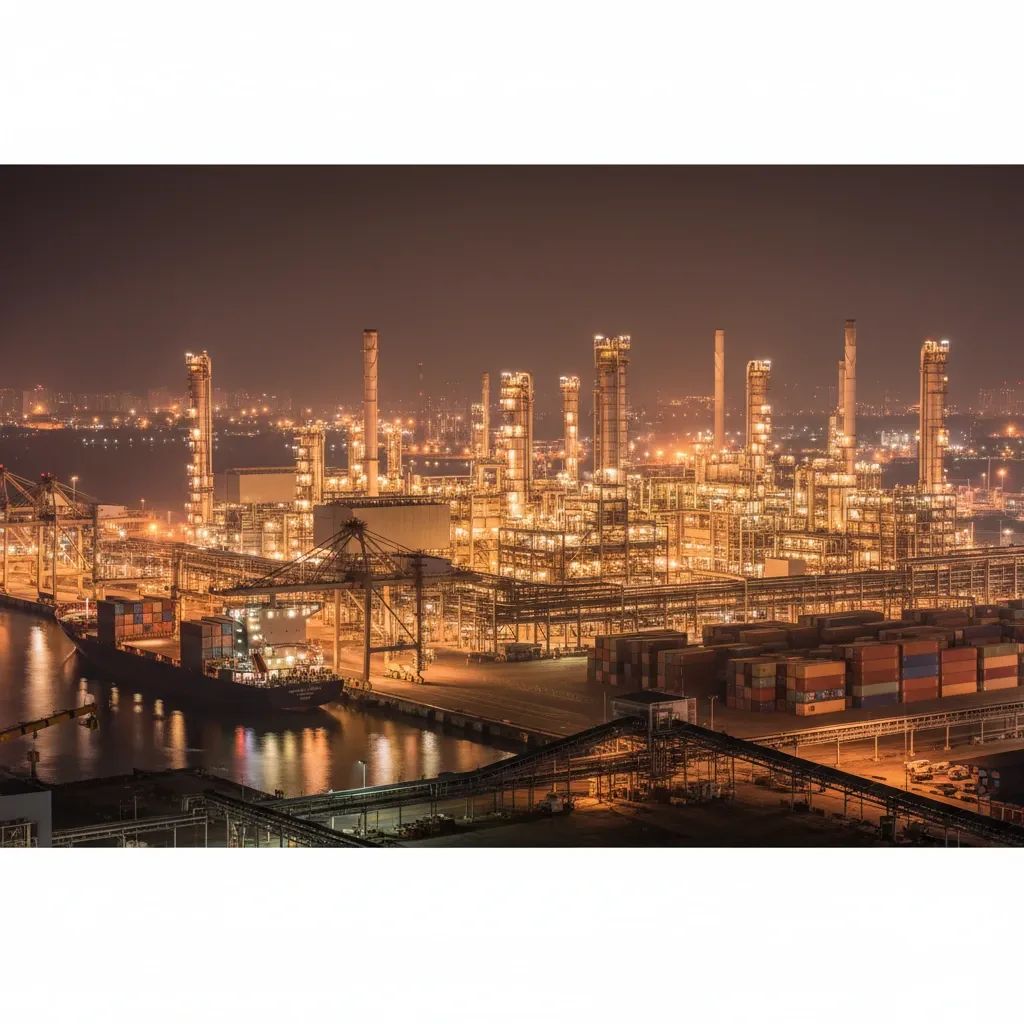
Thailand is making a decisive move to become the world's next major shipping hub. The government plans to fast-track a 1 trillion baht ($31 billion) megaproject that would let cargo bypass one of the planet's most congested shipping lanes—the Strait of Malacca—an infrastructure play that's suddenly become urgent with recent instability choking global maritime routes. The convergence of disruptions elsewhere, like the Strait of Hormuz crises, has amplified investor attention on alternative shipping corridors everywhere.
Why This Matters
• The bottleneck gets sidestepped: Ships crossing between the Indian and Pacific Oceans could cut transit time by 4 days and operating costs by 15% through southern Thailand instead of queuing through the Strait of Malacca
• Cabinet decision imminent: Formal approval expected June-July 2026, with bidding launching Q3 and construction potentially starting before year-end
• Singapore is watching—and investing: The city-state's Defence Minister signaled official interest on April 27, marking a potential pivot from competitor to stakeholder
• Zero baht from Bangkok's wallet: Private investors bear all construction and operational risk under a 50-year concession model; Thailand profits from port fees and land leases
The Geography of Urgency
The Strait of Malacca, that narrow waterway between Malaysia and Indonesia, moves 25% of the world's containerized cargo annually. It's also perpetually congested, prone to piracy, and represents a vulnerability that keeps supply chain managers awake at night. Global geopolitical tensions—including recent turmoil at the Strait of Hormuz, where approximately 20 million barrels of oil transit daily—have amplified investor attention on alternative routes everywhere, making now an opportune moment for Thailand's project.
The Thailand Land Bridge addresses this directly. Picture cargo ships arriving at a deep-sea port in Ranong on Thailand's Andaman coast (facing India), where containers are offloaded onto a 90-kilometer overland corridor combining motorways, dual-track railways, and potentially energy pipelines. That same cargo reaches a second deep-sea port in Chumphon on the Gulf of Thailand, where it loads onto Pacific-bound vessels. The entire detour through Malacca—adding roughly 1,000 kilometers to the journey—gets eliminated.
The Office of Transport and Traffic Policy and Planning, Thailand's infrastructure authority, estimates this corridor would shave 4 days off transit times and cut shipping expenses by 15%. To put that in perspective: for a container line operating 50 ships, such savings could mean millions in annual fuel and crew costs—enough to tempt route diversion away from Singapore and established hubs.
Why Singapore Changed Its Tune
Competition typically runs deep between Bangkok and Singapore. The city-state's Tuas Port just completed a $20 billion expansion to cement itself as the world's second-busiest container terminal. Yet on April 27, Singapore's Minister for Defence Chan Chun Sing sat down with Thai Prime Minister Anutin Charnvirakul and described the Land Bridge as a "strategic transport link" capable of boosting logistics and enhancing regional security.
What appears contradictory makes business sense. If the Thai project succeeds without Singapore's participation, it becomes a threat to Tuas's market dominance. By securing an early stake—through either port operations, rail concessions, or warehousing rights—Singapore shifts from victim to beneficiary. Should cargo eventually flow through Ranong and Chumphon, the city-state wants to own a piece of that infrastructure rather than watch profits migrate elsewhere.
Thai government spokesperson Rachada Dhnadirek indicated that Singaporean investors are "likely to participate" once regulatory clarity emerges, but specifics haven't been negotiated. Singapore is essentially monitoring Thailand's Cabinet timeline and tender process before committing capital.
The Money Question
Thailand's strategy hinges entirely on private financing. Deputy Prime Minister and Transport Minister Phiphat Ratchakitprakarn has been explicit: the government will grant 50-year land concessions to investors, but won't inject public money. This shifts all construction and operational risk to the private sector—a shrewd move for a nation already managing debt concerns.
Early interest has come from heavyweights like China Harbor Engineering, DP World (the Dubai-based port giant), Mediterranean Shipping Company, Evergreen, and Gulf Development, a Thai firm. The diversity reflects genuine appeal: Chinese interests view this as a partial solution to their "Malacca Dilemma," Middle Eastern operators see profit in new hub capacity, and European shipping lines are always hunting cost advantages.
Yet skepticism lingers in investment circles. The financial model depends on container lines voluntarily rerouting cargo through Thailand instead of established ports with proven throughput and established customer relationships. A 15% cost saving looks attractive on a spreadsheet, but involves operational friction—offloading, overland transport, reloading—that some shippers may reject, especially for time-sensitive goods that demand direct port-to-port transit.
What Residents and Businesses Should Know
For people living in Thailand, the Land Bridge represents the government's ambition to reshape the nation's economic identity. If the project proceeds on schedule, the Southern Economic Corridor will attract logistics firms, warehousing operators, distribution centers, and ancillary services. Employment projections suggest 280,000 to 300,000 new jobs by the mid-2030s, concentrated in Ranong and Chumphon provinces—regions historically among Thailand's least developed.
At full capacity, the two ports would handle approximately 33 million TEUs (twenty-foot equivalent units) annually. For context, that volume would rival China's Ningbo-Zhoushan port, currently the world's third-busiest. Infrastructure spending alone—roads, rail corridors, customs facilities—typically generates secondary employment in construction, utilities, and hospitality.
Yet local communities see threats. Fishing villages in Ranong have protested, citing concerns that 6,900 rai of land reclamation and 11,000 rai of dredging will destroy mangroves, coral ecosystems, and traditional fishing grounds. Greenpeace Thailand has documented 11 critical deficiencies in the government's Environmental and Health Impact Assessment, including insufficient study areas, inadequate World Heritage site analysis, and reliance on secondary data rather than independent field inspections.
The proposed ports overlap with sensitive zones—Mu Ko Ranong Biosphere Reserve and Laem Son National Park—both considered for UNESCO World Heritage designation. This matters directly for residents in Ranong and Chumphon: UNESCO World Heritage status restricts industrial development and can limit property rights in protected areas. However, it also attracts conservation funding, eco-tourism revenue, and international investment in sustainable practices. Property values in World Heritage zones often appreciate due to tourism appeal, but building permits become more restrictive. For residents planning business expansion or real estate investments in these provinces, understanding this tension is crucial—UNESCO protection could enhance long-term asset values through heritage tourism, or constrain commercial opportunities depending on how designation is implemented. Parliamentary members have called for suspending public consultations until environmental assessments are overhauled. This tension between economic opportunity and ecological protection will define implementation debates.
The Competitive Calculus
The Land Bridge will intensify regional port warfare. Singapore's Tuas, Malaysia's Port Klang, and Penang have all invested billions in capacity expansions over the past decade. If Thailand captures even a fraction of that traffic, returns on those investments could underperform.
China has obvious strategic interest. Beijing views the project as alleviating its "Malacca Dilemma"—the vulnerability of routing 80% of oil imports through a single chokepoint potentially subject to blockade. By diversifying transit routes, China reduces geopolitical exposure. For Thailand, the calculation is more straightforward: GDP could increase by 1.5%, and sustained revenue flows from port fees, land leases, and industrial development.
The balancing act, however, is delicate. Thailand must court Chinese investment without alienating Western partners or appearing overly aligned with Beijing's infrastructure strategy—a political tightrope that seasoned policymakers in Bangkok understand well.
Timeline and Execution Risk
The Office of Transport and Traffic Policy and Planning has completed tender documents and expects Cabinet approval between June and July 2026. Bidding is scheduled to open in Q3 2026, with construction potentially commencing by late 2026. The first phase—likely prioritizing the Ranong port and initial rail connections—targets completion by 2030. The full project spans three phases, with final completion expected by late 2036.
Whether the Land Bridge becomes a regional game-changer or a costly infrastructure legacy depends on factors Thailand can't fully control: whether major shipping lines actually reroute cargo, how fuel costs evolve, whether geopolitical stability persists, and whether private investors remain confident committing tens of billions to an unproven concept. The convergence of Malacca route pressures, Singaporean interest, and Cabinet momentum has created the project's most credible moment in years. By summer, clearer signals will emerge about whether that window stays open or begins to close.


