
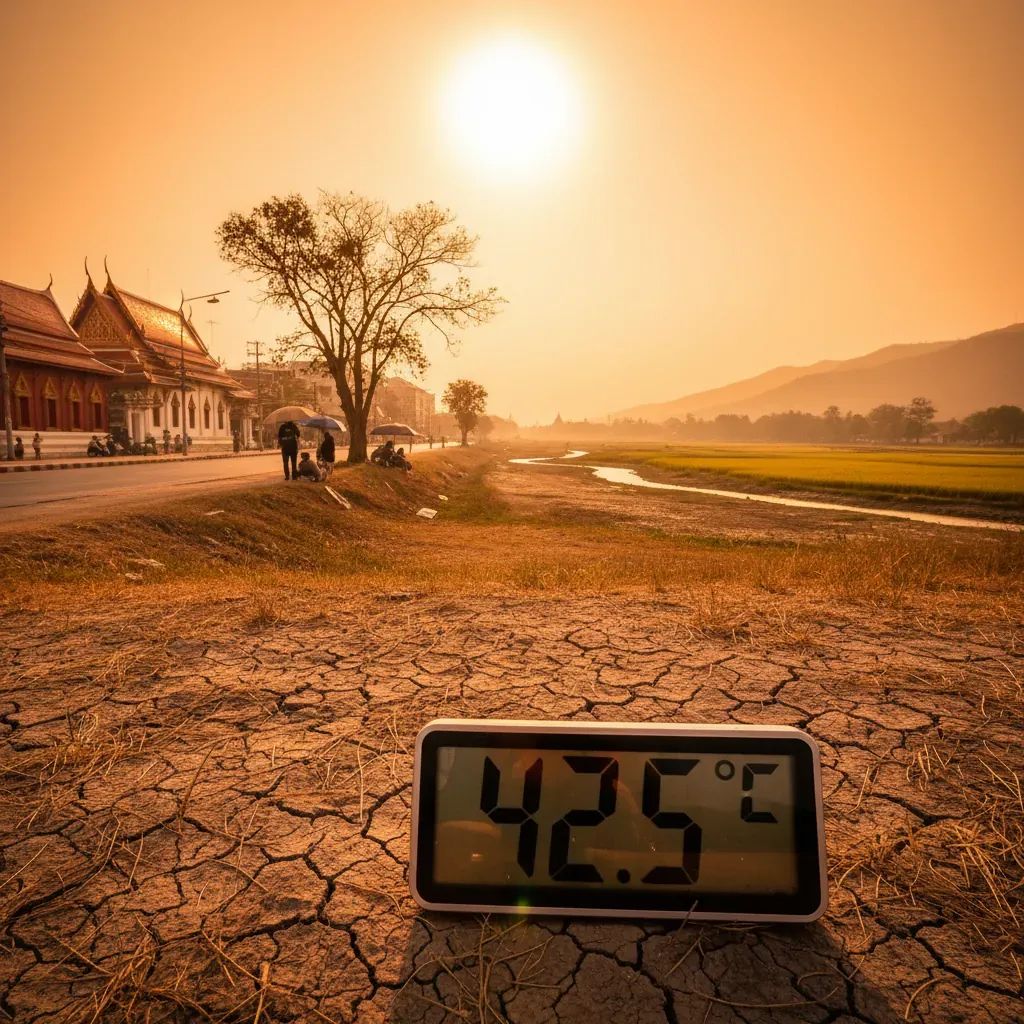
The Thailand Ministry of Public Health has escalated its heat-related illness warnings as meteorological data confirms the 2026 hot season will surpass 2023 intensity levels—a year that already ranked as the hottest on record globally. With temperature forecasts pointing to prolonged exposure above 40°C in multiple provinces, officials are positioning resources to prevent a repeat of the 37 heatstroke fatalities recorded during March-June 2023 alone.
For anyone living, working, or conducting business in the Kingdom, the message is straightforward: this is not a typical dry season advisory. The Thailand Department of Disease Control has tracked a cumulative 131 heat-related deaths between 2019 and 2023, averaging 26 people per year—a figure that has trended upward even as awareness campaigns expanded. The 2026 season threatens to push those numbers higher unless residents adjust daily routines, employers modify outdoor work schedules, and vulnerable households secure cooling access.
Why This Matters
• Temperature thresholds exceeded: Provinces in the Northern, Central, and Northeastern regions are expected to log heat index readings in the "extreme danger" zone, with sustained temperatures above 40°C—conditions that can trigger heatstroke within 30 minutes of unprotected outdoor exposure.
• Workplace and school disruption: Outdoor labor sectors and education schedules face mounting pressure to adapt; regional neighbors including the Philippines, Laos, and Cambodia have already shuttered schools during peak heat windows in previous seasons.
• Economic spillover: Thailand could forfeit up to 20% of GDP over the next 25 years if climate adaptation measures remain piecemeal, according to regional economic assessments tracking heat-related productivity losses.
Who Faces the Highest Risk
The Thailand Department of Health has published an updated priority list for surveillance, centering on demographics that struggle to regulate core body temperature or lack escape routes from heat exposure:
Elderly residents (aged 65+) account for a disproportionate share of fatal cases, with age-related cardiovascular and respiratory conditions amplifying vulnerability. Infants and young children lack mature thermoregulation systems, making them susceptible even in moderately hot indoor environments. Pregnant women face compounded risks; elevated maternal temperatures have been linked to preterm labor, low birth weight, and neonatal stress syndromes.
Outdoor workers—construction crews, agricultural laborers, street vendors, delivery riders—remain exposed for 8-12 hours daily, often without adequate hydration access or shade breaks. Chronic disease patients managing heart disease, hypertension, diabetes, obesity, asthma, or kidney disorders experience symptom escalation under heat stress; prescribed diuretics, beta-blockers, and psychiatric medications can further impair the body's cooling mechanisms.
Recognizing Heatstroke: The 40°C Threshold
Heatstroke differs from heat exhaustion in severity and speed. Once core body temperature climbs above 40-41°C, the central nervous system begins to fail. Observable signs include:
• Dry, flushed skin with cessation of sweating despite extreme heat
• Rapid, shallow pulse as the cardiovascular system struggles to dissipate heat
• Altered mental state—confusion, slurred speech, irritability, or combativeness
• Loss of consciousness or seizures indicating neurological damage
Unlike milder heat illnesses that resolve with rest and fluids, heatstroke is a medical emergency. Without rapid cooling and hospital intervention, organ failure and death can occur within hours. The Thailand Emergency Medical Services hotline 1669 should be contacted immediately if any of these symptoms appear.
Prevention Protocol: Beyond Drinking Water
The Thailand Ministry of Public Health has moved beyond generic "stay hydrated" messaging to issue specific behavioral guidelines calibrated to local housing stock, work patterns, and infrastructure gaps:
Hydration timing matters: Aim for 2-3 liters daily (10-12 standard glasses), consumed steadily throughout the day rather than in response to thirst. Thirst signals dehydration has already begun. Workers in direct sun exposure require electrolyte supplementation—plain water alone cannot replace salt lost through sweat. Avoid alcohol, caffeinated beverages, and high-sugar drinks, all of which accelerate fluid loss.
Clothing and sunlight: Loose-fitting, light-colored, breathable fabrics minimize heat retention. Wide-brimmed hats, UV-blocking sunglasses, and umbrellas are essential for any daytime outdoor movement. Critical avoidance window: 11:00-15:00—the four-hour midday block when solar radiation peaks and ambient temperatures climb fastest.
Housing and workplace adjustments: Residents without air conditioning should prioritize cross-ventilation, ceiling fans, and damp towel cooling. Employers managing outdoor labor must provide shaded rest areas, staggered shift schedules to avoid peak heat, and enforce mandatory hydration breaks. The Thai Labor Protection Act technically requires such measures, but enforcement remains inconsistent across provinces.
Vehicle safety: Never leave children, elderly passengers, or pets unattended in parked vehicles, even briefly. Interior cabin temperatures can exceed 60°C within 15 minutes when windows are closed under full sun exposure.
Regional Heatwave Context: Southeast Asia Under Pressure
Thailand's 2026 forecast sits within a broader regional pattern. The 2023 global temperature average of 14.98°C marked the hottest year since instrumental records began, surpassing pre-industrial baselines by 1.45°C. Southeast Asian nations bore acute impacts: Indonesia saw rice prices spike as drought cratered yields; Vietnam reported widespread crop failures; Malaysia battled forest fire outbreaks fueled by tinder-dry vegetation.
Philippines education authorities shuttered thousands of schools for weeks during March-April 2023 peak heat, affecting millions of students. Singapore relaxed school uniform regulations to allow lighter fabrics and shorter hemlines. Cambodia and Laos shifted to remote learning protocols when classroom temperatures exceeded safe thresholds despite open windows and fan deployment.
The phenomenon extends beyond human health. Elevated sea surface temperatures triggered coral bleaching across reef systems from the Andaman to the Gulf of Thailand, threatening marine biodiversity and coastal tourism revenue. Aquaculture operations reported mass fish die-offs when pond temperatures spiked beyond species tolerance.
What This Means for Residents
Medical preparedness: Stock electrolyte solutions (oral rehydration salts available at any pharmacy), ice packs, and a functioning thermometer at home. Know the location of the nearest 24-hour emergency room and save the 1669 hotline in mobile contacts. If someone collapses from suspected heatstroke, immediate first aid includes moving them to shade, removing excess clothing, applying ice packs to the neck, armpits, and groin, and fanning vigorously while awaiting ambulance arrival.
Elderly and child care: Establish daily check-in protocols for vulnerable household members. A person suffering heatstroke may lose capacity to recognize their own distress or call for help. Caregivers should monitor for behavioral changes—unusual lethargy, disorientation, or irritability often precede collapse.
Outdoor exercise: Shift jogging, cycling, or field sports to pre-dawn hours (before 08:00) or post-sunset (after 18:00). Midday exertion carries unacceptable risk even for healthy young adults. Gyms with climate control become essential amenities during heat season, not luxuries.
Agriculture and labor: Farm workers and construction crews should negotiate heat-adjusted schedules with employers—earlier starts, extended midday breaks, guaranteed water access. While such accommodations may reduce immediate productivity, they prevent the catastrophic costs of medical evacuation, hospitalization, or wrongful death litigation.
Transportation: Motorbike riders face compound exposure to engine heat, road surface radiation, and direct sunlight. Long-distance drivers should plan rest stops every 90 minutes in air-conditioned facilities; highway rest areas often lack adequate shade or cooling.
Government Response Capacity
The Bangkok Public Health Emergency Operations Center (PHEOC) has activated heat-season protocols, pre-positioning medical supplies and coordinating ambulance deployment. Provincial hospitals have stocked intravenous fluids, cooling blankets, and staff training refreshers on heatstroke treatment algorithms.
However, infrastructure gaps persist. Many rural health stations lack air conditioning or backup generators, limiting their capacity to provide safe refuge or stabilize critical patients before transfer. Urban heat island effects make Bangkok temperatures measurably higher than surrounding provinces—dense concrete, minimal green space, and vehicle emissions trap heat overnight, preventing the temperature relief that traditionally occurred after sunset.
The Thailand Department of Health continues daily publication of provincial heat index forecasts via its website and social media channels, categorizing risk levels from "caution" through "extreme danger." Residents should consult these updates as routinely as checking weather apps.
Learning from Regional Neighbors
Climate adaptation specialists point to interventions Thailand could accelerate based on regional precedents:
National Heat Action Plans: Comprehensive frameworks that coordinate meteorological services, health systems, labor agencies, and education authorities under unified command—currently missing in Thailand despite the Ministry of Public Health's fragmented initiatives.
School infrastructure upgrades: Systematic retrofitting of classrooms with improved ventilation, heat-reflective roofing materials, and emergency cooling stations. The Philippines has begun budgeting for such projects following repeated heat-forced closures.
Urban forestry mandates: Expanding tree canopy coverage in cities to mitigate heat island effects. Some Thai municipalities have launched pilot programs, but coverage remains far below the 30-40% canopy ratios urban planners recommend for effective cooling.
Outdoor worker protections: Legally enforceable rest and hydration requirements tied to real-time temperature readings, with penalties for non-compliant employers. Singapore's Workplace Safety and Health Act provides a potential model.
Financial and Economic Angles
Heat-related illness imposes quantifiable costs: 512 billion lost work hours globally in 2023 due to heat stress, according to labor economists tracking climate impacts. Thailand's outdoor-heavy economy—agriculture, construction, tourism—faces particular exposure.
Rice farmers delaying planting or harvesting due to dangerous heat windows risk yield losses and debt accumulation. Construction project delays from shortened safe working hours inflate costs and push completion dates. Tourism workers—street-side guides, outdoor market vendors, theme park staff—see income collapse when visitors retreat to air-conditioned venues during peak afternoon heat.
The World Health Organization's unprecedented July 2023 declaration of climate-driven extreme weather as a public health emergency in Europe (where heat deaths have climbed 30% over two decades) signals the scale of systemic economic disruption ahead. Thailand's 20% GDP vulnerability estimate assumes current adaptation trajectories; aggressive infrastructure investment and policy reform could significantly reduce that figure.
Practical Action Timeline
Today: Verify home cooling equipment functionality; stock electrolyte solutions and ice packs; identify vulnerable household members and establish daily check-in routines; bookmark the Thailand Department of Health heat index dashboard.
This week: Schedule medical reviews for family members on cardiovascular, renal, or psychiatric medications; discuss heat-adjusted work schedules with employers; plan grocery and errand runs for early morning or evening hours.
This season: Monitor elderly neighbors living alone; advocate for workplace safety compliance; participate in community cooling center initiatives if your municipality launches them; pressure landlords to install ventilation improvements in rental units.
The 2026 hot season represents a measurable escalation in climate-driven health risk for everyone in Thailand. The good news: heatstroke is largely preventable through behavioral adjustment, infrastructure access, and community vigilance. The bad news: those defenses require consistent daily implementation over a multi-month window—and the threshold for error is literally life or death.


