
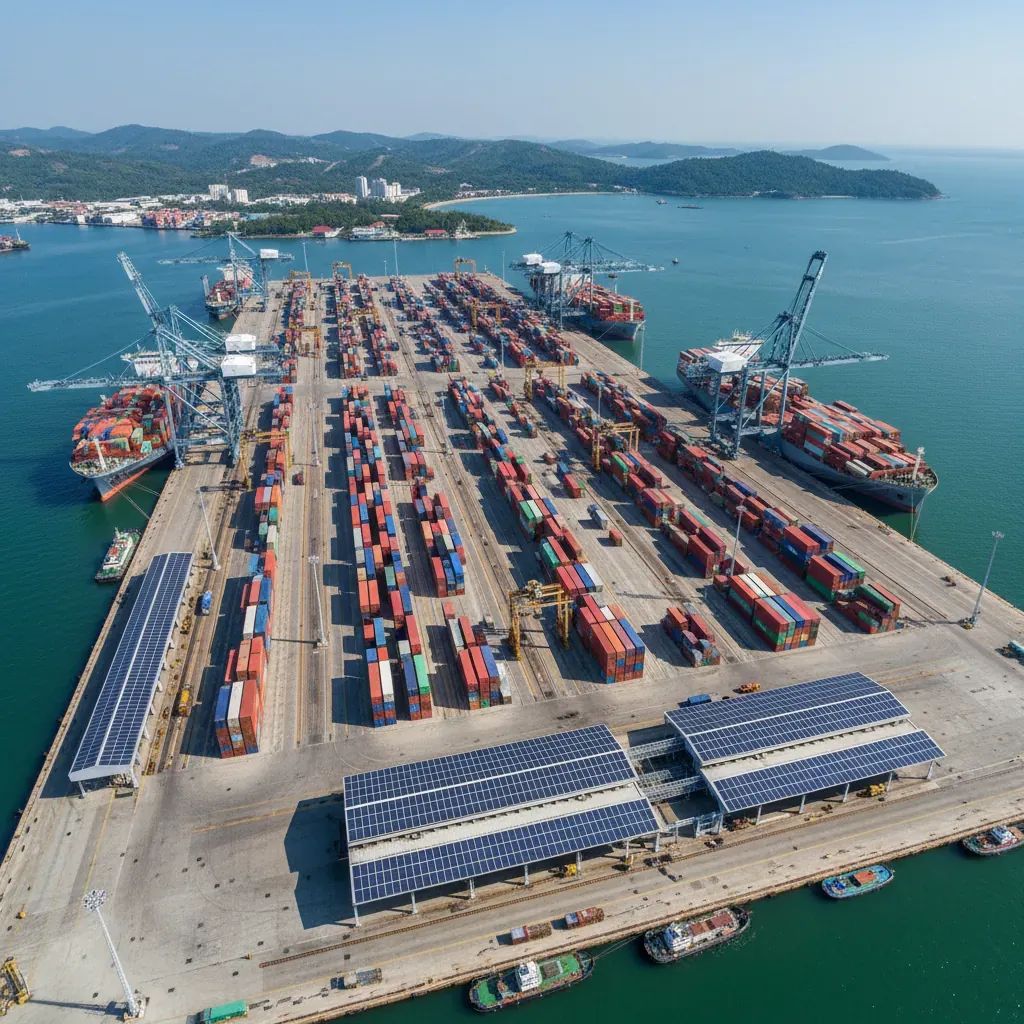
Thailand's draft Power Development Plan for 2026-2050 will increase electricity bills starting in 2027, but the Energy Ministry is offering new solar tax breaks and the opportunity for homeowners to sell excess power back to the grid for income. The revised Power Development Plan covering 2026 through 2050 represents a fundamental shift in how Thailand generates, distributes, and pays for electricity over the next 25 years.
What's Changing for You as a Resident
• Your electricity bill trajectory: Renewable infrastructure costs money upfront, but grid modernization means rates are expected to rise beginning in 2027; specific percentage increases have not yet been announced. Industrial users will face steeper increases than residential consumers, though household bills will not escape entirely.
• Peak-season supply risks: Between 2028 and 2035, potential peak-season supply tightness may occur during summer months as coal plants retire faster than backup systems come online. The government has not yet publicized contingency plans.
• Rooftop solar income opportunity: Homeowners installing solar can claim tax deductions on installation costs and potentially earn income selling excess power back to the grid starting mid-2026. Specific tax deduction amounts and grid-connection rates have not been finalized.
• Regional energy shifts: Thailand aims to shift from importing power from Laos and Myanmar to becoming a regional exporter, which could stabilize long-term electricity costs but also create short-term grid management challenges.
Why This Plan Matters Now
Thailand is racing to overhaul its entire electricity system before 2050, and the stakes extend far beyond power plants and transmission lines. The Thailand Energy Ministry has drafted a comprehensive plan that will reshape how businesses operate, how households manage energy costs, and which industries thrive or struggle in coming years. The plan is essentially the operational manual for Thailand's economic future, not just its environmental one.
When Thailand moved its net-zero deadline forward by 15 years—from 2065 to 2050—it wasn't primarily an environmental gesture. The European Union's Carbon Border Adjustment Mechanism, which imposes tariffs on carbon-intensive imports, threatens the profit margins of Thailand's export manufacturing sector. Electronics makers, automotive suppliers, and food processors cannot afford to be locked out of EU and other developed markets. For these companies, renewable energy is now as much a competitive issue as a compliance one.
The energy and transport sectors currently produce more than 60% of Thailand's annual carbon emissions. Fixing that problem requires both speed and precision. The revised plan abandons the gradual path outlined in earlier versions and instead mandates aggressive installations across solar, wind, and emerging technologies. Thailand Energy Ministry officials have publicly stated that the 2026-2050 framework represents their final attempt to avoid the economic penalty of carbon tariffs and the reputational damage of failed climate commitments.
Solar Dominance and Decentralization
The plan assigns solar power the heavy lifting role. By 2037, nearly 25 gigawatts of solar capacity must come online—roughly triple the current installed base. But the approach differs sharply from previous auctions dominated by well-connected industrial developers. A 1,500 megawatt community solar initiative will partner directly with local governments, townships, and village cooperatives to build installations on communal land. This model distributes economic benefits to rural constituencies and speeds deployment by sidestepping lengthy permitting processes that slow large commercial projects.
Residential Solar Installations and Income Opportunities
For homeowners and shophouse proprietors, tax deductions for rooftop installations represent the first real incentive structure Thailand has offered. Solar panel costs have dropped substantially—a typical 5-kilowatt residential system now costs between ฿250,000 and ฿400,000. With tax benefits, a payback period of 5 to 7 years becomes feasible for owner-occupants. More significantly, regulations currently under negotiation will permit households to sell excess power to the grid. Rates remain unclear, but early estimates suggest this could provide a meaningful income stream—potentially ฿500 to ฿2,000 monthly for systems in favorable locations—though these figures have not been officially confirmed by the Energy Regulatory Commission.
The process for connecting to the grid and selling power remains under development. Residents interested in solar installation should contact the Provincial Electricity Authority (PEA) or Metropolitan Electricity Authority (MEA) for current guidelines on installation permits and approved installer lists. The government has not yet announced whether tax deductions will apply retroactively to systems already installed or only to new installations after the plan's formal approval in early 2026.
Agricultural and Aquaculture Solar
Floating solar installations on reservoirs and irrigation ponds will add another generation channel without consuming agricultural land—a politically crucial move in a rural nation where land disputes remain contentious. Agricultural solar, where panels shade crop fields below, will allow farmers to maintain production while leasing rooftop space to energy companies. These arrangements create new cash flows for rural communities without fundamentally disrupting existing land use.
The Natural Gas Paradox
Despite the renewable push, Thailand remains committed to importing liquefied natural gas for the foreseeable future. The revised plan includes approximately 6 gigawatts of new gas-fired generating capacity by 2037, with a projected decline afterward. This apparent contradiction reflects the hard reality that renewables alone cannot reliably serve Thailand's 24-hour electricity demand.
Solar generation peaks at midday; wind is episodic. A country cannot simply switch off factories, hospitals, or air-conditioning systems when cloud cover arrives. Gas plants provide the bridging power, particularly during monsoon season when solar output drops and before battery storage systems reach deployment scales necessary to store full-day loads.
The hydrogen innovation addresses carbon concerns without abandoning the gas infrastructure already built. Blending 5% hydrogen into natural gas streams by 2030—potentially rising to 20% by 2037—reduces methane emissions and signals to international partners that Thailand is serious about decarbonization even within its transitional fuel sources. However, this requires entirely new product specifications, transport safety protocols, and supply chain arrangements. The Thailand Energy Regulatory Commission is now drafting comprehensive hydrogen standards from scratch, a task that could encounter technical and bureaucratic delays.
Nuclear's Unexpected Comeback
The inclusion of Small Modular Reactors in the revised plan marks a genuine policy reversal. The previous PDP 2018 explicitly rejected nuclear technology in favor of gas and renewables, citing public safety concerns. The current draft plan includes two 300-megawatt SMR units tentatively scheduled for operation by 2037, though this remains subject to regulatory approval and public consultation.
SMR advocates emphasize compact design, enhanced safety systems, and stable baseload power free from weather dependency. Critics counter that Thailand has no domestic nuclear expertise, no regulatory apparatus for reactor operations, and an unresolved waste disposal question that extends across generations. Public anxiety about nuclear safety remains strong in a region aware of historical incidents. The Thailand Energy Regulatory Commission must craft an entirely new regulatory framework covering reactor operations, environmental monitoring, waste handling, and decommissioning protocols—work that historically requires years of technical development and public consultation.
For foreign investors eyeing Thailand, SMR inclusion signals both opportunity and uncertainty. Companies manufacturing or operating reactors see a potential market; companies sensitive to public sentiment recognize reputational risk.
Grid Transformation and the Data Center Effect
Thailand's electrical grid was designed for centralized power plants supplying linear transmission routes. Distributed solar generation, battery storage facilities, and grid-level load management require fundamentally different infrastructure. The Provincial Electricity Authority and Metropolitan Electricity Authority are undertaking modernization, particularly in the Eastern Economic Corridor where data centers, semiconductor factories, and advanced manufacturing have created demand surges.
Data center electricity consumption is substantial—a modern facility consumes as much power as a small city. Global tech companies expanding into Thailand bring electricity demands that existing generation cannot reliably serve. The grid upgrade therefore becomes a competitive necessity: without modernized transmission and backup power systems, Thailand loses foreign direct investment to countries with more robust electrical infrastructure.
Battery energy storage remains the critical missing link. Without large-scale storage systems—grid-scale batteries and pumped hydro facilities—the grid cannot absorb solar's daily variability. A single day of cloud cover can reduce solar generation by 50% or more. The government is accelerating partnerships with international technology firms and domestic conglomerates to deploy battery systems strategically across the network. However, battery energy storage systems (BESS) technology remains capital-intensive, and deployment timelines remain uncertain.
Geopolitics and Regional Reordering
Thailand historically imported substantial hydropower from Laos—accounting for roughly 15.7% of domestic generation—and natural gas from Myanmar. The revised plan inverts this dynamic. As domestic renewable capacity soars, Thailand aims to shift from net importer to net exporter, channeling surplus power to Laos, Cambodia, and Malaysia through the ASEAN Power Grid initiative.
This transformation carries strategic implications beyond commerce. Energy exporting countries exert soft power over importing neighbors. Thailand would gain leverage in regional negotiations if it controls electricity flows to neighboring economies. However, this also exposes Thailand to regional grid instability and the political complexities of energy diplomacy. A disruption in Thailand's power system could cascade across Southeast Asia; a disruption elsewhere could threaten Thai supply.
High-voltage transmission line upgrades and cross-border energy agreements remain under negotiation, with timelines uncertain. The ASEAN Power Grid concept exists on paper more firmly than on ground, and actual implementation depends on diplomatic cooperation and technical coordination that historically moves slowly in the region.
Implementation Timeline and Next Steps
The final approved version of the revised Power Development Plan is expected by early 2026, following public consultations and legislative approval. Once ratified, it becomes the binding directive for every major generation, transmission, and distribution investment over 15-20 years.
For residents interested in solar installation, monitor announcements from the Energy Regulatory Commission and your local electricity authority (PEA or MEA) for finalized tax deduction details and approved installer lists once the plan is officially approved. Major policy documents rarely survive contact with reality unchanged. Power generation economics shift as technology prices fluctuate. Political priorities change. Regional supply chains face disruptions. The current plan represents the government's best assessment today, not an ironclad forecast.
Thailand's pivot away from fossil fuels is no longer theoretical—it is operational policy being funded, permitted, and built. The next 24 months will determine whether the energy sector can execute this transformation without sacrificing grid reliability or economic competitiveness.


