
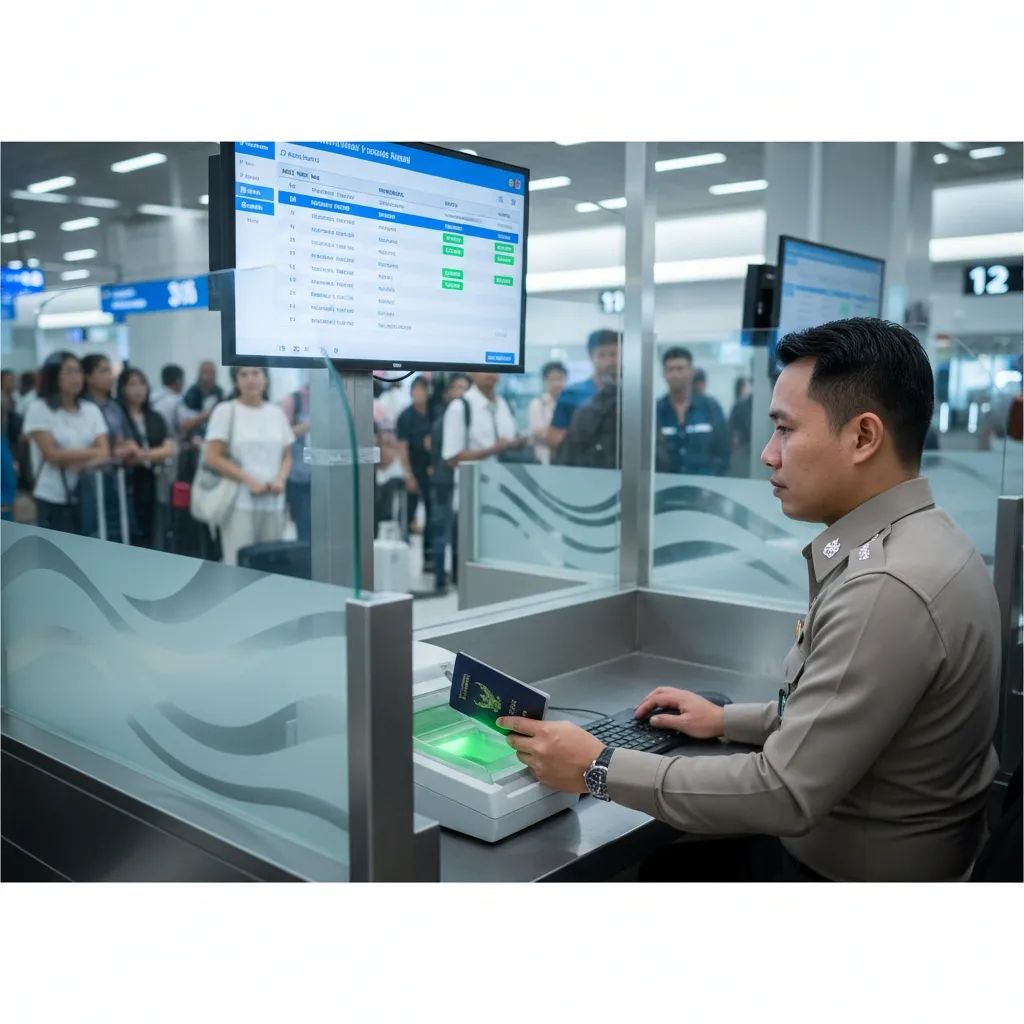
Heading to Thailand in 2026? Whether you're chasing beach sunsets in Phuket, temple-hopping in Chiang Mai, or working remotely in Bangkok, understanding the visa rules is essential. Thailand has simplified entry for most travelers while introducing flexible long-stay options like the Destination Thailand Visa (DTV).
This evergreen guide answers the top search questions — visa on arrival, tourist visa, Destination Thailand Visa (DTV), and the visa exemption list — with clear, quotable facts based on official 2026 rules from the Thai Ministry of Foreign Affairs and Immigration Bureau. Note: the 60-day visa exemption remains in force as of May 2026, though it's under ongoing government review.
What is Thailand's visa exemption and who qualifies?
Citizens of 93 countries — including the US, UK, Canada, Australia, most of Europe, Japan, South Korea, and India — can enter Thailand visa-free for up to 60 days for tourism, short business, or urgent work.
No advance application is needed. Just show a valid passport (at least 6 months validity recommended) and complete the mandatory Thailand Digital Arrival Card (TDAC) online before you fly. This is the easiest and most popular option for short trips.
How long can I stay visa-free in Thailand in 2026?
You get 60 days on arrival (air or sea), with a one-time 30-day extension possible at any immigration office for 1,900 THB — letting you stay up to 90 days total per entry.
Extension approval is at the officer's discretion. Land borders may have slightly different rules in practice, but the standard is now 60 days across entry points. Repeated "visa runs" are under stricter scrutiny — officers can deny entry if it appears you're living in Thailand without a proper long-stay visa. Read more on Thailand's debate over halving the 60-day visa-free stay.
What is the Thailand Digital Arrival Card (TDAC) and do I need it?
Yes — every non-Thai traveler must complete the free TDAC online up to 72 hours before arrival, regardless of visa type. It's quick, gives you a QR code, and replaces the old paper arrival card.
Apply only on the official site: tdac.immigration.go.th. Children and infants need their own. No TDAC means delays or being sent to a kiosk on arrival. Beware of fake TDAC websites stealing traveler data — only use the official URL.
What is Visa on Arrival (VoA) and who can use it?
If your country isn't on the 93-country exemption list but is on the VoA list (about 31 nationalities, including China, Russia, and certain others), you can apply at the airport for a 15-day stay.
- Fee: around 2,000 THB (cash in Thai baht).
- Extension: not easily extendable.
- Best for: short visits, less flexible than the exemption.
What is the Destination Thailand Visa (DTV) and is it right for me?
The DTV is Thailand's game-changing 5-year multiple-entry visa for digital nomads, remote workers, freelancers, and anyone doing Thai "soft power" activities like Muay Thai training or cooking courses — allowing 180 days per entry.
It's perfect for longer stays without the hassle of frequent renewals. You can extend each 180-day period once inside Thailand.
Key DTV requirements (2026)
- Passport valid for 6+ months.
- Recent photo.
- Proof of funds: at least 500,000 THB (≈ USD 14,000–16,000) in a personal bank account (3–6 months of statements).
- Proof of purpose: remote work contract or portfolio, OR an acceptance letter for a qualifying Thai soft-power activity.
- Apply from outside Thailand via Thai embassy/consulate or the e-Visa system: thaievisa.go.th.
- Fee: around 10,000 THB (≈ USD 280–400, varies by location).
- Dependents: spouse and children under 20 can join.
Tourist Visa (TR) — the traditional option
If you don't qualify for exemption or VoA, or you want everything stamped before you fly:
- Single-entry: 60 days (extendable +30 days).
- Multiple-entry: 60 days per entry within 6 months.
- Apply in advance through the Thai e-Visa portal or your nearest Thai embassy.
- Best for: pre-planned tourism with fixed dates.
Quick comparison: Thailand visa options (2026)
- Visa exemption — 93 eligible countries · 60 days per entry (+30-day extension) · free · best for short tourist trips.
- Visa on Arrival (VoA) — about 31 specific countries · 15 days · ~2,000 THB · best for very short visits.
- Tourist Visa (TR) — open to all nationalities · 60 days per entry (+30-day extension) · 1,000–5,000 THB · valid 3–6 months · best for pre-planned tourism.
- Destination Thailand Visa (DTV) — remote workers and soft-power applicants · 180 days per entry (extendable) · 10,000 THB · 5-year multiple-entry · best for digital nomads and long stays.
Pro tips for a stress-free Thailand entry in 2026
- Always carry proof of onward/return travel and sufficient funds (immigration may ask).
- Submit the TDAC as soon as you have your flight details — it's free and takes minutes.
- For DTV applications or extensions, keep digital and paper copies of everything.
- Overstaying fines start at 500 THB per day (max 20,000 THB) and can lead to entry bans.
- Rules can shift quickly — the 60-day exemption is still active but under review. Verify on mfa.go.th before you book.
Thailand's visa system in 2026 strikes a smart balance: easy entry for tourists and genuine long-stay flexibility for remote workers. Whether you're here for two weeks or two years, getting the right option upfront saves headaches and lets you focus on the mango sticky rice and island sunsets.
For the absolute latest details and official lists, check the Thai Ministry of Foreign Affairs, the official TDAC portal, and the Thai e-Visa portal.
Safe travels — Thailand is waiting with open arms (and incredible street food).


