
Thailand’s diplomats have decided they will not sit out Myanmar’s controversial return to the ballot box. Over the next three weeks, embassy officials in Yangon will fan out across four cities—from the teeming commercial capital to the restive Shan-Thai border—to keep a close eye on every ballot box they can reach.
Why it matters at home
• 50 polling stations will host Thai monitors, an unusually large footprint for a bilateral mission.
• The chosen locations—Yangon, Bago, Pathein and Tachilek—mirror the places where Thai trade, migration and security interests most often intersect with Myanmar’s internal troubles.
• Bangkok hopes the move will help fend off criticism that Thailand is too cosy with Naypyidaw’s generals, while still protecting the 3,000 km land border against fresh instability.
Inside the observer mission
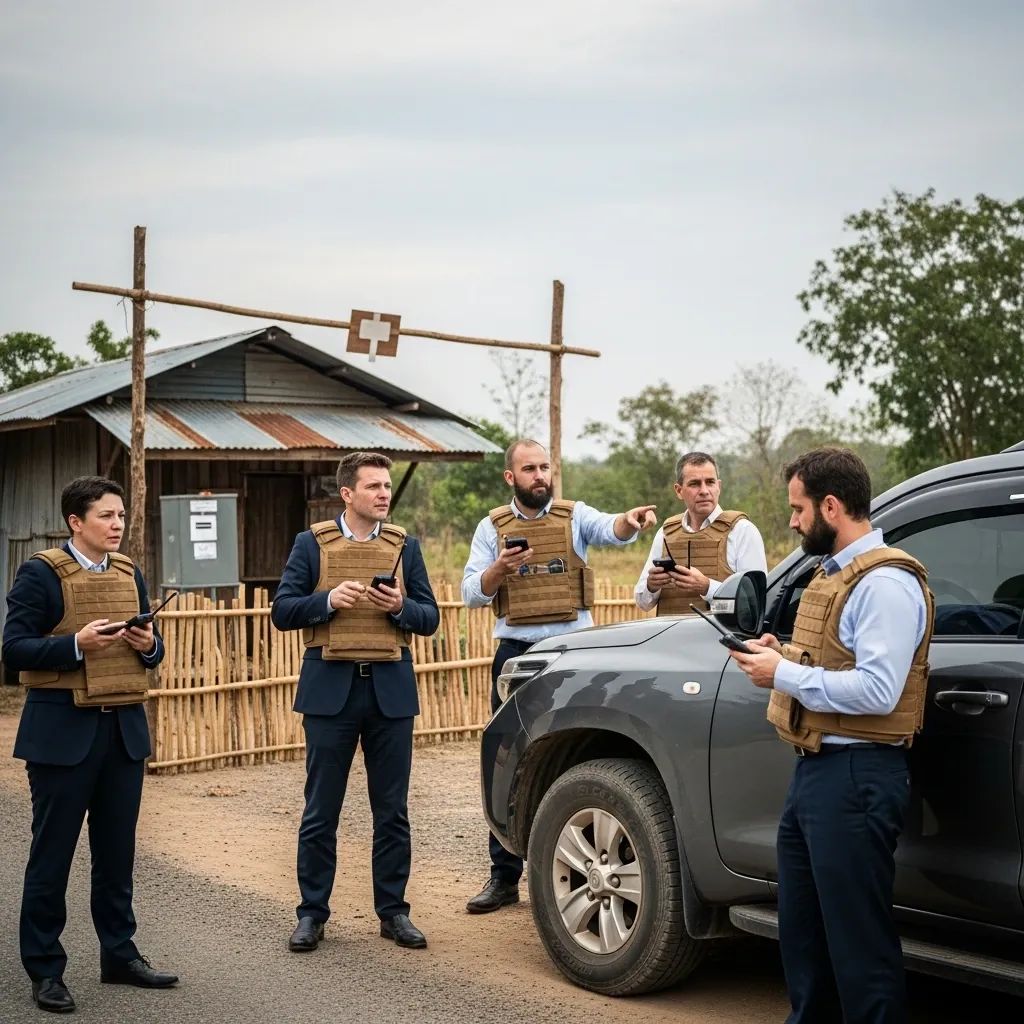
The Royal Thai Embassy has assembled a rotating team of two-dozen diplomats and local hires. They will travel under low-key security protocols; body armour and satellite phones are standard issue, but the officials will move in unmarked vehicles to avoid drawing attention. Each member has undergone a crash course on Myanmar’s byzantine electoral law as well as first-aid training—lessons learned from the chaotic 2020 vote that preceded the coup.
The itinerary is anything but symbolic. In Yangon, staff will focus on mixed wards where displaced rural voters have been resettled. Up north in Bago, the priority is polling stations near military barracks—crucial for spotting any uniformed bloc voting. In the delta city of Pathein, agricultural districts dominated by day-labourers who cross into Ranong for seasonal work are on the checklist. And in Tachilek, just a motorcycle ride from Mae Sai, the team will watch for irregularities that could spill into Thai territory, such as armed groups trying to disrupt the count.
A vote in three acts
Myanmar’s State Administration Council has scheduled the ballot in three distinct phases—28 December, 11 January, and 25 January—arguing that security constraints make a single-day election impossible. Critics counter that the staggered timetable allows the junta to deploy troops where resistance is fiercest, then move them to the next hot spot after the count is secured.
For Thailand, the timing is awkward. The second round of voting falls just days before most factories along the border finish New Year wage disbursements, a period when cross-border movement already surges. Thai officials are bracing for a spike in checkpoints and possible temporary closures on the Mae Sot–Myawaddy and Three Pagodas Pass crossings.
Security first, transparency second
Myanmar’s military has imposed a patchwork of curfews and assembly bans. Foreign observers must file daily travel logs and accept random phone inspections. Thai diplomats will therefore rely on encrypted messaging apps approved by Bangkok’s Ministry of Digital Economy rather than local SIM cards. Coordination with other embassies is deliberately limited to avoid claims of forming an international bloc, but informal WhatsApp channels among Southeast Asian envoys remain active for real-time risk mapping.
Diplomatic tightrope
ASEAN’s much-touted "five-point consensus" calls for dialogue, yet bloc members are split. Indonesia and Malaysia lean toward boycott, while Cambodia publicly backs the polls. Thailand’s ‘quiet diplomacy’ once again places it somewhere in between—observing without endorsing. Western capitals fear Bangkok’s presence could lend a veneer of legitimacy; Bangkok argues that an empty chair would do nothing for the ordinary people of Myanmar and would leave the information field to state media.
What Thai scholars are saying
Domestic analysts are sceptical about the election’s democratic value but see a pragmatic upside for Thailand:
Border management intelligence – "Even a flawed ballot gives us granular data on troop shifts," notes Dr. Piyarat Chongcharoen of Chulalongkorn University.
Humanitarian access leverage – Observers on the ground can pressure local commanders to allow aid trucks bound for Karen and Shan IDP camps.
Reputation risk – Dr. Kittiphong Sukwattanakul warns that being seen as too accommodating could hurt Bangkok’s chances for a future UN Security Council seat.
After the ballot boxes close
Early indications suggest voter turnout will hover below 40% in conflict-prone areas, and opposition parties—many of which have been deregistered or jailed—are unlikely to recognise the results. Should violence escalate, Thai security sources have contingency plans to open three temporary shelters in Chiang Rai’s Wiang Kaen, Tak’s Phop Phra, and Mae Hong Son’s Khun Yuam districts. Meanwhile, the Ministry of Foreign Affairs is preparing a post-election white paper on how Thailand can continue to engage "without crossing lines of principle," according to one senior official.
Key takeaways for Thai readers
• Thai observers are on the ground for all three election phases but insist they are not validating the process.
• Monitoring will happen in urban, rural and border zones that matter most to Thai commerce and security.
• Security protocols are tight: encrypted comms, unmarked travel, and coordination with limited partners.
• ASEAN remains divided; Bangkok’s middle-path exposes it to both praise and criticism.
• Expect potential border disruptions and a fresh influx of displaced people if post-election violence spikes.
Thai policymakers hope that what they learn from the ballot boxes next door can guide a longer-term strategy: keeping lines of trade open, offering humanitarian relief where possible, and nudging Myanmar—however slowly—toward a future that might one day resemble genuine, inclusive democracy.


