
From Sa Kaeo’s mist-covered highlands to the gas-rich waters off Trat, the invisible lines that separate Thailand from Cambodia are once again under the microscope. Bangkok’s caretaker administration, led by Prime Minister Anutin Charnvirakul, believes the two decades-old border accords no longer fit the times. A proposal to redesign them – informally dubbed “MoUs 69” – is gathering steam, even as detractors warn that tinkering with the documents could hand Phnom Penh an edge.
Snapshot: What’s moving and why
• MoU 43 – covers the 798 km land frontier; Bangkok wants LiDAR surveys and 1:50,000 maps to settle ridge-line disputes.
• MoU 44 – governs an overlapping claims area in the Gulf; Cambodia is keen, but Thailand rejects a simple 50 %–50 % split.
• Hun Sen has demanded an urgent Joint Boundary Commission (JBC) meeting in Siem Reap.
• Critics fear Thai territory losses if LiDAR data replaces colonial-era maps.
• A possible 2026 referendum could decide whether to keep, amend or scrap the pacts.
Why the MoUs are back in the spotlight
Two memorandums signed in 2000 and 2001 were meant to freeze tensions while surveyors plotted a permanent line. Instead, repeated skirmishes, competing historical maps, and a stop-start JBC have kept the question alive. With elections looming and a caretaker cabinet holding limited powers, the government is attempting to leave the next administration a tech-ready blueprint rather than a diplomatic vacuum.
What exactly is at stake on the ground
Along the forested border of Surin, Buriram and Sa Kaeo, villagers have watched makeshift demarcation posts migrate by metres each season. Water catchments, customary grazing routes, and a handful of proposed SEZ access roads rely on a clear watershed line. Thailand insists that only 1:50,000-scale military charts, revised with LiDAR-derived digital elevation models, reflect reality. Cambodia, meanwhile, still cites a 1:200,000 French colonial map, arguing it was annexed to the 1904-1907 Siam-France treaties. Land developers on both sides see clarity as the prerequisite for any cross-border logistics corridors.
Sea of discontent – energy and the overlapping claims area
The maritime quarrel is less about cartography and more about natural gas. Block A-10, lying partly inside the 26,000 sq km overlapping claims area (OCA), holds an estimated 300 Bcf of recoverable reserves. Phnom Penh wants the two states to apply a median-line principle and split revenues. Bangkok counters that the continental-shelf geometry favours a bigger Thai share. With domestic gas output in the Gulf plunging by 15 % since 2020, Thailand’s Energy Ministry views the OCA as a potential lifeline for power-generation costs now borne by households.
Technology as game-changer – or Pandora’s box?
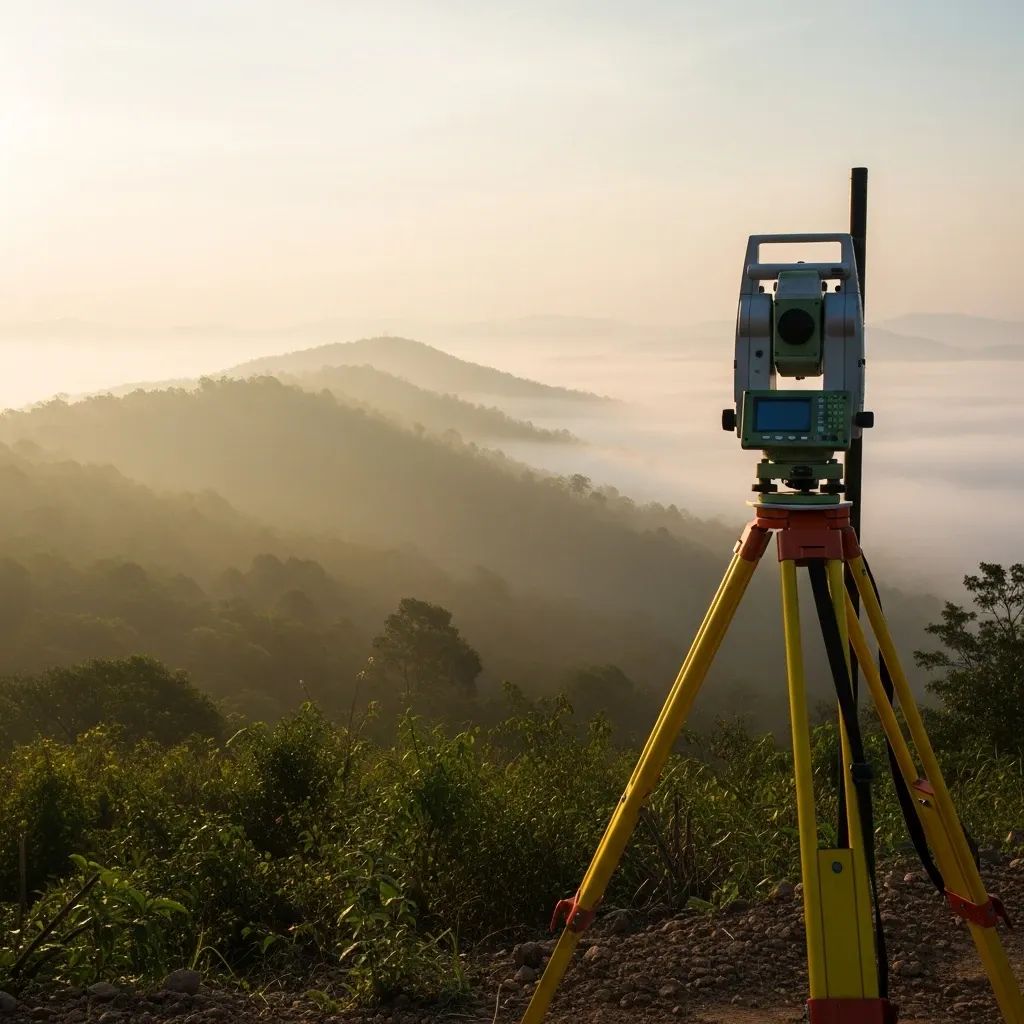
Advances in LiDAR, once prohibitively costly, now allow sub-10 cm accuracy even under dense canopy. Experts at Chulalongkorn University argue the method could “end once and for all” the debate over where the true watershed crest lies. Yet veteran surveyors warn that mathematical precision can upend political compromise: correcting an 80-year-old map might place a cluster of Thai farm plots on the Cambodian side, fuelling local anger. The two states have agreed to a pilot survey near Ban Nong Jan this quarter; results will be treated as non-binding while confidence builds.
Legal minefield and diplomatic tightrope
Although an MoU carries less weight than a treaty, unilaterally withdrawing from one can violate the Vienna Convention on the Law of Treaties. Foreign-ministry lawyers note that Cambodia could petition the International Court of Justice if Bangkok tears up MoU 44. Conversely, Thailand’s Senate committee on foreign affairs has already voted unanimously to recommend cancelling MoU 44, citing two decades of stalemate. Business councils fear a tit-for-tat tariff war on rubber, cassava and garments if relations sour.
Domestic politics – referendum or rhetoric?
Opposition leader Dr Warong Dechgitvigrom has toured Bangkok constituencies warning that LiDAR data cost Thailand “several hundred rai” in preliminary tests. His Thai Pakdee Party is collecting signatures for a people’s vote to revoke both MoUs alongside the general election expected later this year. Bhumjaithai strategists privately concede a referendum is popular, yet caution that scrapping the documents could force Thailand to renegotiate “from zero” under less favourable international scrutiny.
What happens next – three plausible scenarios
Modernise & ratify: The next government endorses Anutin’s tech-centric template, inserts a dispute-resolution clause, and sends it to parliament for ratification.
Freeze & monitor: Talks continue under the status quo, with pilot LiDAR surveys yielding data but no boundary change, buying time until political moods cool.
Abrogate & litigate: One side pulls out, prompting reciprocal moves and likely ICJ litigation – the costliest, slowest path, but no longer unthinkable.
Why Thai households should care
Border uncertainty is not an abstract cartographer’s duel. It shapes prices at the petrol pump, dictates future trade routes to Phnom Penh and Ho Chi Minh City, and influences where special-economic-zone factories set up shop. A swift, evidence-based settlement could unlock gas reserves that shave satang off electricity tariffs and open new tourism loops from Chanthaburi to Angkor. Delay or miscalculation, however, risks fresh military flare-ups and another round of export bottlenecks. For residents from Nong Ku to Nana, the lines on these maps might soon touch everyday life far more than they realise.


