
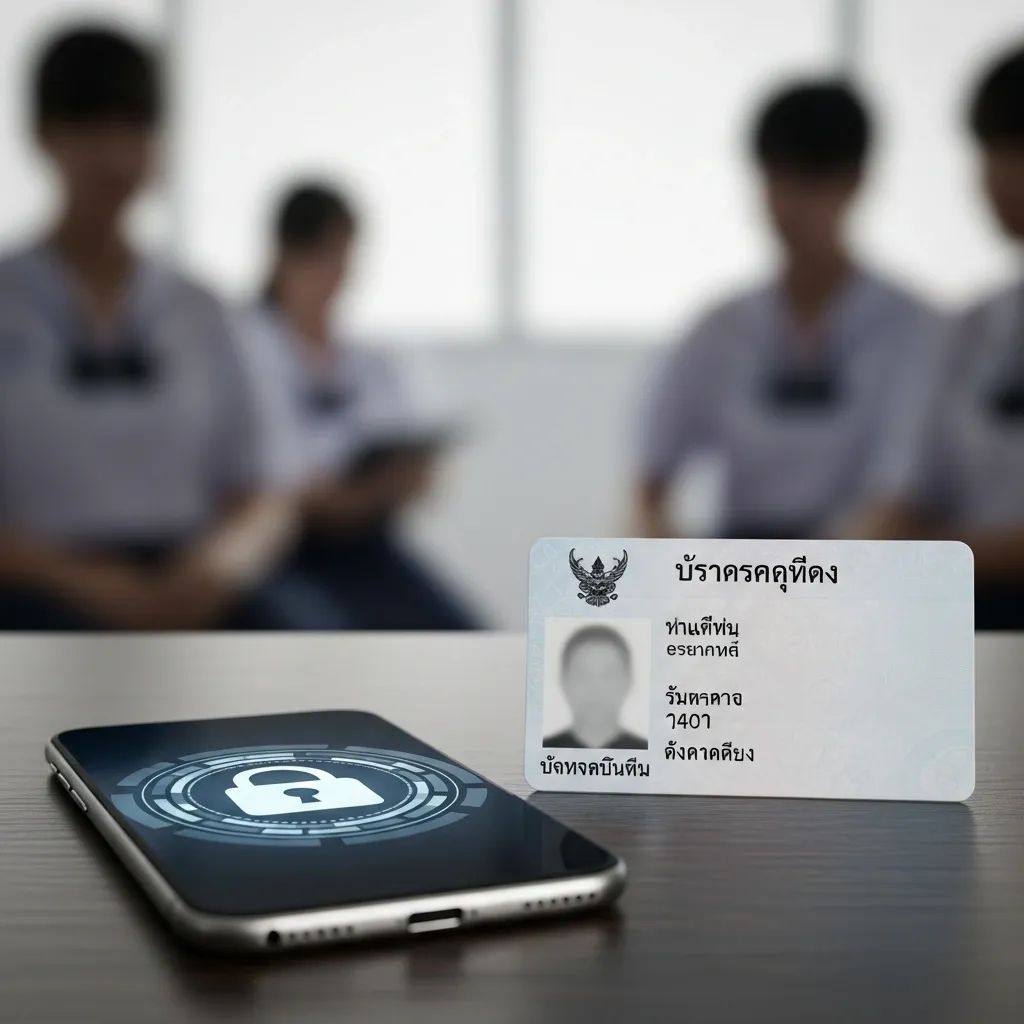
The Thailand Digital Economy and Society Ministry (DES) has begun drafting rules that could bar children under 14 from opening personal social-media accounts, a shift that could reshape how families, schools and tech companies operate day-to-day.
Why This Matters
• Potential age cut-off: 14 – officials are eyeing a younger bar than Australia’s 16, affecting primary and lower-secondary pupils immediately.
• School enforcement likely – campuses may be asked to police log-ins, not just collect phones, reviving debates about teachers’ workloads.
• SIM registration tie-in – rules could force mobile operators to link age verification to the national e-ID system, raising privacy and data-cost questions.
• Fines of up to ฿5 million – an early DES memo suggests platform executives could face company-level penalties roughly equal to a mid-market Bangkok condo.
Global Rules Inform the Draft
Australia’s December ban on under-16 accounts and the UK’s stiff fines for unsafe platforms supplied Thai lawmakers with a ready-made playbook. Closer to home, Singapore requires parental consent for children under 13, proving verification hurdles are solvable in Southeast Asia’s tech-savvy markets.
The Thai Proposal in Plain Language
Authorities are weighing three core elements:
Hard age floor of 14. Users younger than that would be blocked outright.
Parental consent for 14–16 year-olds. Similar to Spanish plans, but tied to Thailand’s smart-ID card system.
Daily usage caps. DES sources floated a 2-hour limit enforced by in-app timers that automatically log minors out.
Lawmakers stress the draft will be platform-neutral—covering Instagram Reels, YouTube Shorts, even future VR hangouts—so tech firms cannot dodge the rule by pivoting to new formats.
Enforcement: From Theory to Reality
Thailand already mandates real-name SIM registration, giving authorities a verification head-start. Yet loopholes abound: prepaid SIMs bought on streets, relatives sharing log-ins, and rampant VPN use. The National Broadcasting and Telecommunications Commission is therefore studying a “Know-Your-User” API that would ping the national civil-registry database each time a new account is created.
Telecom lawyers warn such deep data hooks could breed fresh privacy liabilities. A breach exposing minors’ ID numbers would violate the Personal Data Protection Act (PDPA) and invite costly litigation.
What This Means for Residents
• Parents may soon need to present their e-citizen ID via a one-time QR code to approve teenagers’ accounts. Expect extra steps when setting up a new phone.
• Teachers could become unofficial watchdogs. Schools that already collect phones might additionally require students to register any social-media handle with the homeroom teacher.
• Small businesses using TikTok or Facebook pages run by family members under 14 would have to transfer admin rights to an adult or risk takedown.
• Investors should watch telco stocks. If carriers must deploy new verification layers, cap-ex budgets—and potentially data-package prices—will climb.
Mental-Health Angle vs. Digital Literacy
DES cites local research showing Thai adolescents log average daily screen time of 5.5 hours, higher than the global 3.7-hour mean. Paediatric psychiatrists at Siriraj Hospital link excess scrolling to sleep loss and rising clinic visits for anxiety.
Critics, however, argue a blanket ban may stifle the digital skills Thailand needs for its Bio-Circular-Green economic push. Coding clubs and junior content-creator contests rely on open platform access. Youth advocates propose graduated privileges—for example, allowing project-based use inside monitored school accounts rather than personal profiles.
Voices From the Ground
"Without Instagram my daughter spent afternoons sketching again," says Chantira Sukprasert, a Bangkok mother who voluntarily blocked social apps on her 12-year-old’s phone. Yet she concedes tracking homework groups became harder.
Meanwhile, 15-year-old Arthit Maneerat worries that over-policing will simply drive peers to anonymous Discord servers: "Kids will always find the backdoor—why not teach us to use the front door responsibly?"
Roadblocks Ahead
• VPN arms race. Every new restriction begets a fresh workaround.
• Regional disparities. Rural schools with patchy Wi-Fi rely more on smartphones for class materials, meaning bans could unintentionally widen the education gap.
• Commercial pushback. Thailand’s booming social-commerce sector—worth ~฿300 billion last year—leans on teen influencers to drive trends.
The Road Forward
The DES plans to release a public consultation draft within 2 months, followed by a 60-day feedback window. Final cabinet endorsement could come as early as Q3 2026. While the exact contours will shift, one trend is clear: social-media free-for-alls for Thai minors are ending. The challenge is crafting a rule tough enough to curb harm yet flexible enough to foster the next generation’s digital fluency.


