
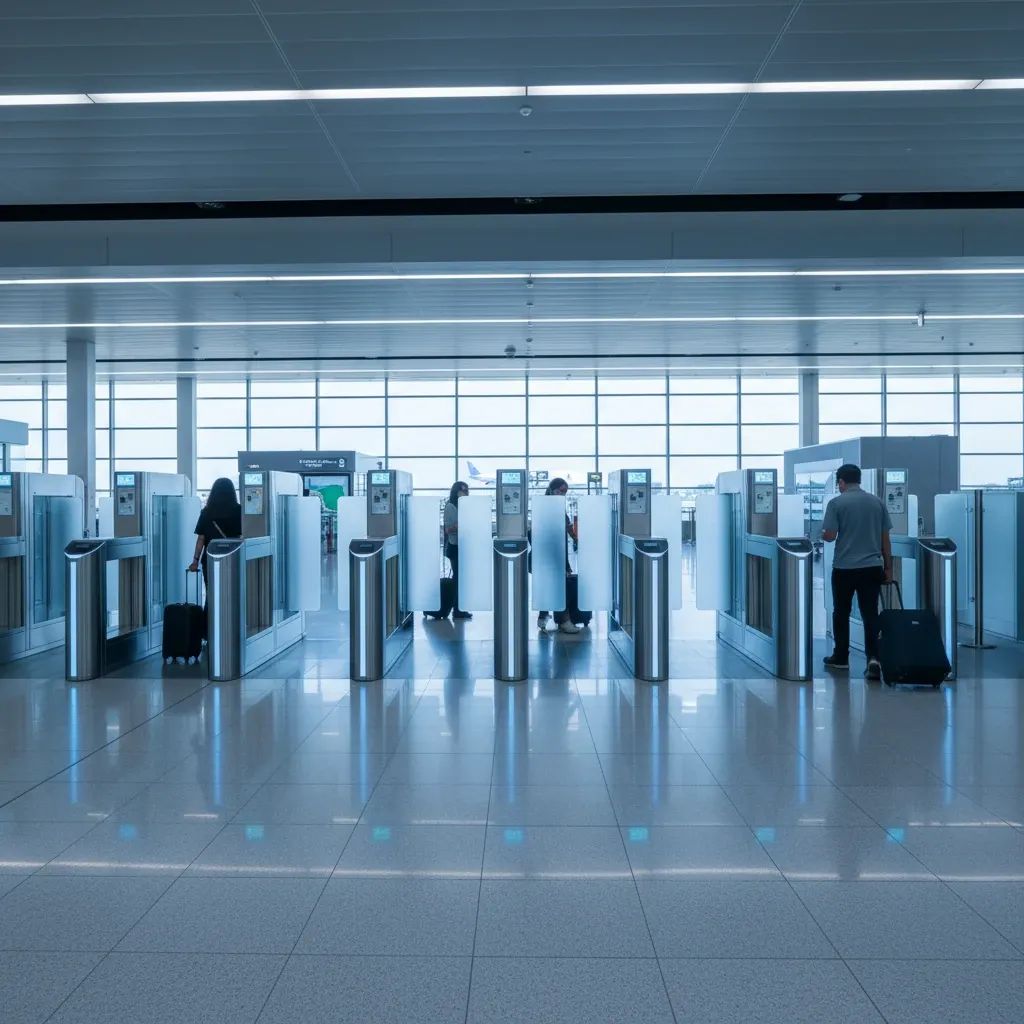
Current Status: Proposal Under Discussion
Important: This exit tax remains a proposal under discussion between the Tourism and Finance Ministries. No cabinet submission date has been set, and implementation is uncertain. Monitor official government announcements before making travel budget decisions.
Why This Matters
• Your Next Passport Stamp Could Cost Extra: If cabinet approval happens, Thai nationals would face ฿1,000 per international departure—a family of four taking two annual overseas trips would incur ฿8,000 in new levies.
• Stacked with Other Rising Fees: Passenger service charges at Thai airports are scheduled to increase 50% starting June 2026; layering an exit fee could create cumulative pressure on airfares already climbing due to fuel costs.
• Resurrection of 43-Year-Old Law: The Thailand government has proposed reviving a dormant 1983 emergency decree rather than drafting new legislation—legal foundation exists but operational details remain unresolved.
• Domestic Travel Gets the Subsidy Counterbalance: Approximately ฿10 billion annually could flow toward the "Half-half Travel" stimulus program, creating a deliberate wealth redistribution aimed at keeping tourism spending inside Thailand.
The Core Mechanism: Tax Outbound Travel, Fuel Domestic Trips
Behind the proposal lies a straightforward—if politically loaded—economic calculation. The Thailand Ministry of Tourism and Sports estimates roughly 10 million Thai residents depart annually for overseas leisure, visiting Singapore, Malaysia, Vietnam, Cambodia, and beyond. Multiply that by ฿1,000, and the Thailand revenue department identifies a potential ฿10 billion annual revenue stream requiring zero new administrative infrastructure.
No parliamentary legislation needed. The 1983 Emergency Decree on Departure Levy already provides legal scaffolding. Cabinet approval alone would trigger implementation. For Tourism Minister Surasak Phancharoenworakul, the appeal transcends mere accounting—it promises escape from annual budget haggling. Tourism stimulus could convert from discretionary appropriations into a self-perpetuating mechanism, powered by the outflow of Thai travelers' disposable income.
The framing matters: this isn't taxation; it's resource recirculation. Money extracted from Thais with means to travel abroad funds subsidies for domestic alternatives, theoretically closing a loop that currently hemorrhages foreign currency. Previous incarnations of such domestic stimulus—particularly the "We Travel Together" program during pandemic recovery—delivered measurable impacts on provincial occupancy and small hospitality operators.
Taxing Departure, Exempting Necessity
Critically, the exit levy would apply exclusively to leisure travel according to the proposal. Business trips, educational pursuits, work-related assignments—all would bypass the ฿1,000 charge with proper documentation. Diplomats on official travel, students enrolled in recognized educational programs, employees holding valid work permits would encounter no charge. The government's logic separates discretionary consumption from essential mobility.
This categorization creates administrative vulnerability. How would Airports of Thailand (AOT) staff or airline agents plausibly distinguish genuine business travel from falsely claimed exemptions? How would Thai Airways, Nok Air, Thai AirAsia, and budget carriers integrate collection into existing ticketing systems without triggering operational bottlenecks? The Thailand Finance Ministry, through director-general Vinit Visessuvanapoom, repeatedly emphasized that implementation details require "careful consideration"—a diplomatic phrase masking genuine operational uncertainty.
Separately, and intentionally structured as distinct, the Thailand Revenue Department is finalizing a ฿300 entry fee for foreign tourists. That charge would target tourism infrastructure, venue management, and traveler insurance pools rather than domestic programs. By taxing both outflows (Thai nationals) and inflows (foreign visitors), the government attempts to distribute burden across both sides of the mobility equation, deflecting accusations of naked resident taxation.
The Subsidy Architecture: "Half-half Travel" Takes Shape
The proposal's legitimacy rests entirely on delivering promised domestic benefits. The "Half-half Travel" program (เที่ยวคนละครึ่ง) envisioned by the Thailand Tourism Authority would allocate 10 million entitlements, each offering up to ฿1,000 in government co-payment for domestic accommodation, meals, and attractions. Earlier iterations—particularly "We Travel Together" initiatives—provided 40–50% off hotel rates, capped at ฿3,000 nightly, plus spending credits for restaurants and local operators.
For a Chiang Mai family retreat or Krabi beach week, such subsidies could meaningfully reshape affordability calculations. A week's accommodation costing ฿10,000 could become ฿5,000–7,000; meal budgets could expand; activity spending could increase. The formula targets discretionary travelers—the demographic most susceptible to substituting international trips with domestic alternatives.
However, internal resistance emerged even from tourism stakeholders. The Thai Travel Agents Association (ATTA) proposed a scaled alternative—1 million entitlements totaling ฿3 billion—suggesting institutional skepticism about sustainability and uptake rates. Budget documents from the Thailand Ministry of Finance, covering medium-term planning through fiscal 2030, reportedly reference potential revenue generation, though specifics remain under discussion and subject to change.
The Friction Zone: Price Sensitivity Varies Sharply by Distance
Public positioning from the Thailand Tourism Ministry minimizes behavioral concerns. A ฿1,000 fee represents a negligible percentage of long-haul vacation costs to Tokyo, Seoul, Sydney—flights alone cost five figures, dwarfing an extra thousand baht. International airfares have spiked roughly 20% over recent years, a shift suggesting price tolerance has already adjusted upward.
This logic, however, overlooks crucial segmentation. Regional short-haul travel tells a different story. Bangkok-Kuala Lumpur round trips for budget travelers using low-cost carriers and modest accommodation cost ฿3,000–5,000 all-in. A ฿1,000 departure tax could represent 20–33% of total trip cost—material enough to recalculate value propositions. Weekend excursions to Vientiane, Phnom Penh, or Cambodia cost under ฿2,000 for many travelers; a ฿1,000 fee could potentially double the percentage impact.
Timing compression may intensify this squeeze. Airports of Thailand increased passenger service charges starting June 2026 from ฿730 to ฿1,120 at six primary international hubs—a ฿390 per-person surcharge representing a 50% levy increase. That embeds into ticket prices. Layering ฿1,000 on top could mean a typical Bangkok-Singapore round trip now carries roughly ฿2,000 in combined new airport and departure fees alone, before fuel surcharges or yield management pricing.
Analysts debate potential intensity. The Thailand Ministry of Tourism claims the fee wouldn't materially deter determined travelers. Industry observers counter that "marginal travelers"—those deciding between overseas leisure or domestic alternatives—represent exactly the target population the subsidy aims to capture. Whether ฿1,000 would prove sufficient to flip such decisions hinges on domestic subsidy generosity and marketing execution.
The Industry Fallout: Potential Winners and Casualties
Potential winners could include budget hotel chains targeting Thai guests, provincial attractions rarely visited by international tourists, ground transportation providers serving domestic circuits, and restaurant operators in secondary cities. If the Half-half subsidy scales meaningfully and marketing reaches provincial populations, occupancy rates could rise and revenue could spike for accommodations dependent on domestic demand.
Potential casualties are equally identifiable. Outbound tour operators assembling Thailand-to-Bali, Thailand-to-Vietnam packages could face direct demand destruction. Airlines operating Thai-heavy loads on regional routes could lose passenger volume. Duty-free retailers at Suvarnabhumi and Don Mueang airports could lose transaction frequency from reduced traveler throughput. Travel agencies collecting commissions on overseas bookings could watch pipelines contract.
The travel industry's formal opposition has already emerged. The Thai Travel Agents Association publicly opposed the measure, warning of potential damage to "two-way tourism flows" and Thailand's competitive positioning as a regional transit hub. The framing is shrewd: don't merely oppose a tax; argue Thailand's economic resilience depends on unrestricted mobility. Constrained outbound travel implies constrained income for regional carriers, ground handlers, and commission-taking intermediaries.
Airline profitability dynamics compound pressure. Thai AirAsia, Nok Air, and Thai Lion Air operate paper-thin margins dependent on frequency and load factors. Rising airport fees, fuel volatility, and a potential demand-suppressing departure levy could create a three-front squeeze. Every percentage point of demand contraction could directly compress revenue and margin available for cost absorption.
Implementation Realities: Significant Uncertainty Persists
Despite Tourism Ministry confidence, the proposal remains in discussion phase with no scheduled cabinet submission. The Thailand Finance Ministry continues evaluating legal mechanics, administrative logistics, and political risk. Key unresolved questions include:
Verification and Categorization: Airports cannot reliably ask departing passengers, "Is this leisure or business?" Travelers may claim exemption regardless of intent. Building reliable authentication—work permit verification, student visa cross-referencing, company documentation—would require administrative overhead and could create operational delay. Accepting broad categorization risks creates potential for abuse or building bureaucratic screening that may infuriate travelers during departure queues.
Revenue Ringfencing: Will collected funds flow into a dedicated tourism development account insulated from annual budget cycles, or pass through general treasury channels where legislators debate allocation? If ringfenced, the program would gain predictability and political stability. If appropriable, the revenue shield could crumble during next fiscal crisis.
Public Acceptance During Economic Flux: Timing would shape political viability. If cabinet approves during economic volatility—rising consumer prices, stagnant wages, cost-of-living anxiety—backlash could brand government as extractive. Conversely, if framed as tourism investment during growth, optics could improve marginally.
Visa Policy Incoherence: Thailand simultaneously promotes digital nomad visas and tax incentives for foreign residents, signaling openness to international mobility. Taxing Thai departure sends conflicting signals about actual openness. Foreign investors and expatriate workers may interpret inconsistent messaging as policy instability.
Regional Comparisons: How Peers Structure Exit Fees
Thailand would not pioneer the concept. Australia's Passenger Movement Charge (roughly AUD 60, or ฿1,400) applies to all departing passengers, funding border operations. The United Kingdom's Air Passenger Duty scales by distance and cabin class, generating billions in general revenue. Ecuador, Argentina, and Caribbean jurisdictions charge USD 20–50 exit fees, typically collected at airports or via airlines.
Thailand's distinctive angle: taxing only nationals while dedicating revenue to domestic tourism subsidies rather than general budgets or infrastructure. The premise—recirculating outbound wealth into internal travel stimulus—differs from international precedent. Whether this resonates as fair wealth redistribution or punitive depends entirely on execution and political framing.
Most precedent systems tax all passengers equally, avoiding the "nationals only" distinction that raises fairness concerns. Thailand's targeting of its own residents creates a unique political vulnerability: Why extract revenue exclusively from Thais? Why not apply uniform taxation that applies equally to visitors?
What This Means for Residents
For Thai passport holders planning international trips: If approved, budget ฿1,000 per departure per person. A family of four taking three annual overseas holidays could incur ฿12,000 in exit levies—equivalent to several nights' provincial accommodation. Frequent business travelers should immediately clarify exemption eligibility with employers and document trip purposes meticulously; misclassification as leisure could result in unexpected charges.
For expatriates and naturalized foreign residents holding Thai passports: Confirm exemption eligibility immediately if the measure is approved. Work permits, diplomatic visas, student documentation should be filed carefully. Misclassification could generate unexpected financial friction at departure.
For domestic travel enthusiasts: Monitor Tourism Authority of Thailand (TAT) announcements and the Tourism Ministry's registration portal for potential Half-half subsidy rollout. Early adoption often determines access to limited entitlements. Program uptake rates in previous iterations ranged from 60–80%, suggesting demand could exceed supply in popular destinations.
For airline and travel agency workers: Prepare for potential demand softening on regional routes should the levy be implemented. Marketing strategies should emphasize bundled value, loyalty programs, and regional packages to offset potential price signals. Commission structures may face pressure if passenger volume contracts.
For hospitality and provincial tourism operators: Higher domestic occupancy could materialize if subsidies scale meaningfully. Inventory planning and staffing decisions should account for potential seasonal demand shifts. Previous Half-half programs delivered 2–3 million incremental domestic trips; similar scale could materially impact secondary-city occupancy.
The Larger Context: Tourism's Vulnerability
The proposed exit levy and Half-half subsidy represent tactical responses to structural turbulence. The Tourism Authority of Thailand targets ฿3 trillion in total tourism revenue by 2026, blending international and domestic streams. That ambition confronts multiple headwinds: Middle East geopolitical instability threatening long-haul air routes, volatile fuel costs inflating airfares roughly 20% over recent years, cost-of-living pressures eroding discretionary spending among middle-income Thai households, and weakened global demand for long-haul leisure travel following pandemic disruption.
By creating a self-funding domestic tourism engine, the ministry attempts to buffer the industry against external shocks. The wager: a predictable domestic revenue stream could reduce dependence on volatile international markets. The risk: public backlash against "mobility taxation" could sour voters and invite electoral costs.
The outcome depends on cabinet deliberation, public response, and operational execution. For now, the proposal remains suspended between proposal and approval—a tax on travel that may or may not materialize, held aloft by bureaucratic discussion and political calculation. Industry players, travelers, and provincial communities await clarity on both the fee's implementation timeline and the subsidy's scale and eligibility criteria.
Monitor official Tourism Ministry and Finance Ministry announcements for updates on this proposal's status.


