
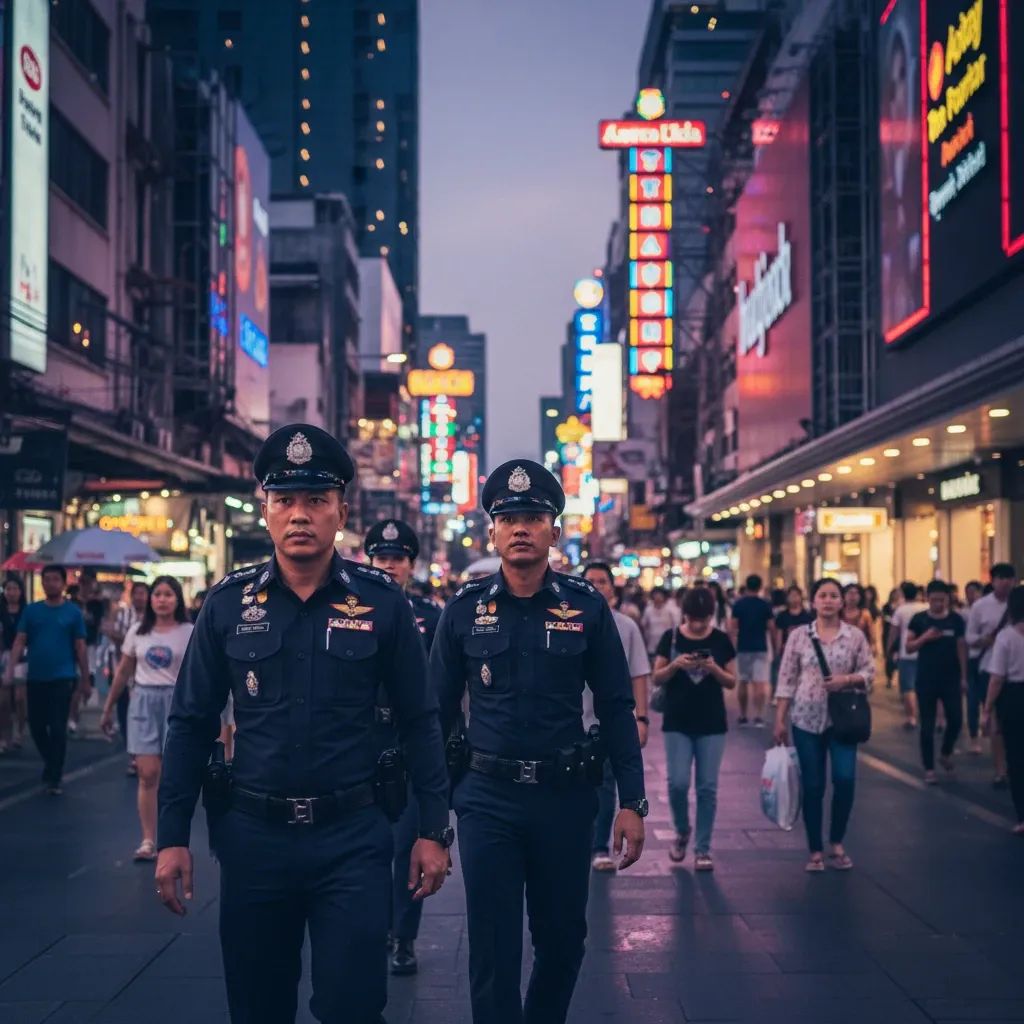
The Thailand Cabinet has extended a nationwide freeze on new public firearm carry permits for another 12 months, building on a suspension first introduced in December 2023. The measure targets prospective permit applicants but does not address the estimated 40% of Thailand's civilian firearms that remain illegal—a factor experts cite as the primary driver of gun violence.
Why This Matters
• No new carry permits (Por.12) will be issued for one year starting from the Royal Gazette publication date, extending a suspension first introduced in December 2023.
• Existing permit holders are unaffected, meaning thousands of legally armed civilians can still carry weapons in public spaces.
• Illegal firearms remain the primary driver of violent incidents—the moratorium does not remove them from circulation.
• Penalties for unlawful public carry: up to 5 years imprisonment and/or a ฿10,000 fine.
The directive, announced by Prime Minister Anutin Charnvirakul, tasks Thailand's Ministry of Interior and the Department of Provincial Administration with tightening enforcement under the Firearms Act of 1947, particularly Sections 6, 13, and 57. It follows a string of high-profile shootings, including the 2022 nursery massacre and the 2023 Siam Paragon mall attack, which together catalyzed public outcry and demands for stricter controls.
What This Means for Residents and Tourists
For foreign nationals living in Thailand or visiting tourist hubs like Pattaya, the practical impact centers on understanding how the freeze affects security on the ground. The suspension targets prospective applicants, not the weapons already in the hands of licensed owners or the vast shadow inventory of illegal guns.
Thailand ranks second in ASEAN for gun deaths per capita—2,351 fatalities were recorded in 2019—trailing only the Philippines. Security analysts point to chronic enforcement gaps, porous borders, and a thriving black market fed by corrupt officials and online smuggling networks as key contributing factors, rather than the volume of legal permits in circulation.
In Pattaya specifically, violence in nightlife districts has escalated through 2025 and into early 2026, involving scissors, machetes, "ping-pong" bombs, and firearms. Incidents include a Ukrainian national stabbed in a condominium, a teen gang clash with a gunshot injury, a knife attack at a nightclub, and a double homicide on South Pattaya Road involving rival Myanmar nationals. Tourists and long-term expatriates have repeatedly cited a perceived lack of police presence and inconsistent enforcement in entertainment zones, where unlicensed venues operate in regulatory gray areas or reopen shortly after raids.
The Gap Between Policy and Street-Level Enforcement
Thailand's regulatory architecture on paper is robust. The Firearms Act mandates that guns be stored at home for self-defense and prohibits public carry without lawful cause. The new directive doubles down by ordering rigorous background checks for purchase permit (Por.3) applicants—scrutinizing personal conduct, associates, and any links to illegal activity—and continuous monitoring of existing possession permit (Por.4) holders.
Yet the gap between policy and street-level enforcement remains significant. A 10-day nationwide operation in August 2025 led to over 5,200 arrests and the seizure of military-grade grenades, blank-firing guns, and ammunition. In February 2026, authorities dismantled a transnational network selling M16 rifles and grenades along the western border. These crackdowns reveal a persistent undercurrent: Thailand serves as a source, transit, and destination hub for arms trafficking, with smuggling routes concentrated along the Thai-Myanmar and Thai-Laos borders.
Online platforms have become key facilitators, enabling cross-border sales and the sharing of knowledge on weapon modification and concealment. A notable case in July 2025 involved 25 semi-automatic firearms hidden in microwave ovens destined for Moscow. What security experts describe as "welfare guns"—discounted firearms sold to police and military personnel—frequently leak into illegal markets, sometimes with the complicity of state-embedded actors.
Comparing Thailand to Regional Neighbors
Singapore maintains the strictest firearm regime in Southeast Asia, effectively banning civilian ownership and imposing severe penalties including caning and the death penalty for trafficking. The city-state consistently ranks highest in the region for law and order.
Indonesia and Malaysia enforce stringent licensing requirements with minimal civilian gun ownership, though both countries contend with illegal arms smuggling and occasional misuse by law enforcement personnel.
The Philippines, despite numerous gun regulations, struggles with ineffective enforcement due to corruption, political influence, and weak institutions. Home-made firearms are common, and the country leads ASEAN in gun deaths per capita.
Myanmar mirrors Thailand's challenges, with civilian gun ownership exceeding that of military and law enforcement combined. Both nations rank among the lowest in Gallup's Law and Order Index, reflecting deep-seated public insecurity.
Brunei and Vietnam impose highly restrictive policies, granting licenses only to military, police, sport shooters, collectors, or hunters. Understanding these regional approaches provides context for why Thailand's approach remains focused on permit restrictions rather than broader market interventions.
Impact on Expats and Investors
For those weighing relocation or investment decisions, Thailand's gun violence profile merits careful consideration. The moratorium signals policy intent but does not address underlying structural issues. Expats in Pattaya and other tourist-heavy cities should remain vigilant, particularly in nightlife zones where alcohol-fueled disputes and inconsistent policing create risk. The February 2026 Chinese tourist robbery and the October 2025 allegations of a nightclub manager assaulting a VIP guest—potentially involving a firearm—underscore the vulnerability tourists face.
Business owners in hospitality and entertainment sectors should also note the enforcement inconsistency. Unlicensed pubs and bars continue a cycle of operation, raid, and reopening, pointing to structural challenges within regulatory channels. Foreign investors may face reputational and legal risks if their venues become entangled in violence or licensing violations.
What Foreign Residents Should Know
Key considerations for expats and long-term residents:
• Can foreign residents obtain gun permits? Thailand restricts firearm permits primarily to Thai nationals. Foreign residents may be restricted from obtaining carry permits; consult with local legal counsel if security concerns warrant investigation.
• High-risk areas: Pattaya's Walking Street, Second Road entertainment zones, and Bangkok's Khao San Road vicinity show higher incident rates. Exercise heightened awareness during late evening hours.
• Reporting incidents: Contact the Tourist Police (1155) for assistance, particularly if you are a visitor. Local Thai police can also file reports, though language barriers may require translation assistance.
• Insurance and documentation: Maintain comprehensive travel/health insurance. Document valuables, residence address, and emergency contacts with your embassy or consulate.
• Community networks: Many expatriate communities in Pattaya and Bangkok maintain informal security networks and share incident reports; connecting with established expat groups provides practical safety information.
What the Moratorium Doesn't Address
The suspension affects new carry permits only. It does not:
• Remove firearms already in circulation
• Revoke existing carry permits
• Target the estimated 40% of guns that are illegal
• Address the corruption enabling "welfare gun" leaks into illegal markets
• Strengthen border controls against smuggling
• Improve coordination between local police and provincial authorities
According to security analysts and policy observers, visible policing, rapid response times, and consistent application of existing law would yield more tangible safety improvements than a temporary permit freeze. The Thai Royal Police and Tourist Police have increased patrols and raids, but enforcement gaps persist—particularly in tourist areas where officers have been accused of limited intervention in assaults.
The Path Forward: Beyond Symbolic Measures
Effective gun violence prevention in Thailand, according to experts and reform advocates, requires a multi-pronged approach:
• Dismantling smuggling networks through enhanced border surveillance and anti-corruption measures
• Targeting illegal arms markets with sustained crackdowns, not just symbolic one-off operations
• Closing loopholes that allow blank-firing guns and air guns to be converted into lethal weapons
• Reforming the "welfare gun" program to prevent official weapons from entering the black market
• Strengthening coordination between the Department of Provincial Administration, local police, and community leaders to monitor existing permit holders
• Investing in high-risk zone enforcement, particularly in Pattaya, Phuket, and Bangkok nightlife districts
For now, the moratorium serves as a policy response to public concern about gun violence. Whether it translates into measurable safety gains for residents and visitors depends on how comprehensively the government addresses underlying challenges: corruption, smuggling networks, and the enforcement gaps that have allowed illegal firearms to proliferate.
Thailand's approach to this point has relied on regulatory restrictions on new permits. Experts suggest that sustained focus on the structural issues driving illegal arms circulation—rather than limiting new legal permits—would be required to produce measurable changes in gun violence rates. Until the regulatory apparatus addresses these root causes, the freeze on new permits remains an important signal rather than a complete solution.


