
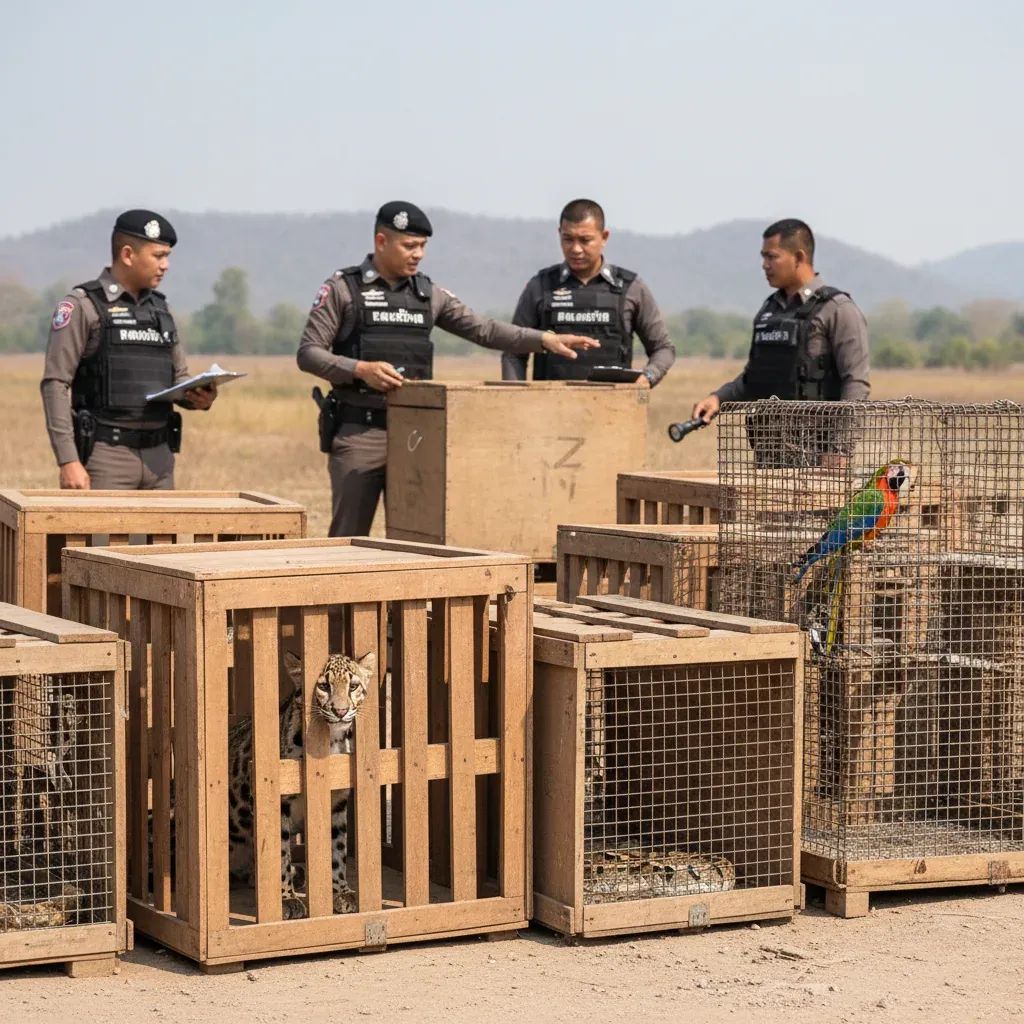
The Thailand Department of National Parks, Wildlife and Plant Conservation has intercepted a major wildlife smuggling convoy carrying 135 animals, including 100 snakes, marking one of the largest roadside seizures of protected species in recent months. The bust—conducted with assistance from the U.S. Fish and Wildlife Service—underscores the Kingdom's position as a trafficking corridor for exotic fauna destined for international black markets.
Why This Matters
• Rare species intercepted: The haul included 13 salmon-crested cockatoos, 6 tree kangaroos, 8 cuscuses, and 13 echidnas—all CITES-listed species rarely seen outside New Guinea and Indonesia.
• Legal consequences expanded: Under the Wildlife Conservation and Protection Act of 2019, CITES-listed species carry penalties of up to 10 years in prison and fines reaching 500,000 baht.
• Regional enforcement signal: The involvement of U.S. federal wildlife agents highlights Thailand's deepening collaboration with Washington in dismantling transnational smuggling rings.
The Roadside Ambush
Thailand Royal Police and conservation officers stopped a white pickup truck on Phetkasem Road near Cha-am District, Phetchaburi Province, during the night of May 5-6, 2026. The vehicle was traveling northbound toward Bangkok when authorities, acting on intelligence from a regional tip-off network, signaled the driver to pull over.
Inside the cargo bed, investigators discovered dozens of wooden crates and wire cages stacked floor-to-ceiling. The inventory shocked even seasoned wildlife officers: alongside the 100 unidentified snake specimens were 13 salmon-crested cockatoos (pink and white crested parrots native to the Moluccas), 6 tree kangaroos, 8 cuscuses (marsupial possums), 13 echidnas (spiny anteaters), and 1 sugar glider.
The driver, identified as Mr. Songob, a 49-year-old resident of Satun Province, told investigators he had been hired by a southern trafficking network to deliver the animals to buyers in the capital. He was charged under Article 19 of the Wildlife Conservation and Protection Act (2019), which criminalizes unlicensed possession of protected species and carries a maximum penalty of 100,000 baht in fines and 1 year in prison for first-time offenders. However, because the seized animals are CITES Appendix species, prosecutors are pursuing aggravated charges that could result in up to 10 years' imprisonment.
What This Means for Residents
For anyone living in Thailand or considering purchasing exotic pets, this case illustrates the sharp escalation in wildlife enforcement. The 2019 Wildlife Act increased maximum jail terms from 4 years to 20 years for serious trafficking offenses and multiplied fines up to 25 times for CITES violations. In practical terms, possessing a single CITES-listed parrot without documentation can now trigger a 500,000 baht fine—equivalent to several months' salary for most workers in Bangkok.
The Southern Pipeline
Mr. Songob's confession pointed investigators toward Satun Province, a border region adjacent to Malaysia that has long served as a wildlife smuggling gateway. Officials note that previous enforcement operations have uncovered networks that source animals from Indonesia and Papua New Guinea, transit them through southern Thailand, and ship them onward to buyers in neighboring countries and beyond.
The involvement of tree kangaroos and echidnas—species native to New Guinea and not found in mainland Southeast Asia—suggests this network has access to international sourcing channels. Conservationists worry that demand for such rare animals contributes to poaching pressure in their native regions.
U.S.-Thai Wildlife Cooperation
The participation of U.S. Fish and Wildlife Service (FWS) agents in this operation reflects a long-standing partnership aimed at addressing wildlife trafficking routes that pass through Thailand. The Kingdom hosts a permanent FWS field office, one of a select number in Asia, and bilateral enforcement efforts have been ongoing for years.
The partnership provides training and intelligence sharing to strengthen enforcement of CITES regulations and domestic conservation laws. Joint operations have yielded significant seizures of protected species, leading to prosecutions and prison sentences for traffickers.
Legal Penalties and Enforcement Challenges
Thailand's 2019 Wildlife Conservation and Protection Act represents a legislative overhaul designed to align domestic law with CITES standards. Key provisions include:
• Maximum prison terms of 10 years for trafficking CITES Appendix I species (critically endangered).
• 20-year sentences for organized wildlife crime syndicates.
• Fines up to 500,000 baht for possession or sale of protected species.
• Asset forfeiture provisions allowing authorities to seize vehicles, property, and bank accounts linked to wildlife crimes.
Despite these legal tools, enforcement remains challenging. Online marketplaces and social media platforms continue to facilitate illegal wildlife sales, and rural communities often lack awareness of the legal risks and penalties involved. Captive-bred wildlife operations add complexity, as documentation standards can be difficult to verify.
Next Steps in the Investigation
All 135 seized animals have been transferred to veterinarians and wildlife specialists at the Protected Area Regional Office 3, Phetchaburi Branch, where they will undergo health assessments and species identification. DNA testing will help determine the origin of the animals and whether they were wild-caught or captive-bred—a distinction that influences sentencing.
Authorities are expanding the investigation to identify the Bangkok-based buyers and trace financial flows back to the southern network. If international smuggling is confirmed, prosecutors may invoke transnational organized crime statutes, which carry harsher penalties and allow for extradition requests.
For Mr. Songob, legal proceedings will unfold in Phetchaburi Provincial Court over the coming months. His cooperation could result in reduced charges, but the sheer volume and rarity of the seized animals—particularly the CITES Appendix species—make a suspended sentence unlikely.
The Path Forward
This week's seizure demonstrates that enforcement capacity is improving in Thailand. For residents, the clear takeaway is straightforward: wildlife trafficking laws are being enforced with increasing vigor, and the financial and legal consequences for involvement are severe. Avoiding exotic pet purchases without verified legal documentation is the safest course for anyone living in or visiting the Kingdom.


