
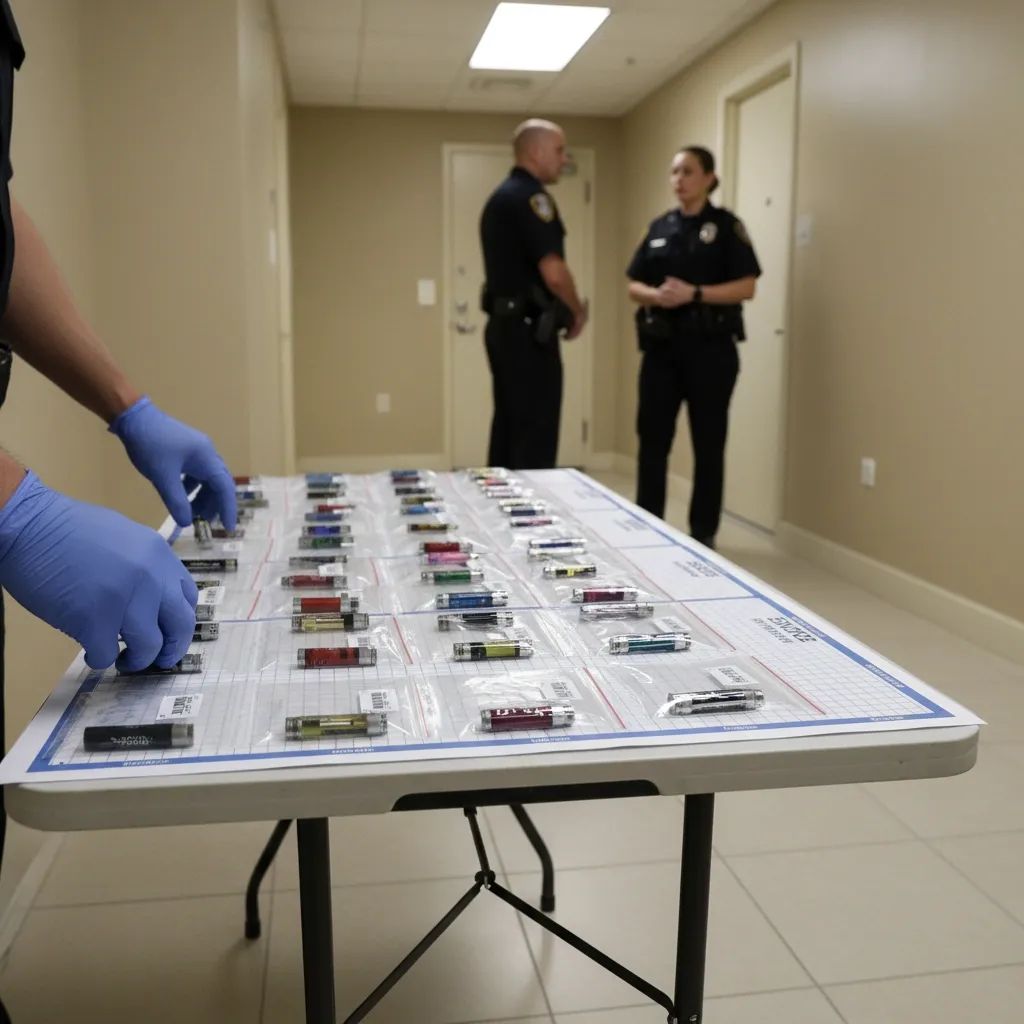
The Thailand Central Investigation Bureau has shut down a brazen e-cigarette manufacturing operation that openly mocked law enforcement during live TikTok streams. The bust netted equipment worth ₿12 million and exposed the country's first confirmed domestic vaping factory. The gang was pumping narcotic-laced "zombie vapes" into the hands of young users.
Why This Matters:
• Narcotic vapes are circulating: The ring mixed 28 kg of Etomidate, a Category 2 controlled substance, into vape liquid—a formula that can cause immediate respiratory failure.
• Youth are the target: The gang's TikTok content, featuring masked figures in suits, racked up over 10 million views and 3 million followers, normalizing illegal products among teenagers.
• Penalties are severe: Sellers face up to 3 years in prison and substantial fines; possession alone can land users in legal trouble.
• The market is exploding: E-cigarette users in Thailand surged from 78,000 in 2021 to an estimated 2 million in 2024, despite a total ban since 2014.
The Operation That Taunted Authorities
The "GM Pot" network didn't just sell vapes—it turned the illegal trade into a lifestyle brand. Members appeared on TikTok livestreams dressed in suits and masks, openly hawking e-cigarettes while building a cult following that treated enforcement threats as background noise. The group's slick online persona, designed to resonate with young audiences, effectively normalized a product that carries criminal liability for both buyers and sellers under Thai law.
When CIB officers raided a house in Samut Sakhon province, they uncovered what investigators are calling the nation's first confirmed full-scale domestic e-cigarette production facility. Previously, most seized vapes in Thailand were imported contraband. This discovery signals a troubling evolution: underground manufacturers are now replicating the entire supply chain within the country, from raw chemical mixing to finished product packaging.
The haul included 20 pieces of specialized manufacturing equipment—e-liquid injection machines, industrial sealing devices, and assembly-line components—collectively valued at ₿12 million. But the most alarming find was the cache of Etomidate, a powerful sedative classified as a Category 2 narcotic under Thai law. The 28 kg seized at the site was being systematically blended into vape juice to create what street dealers call "zombie vape," a formula that produces intense psychoactive effects but carries the risk of immediate respiratory collapse in cases of overdose.
Three Arrests, Three Roles
Authorities took three suspects into custody, each responsible for a distinct segment of the operation. One managed the livestream sales, orchestrating the TikTok broadcasts that became the gang's primary revenue engine. Another oversaw the physical premises, ensuring the production line ran smoothly and inventory remained stocked. The third handled customer communications, responding to direct messages and facilitating orders that flowed in by the hundreds daily.
The CIB has made clear that financial investigators are now tracing the money trail, hunting for the masterminds who bankrolled the equipment and sourced the narcotics. The arrests represent operational disruption, but authorities believe higher-level organizers remain at large.
The "Zombie Vape" Formula
Etomidate, typically used in medical settings as a short-acting anesthetic, has found a disturbing second life in Thailand's black-market vaping scene. When mixed into e-liquid, it delivers a sedative high that has become popular in entertainment venues and nightlife districts. Dealers charge inflated prices for the formula, and police say the effects on the nervous system are profound and dangerous.
Overdose scenarios can spiral rapidly: users experience confusion, loss of motor control, and in severe cases, respiratory failure within minutes. The substance's popularity among younger users—many of whom believe they're simply vaping flavored nicotine—has raised alarm bells across public health agencies. The Thailand Ministry of Public Health has issued warnings, but the messaging struggles to compete with the aspirational branding that influencers attach to vaping culture.
A Market Growing Faster Than Enforcement
Thailand's complete ban on e-cigarettes—covering import, sale, possession, and use—has been in place since 2014. Yet user numbers tell a story of runaway demand. From roughly 78,000 vapers in 2021, the population has grown to an estimated 900,000 in 2024. The rise of disposable pods, aggressively marketed by influencers on TikTok and Instagram, has normalized the behavior among teenagers who view the law as toothless.
Between March 2024 and March 2025, the Ministry of Digital Economy and Society blocked 9,515 URLs tied to illegal vape sales and shut down 14 TikTok accounts. In April 2025, a separate operation dismantled the "Shisha Chic" network, which was processing over 1,000 orders daily and yielded a seizure of more than 20,000 vape products and seven arrests.
The Thai Cabinet ordered an overhaul of the Tobacco Products Control Act in October 2025, responding to mounting evidence of youth nicotine addiction. Yet enforcement remains a game of digital whack-a-mole: accounts reappear under new names, and encrypted chat apps facilitate transactions that evade traditional monitoring.
What This Means for Residents
If you live in Thailand, the legal landscape around e-cigarettes is unambiguous and unforgiving. Possession of any vaping device or e-liquid can result in arrest. While the maximum penalty includes fines up to ₿30,000 and jail time, enforcement varies in practice: tourists seized at airports typically face fines and confiscation, while residents are more likely to face stricter prosecution and court proceedings. Sellers face up to 3 years in prison, and importers are subject to even harsher sentences.
For parents, the TikTok angle is the critical vulnerability. The platform's algorithm amplifies content that garners engagement, and the "GM Pot" gang's masked influencer aesthetic hit the sweet spot for teen audiences. Conversations about online safety now need to explicitly address the risks of influencer-driven contraband marketing, where the line between entertainment and criminal enterprise is deliberately blurred.
What parents and residents should watch for:
• Teen TikTok accounts following masked figures promoting lifestyle products without clear branding
• Direct messages from unknown accounts offering "premium" or "specialty" vapes
• Sudden changes in teen behavior, confusion, or unexplained drowsiness that could indicate experimentation with narcotic-laced products
To report suspicious activity, you can flag TikTok accounts directly through the app's reporting feature or contact the Thailand Internet Crimes Against Children (ICAC) unit through the Royal Thai Police's official website.
For verified information on vaping laws and health risks, consult the Thailand Ministry of Public Health website or contact local district health offices—they provide resources in Thai and English specifically for families and expatriates.
Expats and visitors should understand that customs officers actively screen for vaping products at airports. Stories of travelers being fined or detained for carrying personal-use vapes are routine. The Thailand Royal Police and CIB have made enforcement a visible priority, and the current political climate under Prime Minister Paetongtarn Shinawatra has intensified crackdowns as part of a broader anti-drug and public health agenda.
The Road Ahead
Thai authorities are now pushing for AI-powered monitoring tools to detect and shut down illegal vape sales in real time across social platforms. Talks with TikTok executives in 2025 resulted in pledges of cooperation, but the platform's global scale and the ease of creating new accounts make sustained compliance difficult.
Investigators are also focusing on supply chain disruption—tracking shipments of Etomidate and other controlled substances used in adulterating vape products. The discovery of a domestic production facility shifts the enforcement calculus: rather than intercepting imports at borders, police must now identify and raid hidden factories scattered across provinces.
Public health advocates are calling for a dual approach: tougher penalties paired with harm-reduction education that acknowledges the reality of widespread use. Critics of the current law argue that criminalization without robust prevention simply drives the market further underground, where product safety is nonexistent and narcotic adulteration becomes routine.
For now, the message from the CIB is clear: the days of openly taunting law enforcement on livestreams are over. But whether the underlying market can be tamed remains an open question in a country where demand, fueled by social media trends, continues to outpace the state's capacity to enforce a blanket ban.


