
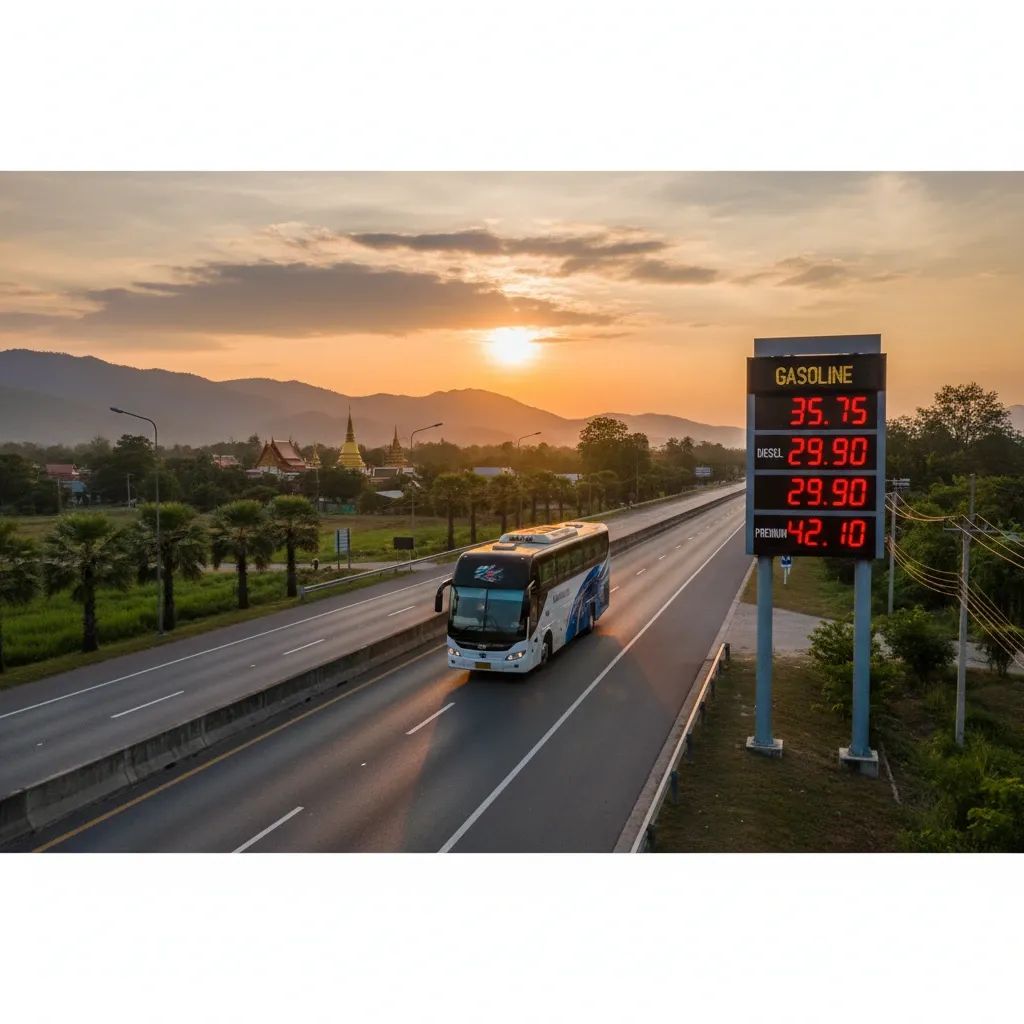
Diesel prices fell below 40 baht per liter this week, triggering a 3-satang-per-kilometer fare reduction across Thailand's interprovincial bus network. On April 29, the Thailand Department of Land Transport (DLT) reduced fares for long-distance Category 2 and Category 3 buses following a formula tied to real-time fuel costs. For passengers planning regional travel, the savings are straightforward: a journey from Bangkok to Udon Thani (approximately 450 kilometers) now saves roughly 13.5 baht per ticket.
What Changed and Why It Matters
• Immediate savings: A 100-kilometer journey costs 3 baht less under the new rates, effective immediately through April.
• Temporary relief: Diesel B7 currently sits at 40.20 baht per liter, but a 0.60-baht-per-liter increase takes effect May 1, likely consuming most or all of today's discount by mid-May when fares reset.
• Monthly adjustments ahead: Thailand's fare model now adjusts monthly based on Consumer Price Index, Energy Index, and labor costs. Passengers should expect fares to fluctuate 2–5 satang per kilometer depending on fuel price movements.
How the New Formula Works
The Thailand Department of Land Transport operates under a system that responds to three variables: general inflation (CPI), diesel B7 and B20 pump prices, and driver payroll trends. This represents a shift from the previous model, where fare adjustments required months of cabinet-level approval. The new system allows for incremental adjustments tied directly to measurable market data.
Sorapong Paitoonphong, the DLT director-general, explained that diesel constitutes roughly 45% of a typical bus operator's total cost structure. When fuel prices swing sharply, the formula automatically triggers adjustments. The April 29 reduction reflects diesel's retreat from April 3 highs (47.74 baht per liter) to current levels around 40.20 baht.
What Residents Need to Know
For travelers relying on interprovincial buses, the key takeaway is simple: fares will now shift monthly rather than remain static. Whether planning visa runs to neighboring countries, weekend trips to Chiang Mai, or family visits upcountry, confirm current fares 48 hours before departure.
Student, senior, and disabled passenger discounts remain unchanged under existing approval frameworks. However, base adult fares now adjust with fuel price movements tracked by the Thailand Oil Fuel Fund Committee.
For business travelers and logistics coordinators planning multi-month travel contracts, the new variability introduces scheduling uncertainty. Routes may cost 2,000 baht per seat one month and 2,030 baht the next if diesel prices climb.
The May 1 Price Increase Ahead
Even as passengers benefit from this week's savings, the Thailand Oil Fuel Fund Committee has approved a 0.60-baht-per-liter increase effective May 1. Diesel B7 will rise from today's 40.20 to 40.80 baht; B20 will climb from 33.20 to 33.80 baht. This adjustment reflects global crude market conditions and the fund's operational requirements.
That single 0.60-baht increase will likely consume most or all of today's 3-satang savings within a single review cycle. Passengers should expect bus operators to announce updated fares by mid-May following the DLT's monthly review process.
Planning for Fare Variability
Thailand's transport pricing framework shifted in 2026 toward systematic formula-based adjustments rather than irregular political decisions. The previous model kept fares frozen for extended periods, then applied sudden 10–20% increases when administrative approval aligned with cost pressures. Passengers absorbed those shocks; operators absorbed demand drops following unpopular hikes.
The new monthly adjustment approach aims to normalize gradual shifts, distributing volatility across time rather than concentrating it in headline announcements. Industry observers expect diesel to oscillate between 38–43 baht per liter through the second quarter of 2026, implying fares could fluctuate within a 2–5 satang range per kilometer during any given month.
For foreign residents accustomed to stable European or North American transit pricing, Thailand's monthly variability represents a significant change. Building a 5–10% buffer into personal or business travel budgets provides practical protection against unexpected fare increases between booking and departure.
Key Takeaway
Bangkok-Udon Thani trips now cost approximately 13 baht less on average. This discount likely persists through April and early May before the May 1 diesel increase triggers an upward fare adjustment. Monitor DLT announcements in late April and early May for updated pricing schedules, and confirm fares immediately before booking long-distance travel.


