
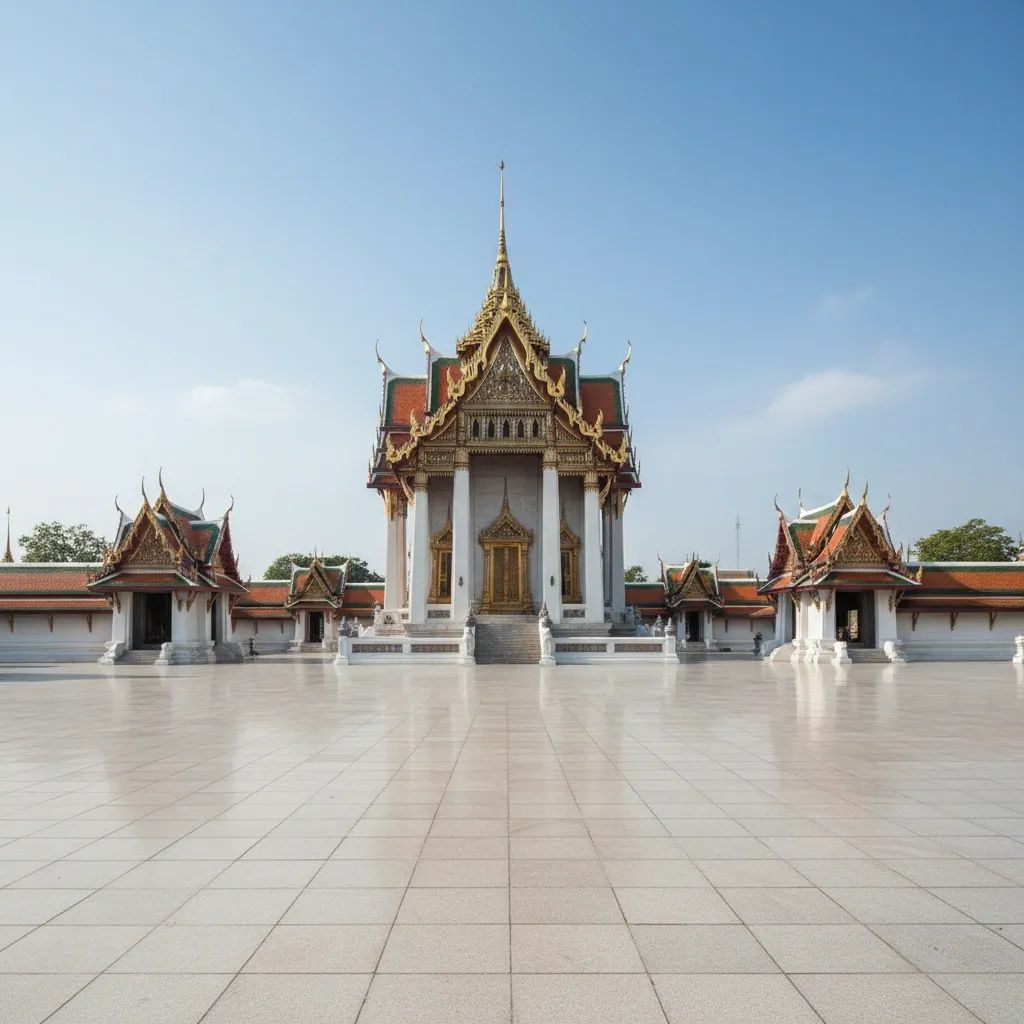
When children live in temples to escape poverty or access schooling, they place themselves under the care of institutions that have historically operated with minimal external oversight. Last week, that implicit trust fractured further when the Thailand Royal Police arrested two monks at a Charoen Krung temple on Thursday, March 19, 2026, revealing allegations of systematic abuse against seven novices and exposing an ecosystem that has tolerated predatory behavior for decades. The case illuminates a hard reality: reverence for Buddhist clergy has inadvertently created the conditions for exploitation.
Why This Matters
• 33,510 long-term novices live in Thai temples, many lacking legal recourse or guardians to advocate for them when abuse occurs.
• The National Office of Buddhism is advancing a legislative fix—criminal penalties of 1-7 years imprisonment for monks engaging in sexual misconduct, addressing what has been a significant legal blind spot.
• Recent arrests and royal interventions signal a shift from institutional silence toward prosecution, but enforcement remains inconsistent and protective infrastructure is still being built.
The Scale of the Problem Becomes Clear
The arrests of Phra Khru Sangkarak Chondaen ("Phra Toon") and Phra Maha Siwabutr ("Phra Ta") are not anomalies—they represent part of a troubling pattern. Police seized more than 100 explicit video clips from their quarters, and evidence suggests the abuse extended to at least 30 separate assaults across seven identified victims. These are not the desperate acts of isolated individuals. The discovery of gambling equipment, alcohol, and contraceptives alongside the digital evidence points to a deliberate pattern of grooming and exploitation.
Both monks reportedly lured novices to their private rooms using modest inducements—a smartphone or 500 baht (roughly equivalent to a day's unskilled labor wage). For children living in temples, such offerings create an impossible power dynamic. Refusal risks social isolation or retaliation from trusted authority figures. Compliance guarantees escalating harm.
The timeline matters. Phra Ta had an outstanding warrant since November 2024, suggesting the investigation took months to materialize. Phra Toon's arrest warrant was issued on March 17, 2026, with both men taken into custody two days later on Thursday, March 19, 2026. The gap between alleged abuse, investigation, and apprehension reveals something uncomfortable: even in documented cases, the institutional machinery moves slowly.
How the Investigation Unfolded
The breakthrough came from outside the monastic system. The Pavena Hongsakul Foundation for Children and Women, a non-governmental organization specializing in child protection, filed the formal complaint that triggered police action. This reflects a consistent reality in Thai abuse cases—NGOs and civil society actors often move faster than bureaucratic agencies trapped within hierarchical approval chains.
When police conducted searches at the monks' quarters, they found more than photographic or video evidence. The inventory of prohibited items—alcohol, condoms, lubricants—painted a picture of deliberate concealment and violation of monastic discipline. Both men reportedly confessed during questioning and voluntarily disrobed before transfer to prosecutors. The disrobing is procedurally significant: it removes them from ecclesiastical jurisdiction and places them squarely in the secular criminal system where standard evidentiary rules and sentencing guidelines apply.
The Institutional Gap That Enabled Abuse
Thai temples operate as semi-autonomous entities, each presided over by an abbot who exercises near-total control over temple assets, personnel, and operations. Financial oversight is minimal. Investigations conducted between 2017 and 2020 by the Thailand Development Research Institute (TDRI) documented widespread embezzlement and money laundering involving both monks and officials from the National Office of Buddhism, the government agency supposedly responsible for monastic supervision. If temples cannot prevent financial fraud, they were never going to catch sexual abuse on their own.
The Sangha Supreme Council, the nominal disciplinary body for the Buddhist clergy, has been criticized for sluggishness and institutional protectionism. When misconduct allegations arise, the hierarchical structure incentivizes silence. Junior monks face pressure to stay quiet. Senior monks resist external scrutiny. Abbots, accustomed to unchallenged authority, dismiss complaints as internal matters.
The Supreme Patriarch introduced new transparency policies in January 2026, weeks before the Charoen Krung arrests, yet implementation remains patchy and independent inspection mechanisms are largely absent. Without external auditors, surprise inspections, and mandatory reporting protocols, temples remain environments where predatory individuals can operate with confidence that exposure is unlikely.
What This Means for Families and Residents
Parents considering temple education face an uncomfortable calculus. Thailand's monastic system offers genuine educational benefits and operates countless temples responsibly. Yet the arrests in Charoen Krung prove that standard background checks and reference systems are insufficient.
When evaluating temples, families should directly inquire about:
• Whether temples have implemented written child protection policies and background screening for monks with direct access to novices
• Whether supervisory staff are present during novice education and sleeping quarters are monitored
• What mechanisms exist for victims to report abuse without fear of retaliation or institutional cover-up
• Whether the temple's abbot and senior monks have any prior disciplinary records or complaints
The Charoen Krung temple in Bangkok is now associated with these arrests, and parents in the area should be aware when considering educational or residential placements for children.
The Pavena Hongsakul Foundation operates a helpline (02-513-1100) for families and children to report suspected abuse and access support. The Thailand Royal Police have established a dedicated reporting channel on Facebook as part of a nationwide effort to encourage the public to identify misbehaving clergy.
For foreign residents and long-term expatriates, these developments reflect evolving tensions within Thai society—between traditional religious reverence and contemporary governance standards. Thailand's courts are now prosecuting cases that would have been quietly contained a decade ago. Whether that shift in enforcement becomes permanent depends partly on external pressure and public attention. International media coverage has historically spurred faster Thai official responses on sensitive issues.
The Legal Landscape Shifts
Existing Thai criminal law provides severe penalties when monks are prosecuted for child sexual abuse. A former monk received 16 years imprisonment for abducting and raping a 13-year-old girl. Another was sentenced to 124 years for human trafficking and exploitation of teenage boys (capped at the statutory maximum of 50 years under Thai law). These precedents demonstrate that the courts take such crimes seriously when they proceed to trial.
However, a deliberate legal gap persisted: no specific statute criminalized consensual sexual relations involving adult monks. The National Office of Buddhism has now drafted amendments to the Sangha Act that would close this gap, creating criminal penalties of 1-7 years imprisonment and fines of ฿20,000 to ฿140,000 for monks (and laypeople) engaging in sexual misconduct. The proposal signals recognition that institutional discipline alone has failed.
Public opinion backs reform forcefully. Surveys consistently show Thais support punishing clergy who violate monastic vows and enacting legislation to protect Buddhism's social standing. This represents a significant shift—what critics once called a "culture of impunity" around powerful clergy is visibly eroding.
What Happens Next
Prosecution of the Charoen Krung case will proceed through the criminal court system, with the Office of the Public Prosecutor building arguments around victim testimony and the substantial digital evidence seized. Both defendants remain removed from the monastic order and will face standard criminal procedures with no ecclesiastical protections.
The outcome will test whether Thailand's judicial system can sustain momentum on high-profile clergy cases without losing attention to less visible incidents. Investigations as far back as 2004-2005 identified monks as perpetrators in multiple child sexual abuse cases. A 2024 scandal involved a monk expelled after authorities discovered 75 gigabytes of child abuse material on his devices. These earlier incidents rarely received sustained legal or institutional follow-up.
Whether proposed legislative reforms pass, how vigorously they are enforced, and whether temples implement genuine protective infrastructure will determine whether Thai Buddhism can restore public confidence. For now, the Charoen Krung arrests serve as a reminder that institutional power—especially when invested with religious authority—provides no sanctuary from accountability when vulnerable children are harmed.


