
Opening
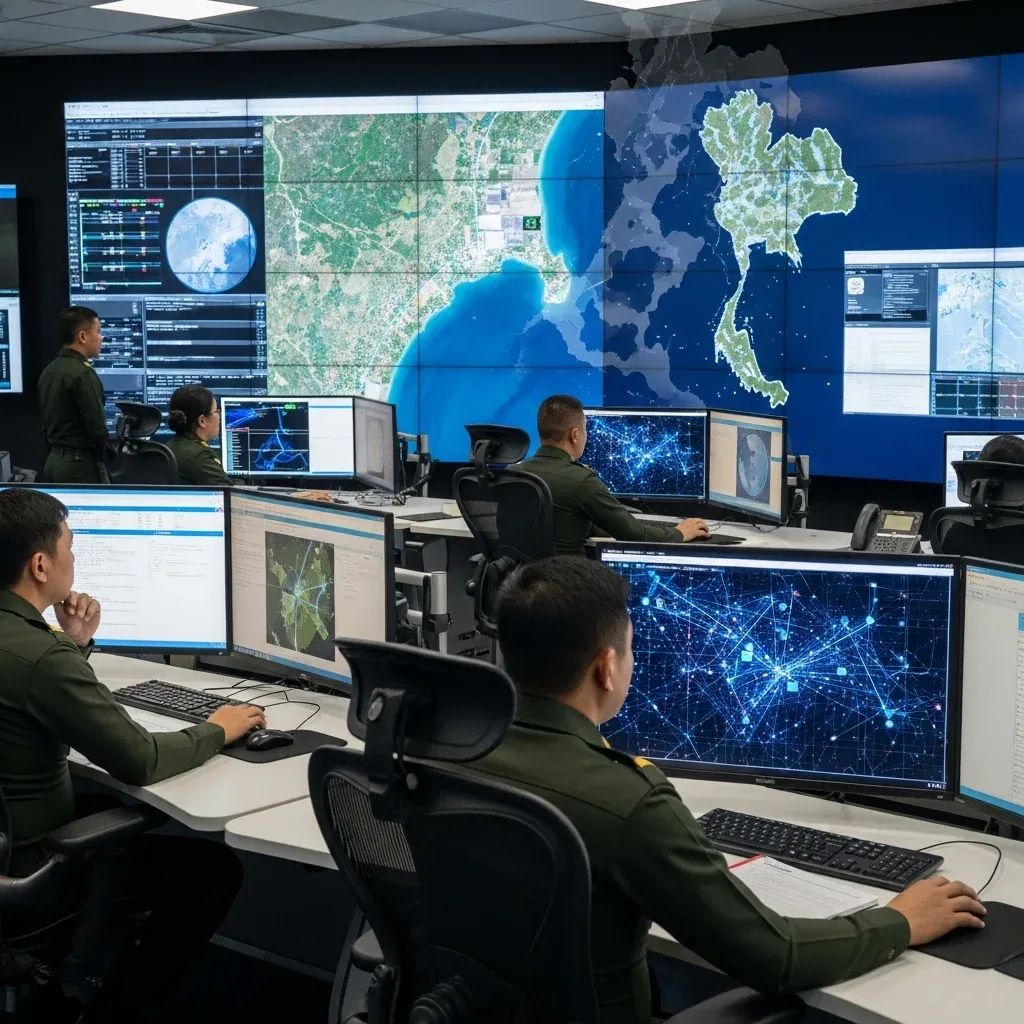
Southeast Asia's vulnerability to undersea sabotage represents an emerging strategic concern. Thailand and Singapore have agreed to strengthen defense cooperation including joint protocols to protect submarine cables, oil pipelines, and data networks — a recognition that modern security threats increasingly operate beyond traditional military boundaries. The agreement, struck during Singapore's Defence Minister Chan Chun Sing's official visit to Bangkok on April 27, 2026, commits both countries to developing bilateral frameworks addressing what strategists call "critical underwater infrastructure" (CUI) — the submarine cables and energy pipelines that connect the region's digital economy, energy supplies, and financial systems. Thailand is currently reviewing related draft documents to help turn this cooperation into concrete operational action.
Why This Matters
• Submarine cables carry vast amounts of cross-border data traffic — disruption to these cables can affect banking systems, communications, and business operations across the region.
• Thailand is reviewing joint defense protocols with Singapore, covering monitoring standards, threat response procedures, and intelligence sharing for subsea threats.
• Cyber cooperation expands beyond government into incident response frameworks, ransomware tracking, and coordinated efforts to disrupt online scam networks operating across Southeast Asian borders.
• Military interoperability deepens through expanded training access, positioning both nations to strengthen operational capabilities for emerging 21st-century threats.
The Subsea Chokepoint
For most residents, the infrastructure enabling modern life — ATM withdrawals, international fund transfers, video calls to relatives abroad — operates invisibly beneath the surface. The South China Sea funnels significant data traffic connecting Thailand to North America and Europe through submarine cables where competing powers maintain strategic interests. These cables carry financial transactions for Bangkok's stock exchange, medical imaging for hospitals across the region, and communications infrastructure critical to modern economic activity.
Submarine cables have become recognized as strategic assets. Recent incidents globally have demonstrated that cable disruption poses potential risks to digital connectivity. Thailand's position as a regional crossroads means it has exposure to multiple submarine cables owned by different operators. Disruption to critical cables could affect Thailand's financial systems and digital connectivity.
Singapore's initiative for a bilateral framework reflects recognition that cable infrastructure requires coordinated response mechanisms rather than isolated corporate efforts. The two ministers agreed that Thailand and Singapore would develop operational protocols — essentially procedures for detecting potential threats, coordinating responses, and maintaining backup communications when primary cables face disruption. Both governments are now reviewing related draft documents outlining monitoring standards, response timelines, and intelligence-sharing mechanisms.
The oil and gas infrastructure adds another consideration. Thailand imports energy through submarine pipelines, and disruptions could carry economic consequences. Unlike communication cables, which can sometimes reroute traffic, energy infrastructure offers limited alternative routes.
Cyber Threats and Cooperation Frameworks
While submarine cables represent one dimension of infrastructure vulnerability, the digital systems managing them require coordinated defense. Thailand and Singapore have agreed to expand cybersecurity cooperation through frameworks designed to move beyond joint statements into collaborative incident response capability.
The foundation was laid in February 2025 at CyberSec Asia, where Singapore and Thai agencies conducted joint threat simulations and established strategic partnerships focused on ransomware defense, state-sponsored espionage prevention, and efforts to disrupt international fraud networks. Thailand's Technology Crime Suppression Bureau and Singapore counterparts are positioned to coordinate on cross-border cybercrime issues, demonstrating potential for operational collaboration.
The two nations now commit to developing a bilateral cybersecurity action plan emphasizing threat intelligence sharing and capacity building. More concretely, this means Thai technicians will gain access to Singapore's advanced threat detection systems, while Singapore receives data from Thailand's border monitoring networks — infrastructure useful for identifying cross-border criminal activity.
Transnational cybercrime affecting Thai nationals remains a concern. Prime Minister Anutin Charnvirakul has championed regional cooperation to address these issues, and Singapore has pledged participation. Enhanced intelligence sharing is intended to accelerate disruption of these criminal networks, though enforcement remains complicated by jurisdictional factors.
Immediate Implications for Digital Infrastructure
For residents, the practical importance centers on network reliability and digital security. Banking depends on international connectivity. Cable disruptions can affect ATM services, delay transactions, and potentially disrupt trading. Thailand's growing fintech sector — digital payment platforms, online insurance, cryptocurrency exchanges — operates on assumptions of reliable connectivity that infrastructure agreements aim to strengthen.
The cyber dimension affects personal security. Enhanced intelligence sharing should improve detection and response capabilities when Thai hospitals, universities, or government offices face cybersecurity threats. The Technology Crime Suppression Bureau's engagement with regional partners positions it to better respond to international fraud cases.
Healthcare providers, financial institutions, and utility companies benefit from coordinated defense approaches. When incidents occur, standardized procedures and established communication channels can reduce operational disruption. For ordinary residents, this means potential reductions in service interruptions when systems face threats.
Training Continuity and Interoperability Gains
Chan's visit reaffirmed that Singapore maintains training access to Thai military facilities — an arrangement benefiting both nations while supporting host communities. Thailand confirmed its support for Exercise Kocha Singa (annual army exercise), Exercise Singsiam (air force), and participation in Exercise Cobra Gold, one of the Indo-Pacific's largest multinational drills.
The March 2026 Exercise Cope Tiger, hosted at Korat Air Base, involved significant Singapore air force personnel and aircraft for trilateral coordination with Thailand and the United States. These exercises maintain combat readiness while building interoperability relevant when crises occur. Thai pilots gain exposure to advanced Singapore air defense tactics and drone operations — capabilities increasingly important as Thailand modernizes its military capabilities.
Thailand benefits from these partnerships. Access to Singapore's training programs and technology cooperation strengthens Thai capability against evolving threats. The relationship is reciprocal: Singapore benefits from Thailand's terrain and training facilities, making Thai bases valuable for realistic combat preparation.
Regional Stability Architecture
Both ministers emphasized that bilateral defense ties operate within the broader ASEAN framework, particularly through the ASEAN Defence Ministers' Meeting (ADMM) and ADMM-Plus structures. These forums serve as the region's primary coordination mechanism for shared challenges — maritime security, humanitarian disaster response, pandemic preparedness, and increasingly, hybrid threats combining cyber and physical dimensions.
Thailand's geographic position makes this cooperation strategically important. The nation borders Myanmar, Laos, Cambodia, and Malaysia — proximity to areas affecting regional stability. Singapore's engagement with Thailand reinforces broader Southeast Asian security cooperation, particularly as both nations navigate competitive dynamics in the region.
Thailand's membership in the Partnership for Indo-Pacific Industrial Resilience (PIPIR) — joined in March 2026 as the 15th member — complements these arrangements by building practical defense supply chain cooperation. The initiative facilitates joint production, equipment sharing, and distributed repair capacity, strengthening regional cooperation while reducing concentrated dependence on individual external suppliers.
Modernization Agenda Under New Leadership
Lieutenant General Adul Boonthamcharoen assumed Thailand's defense portfolio on March 31, 2026, with a focus on sovereignty, border security, military modernization, and public safety. His policy framework extends security considerations beyond military equipment to regional stability and national interests.
Thailand has allocated approximately 31 billion baht ($995 million) for defense procurement in fiscal 2026, with emphasis on strengthening domestic defense capabilities. This represents a shift toward building Thailand's industrial capacity while reducing concentrated dependence on external suppliers.
Lieutenant General Adul's reform initiatives include modernizing the volunteer soldier program to provide vocational training, improved welfare, and genuine career development beyond military service. As Thailand's population structure changes and recruitment faces challenges, transforming military service into a pathway for skill acquisition addresses recruitment needs while improving prospects for those completing service.
The Coordination Imperative
The April 27 meetings reflect evolving security perspectives in Southeast Asia. Contemporary threats include data security concerns, submarine infrastructure considerations, and cybersecurity challenges — issues that transcend traditional military responses. Modern defense requires coordination across government agencies, private infrastructure operators, and regional partners.
Singapore's role as a regional hub gives it particular importance for cybersecurity coordination. The ASEAN Regional CERT, located in Singapore, coordinates incident response across member states, and Thailand's deeper integration into these networks improves its capacity to identify and address emerging threats.
The infrastructure sustaining modern economic activity depends on cooperation that often operates far from public attention: submarine cable monitoring, cybersecurity operations, and cross-border coordination to address criminal networks. The Thailand-Singapore defense agreement is ultimately recognition that this critical infrastructure requires active protection and coordinated response mechanisms. For residents, the basic understanding is this: the connectivity and stability enabling daily life depend on decisions made by defense and security officials, translated into operational cooperation in undersea environments and digital networks where protection efforts remain largely unseen.


