
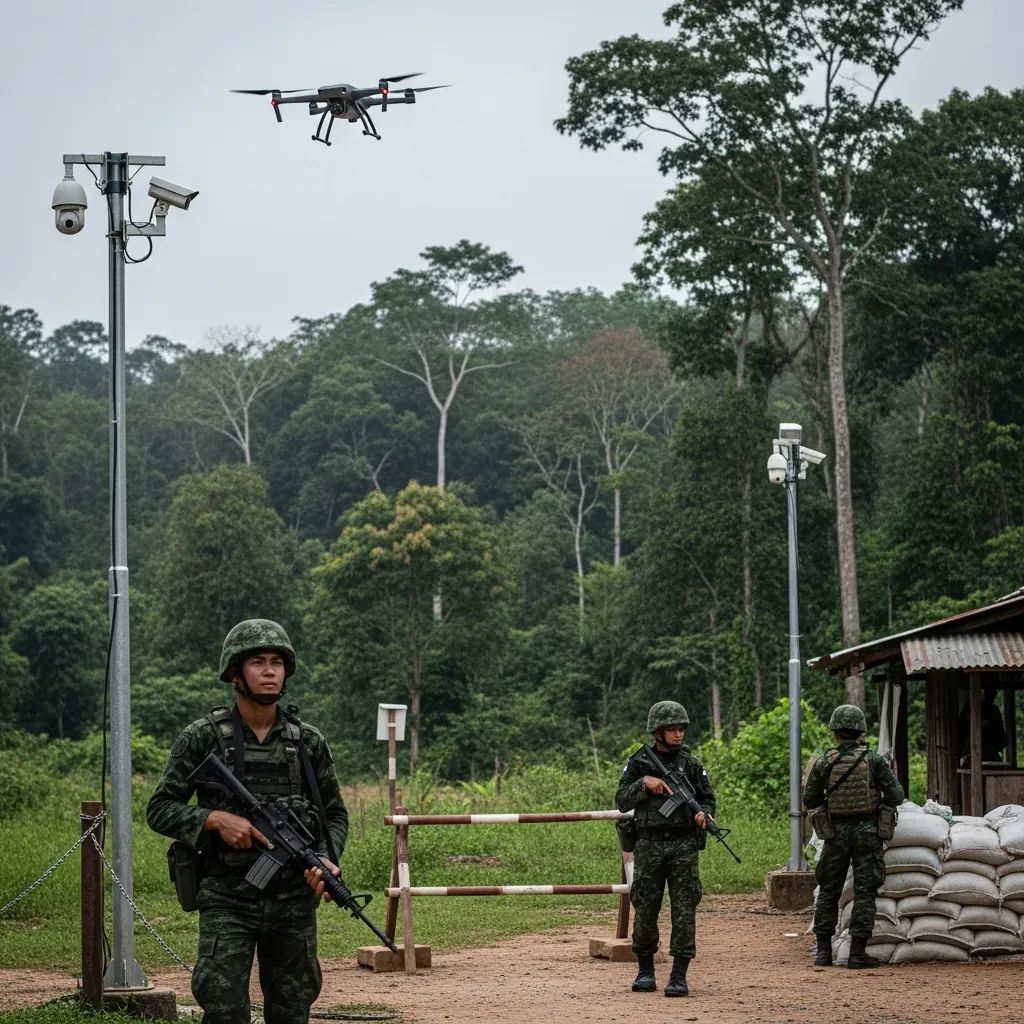
The security build-up along Thailand’s frontiers is entering its final stretch as the country moves into the last fortnight before the 8 February general election. Defence officials insist they are tightening every bolt—from remote border crossings to the insurgency-hit deep South—while underlining the army’s pledge to keep politics and soldiers firmly apart.
Key Points At A Glance
• Troop numbers reinforced at northern and southern border checkpoints; drones and CCTV added.
• Three southernmost provinces—Pattani, Yala and Narathiwat—receive an extra layer of counter-insurgency patrols.
• Armed forces reiterate strict neutrality; military bases will be opened for campaigning only if the Election Commission (EC) requests.
• Voter transport from remote hamlets must be coordinated by Interior Ministry officials, not the army.
• Authorities warn of rising waves of fake news claiming the poll will be cancelled.
Election Mood Reaches the Border Gates
Guard posts in Chiang Rai, Tak and the Mekong corridor have been told to raise their alert level from routine ‘yellow’ to ‘amber’. That means more frequent ID checks, longer drone flights above forest tracks and random vehicle searches at unofficial crossings that smugglers—or provocateurs—sometimes use. Defence Minister Natthaphon Nakphanit said he ordered commanders to “triple-check” supply routes that could be exploited to slip weapons or disinformation leaflets into the country. The push, he stressed, is not new but “intensified” because of the looming election. Meanwhile, army engineers have been installing additional thermal cameras, extending cellular reception for patrol units and working with immigration police to share live feeds.
Keeping the Deep South Calm
While the rest of the nation debates party manifestos, residents in the trio of southern border provinces live with a different soundtrack—sporadic explosions and nightly gunfire. The Internal Security Operations Command (ISOC), chaired by the Prime Minister and vice-chaired by the army chief, has authorised a surge of 400 paratroopers to reinforce ranger companies already on village perimeters. Local commanders now conduct 24-hour “ring patrols”, circling polling centres at varying intervals to stay unpredictable. At the same time, civil society groups such as the อปพร. community volunteers receive briefings on how to spot suspicious objects near schools that will serve as voting stations. Crucially, development officers continue to hand out small-business grants—in line with the belief that economic inclusion is one antidote to unrest. Military sources say these grants lower the risk of attacks timed to delegitimise democratic events.
Neutrality Test for the Armed Forces
Thai history is crowded with chapters where the khaki uniform wandered into the voting booth. Determined to avoid that script in 2026, defence headquarters re-circulated a memo banning officers from endorsing any candidate on social media, wearing party insignia off-duty or appearing onstage at rallies. Pro-democracy academics praise the clarity but will watch the enforcement: opening a base for campaigners, even “case by case”, could still create an “optics” problem if one party gets easier access. Natthaphon counters that every request must be channelled through the EC, logged, and—importantly—broadcast live on the garrison’s Facebook page so citizens can judge fairness in real time. Human-rights lawyers say the livestream idea is novel but the real metric will be whether all parties feel confident enough to make the same request. So far, none have.
Getting Remote Voters to the Ballot Box
From Mae Hong Son’s mountain hamlets to island villages in Satun, the simple act of voting can require a boat ride, a pick-up truck and a motorbike. Military wagons may look like a quick fix, yet election law treats free rides from state agencies as a potential form of inducement. Therefore, any transport must be requested first by the district chief, co-signed by the provincial governor and then forwarded to the local garrison. Officers can provide drivers and fuel only after the Interior Ministry’s green light. In 2019, more than 120,000 voters used this channel; officials expect a higher figure this year because online registration for absentee ballots closed earlier than many villagers realised. The Transport Co. bus firm has already sold out most Bangkok–Isaan routes for the election weekend, indicating a strong turnout despite the logistical maze.
Rumours, Trolls and the Fight for Facts
Scrolling through Thai-language social feeds lately can feel like wading through a swamp of “no election” conspiracy posts, doctored videos and deepfake audio clips allegedly featuring senior generals. Natthaphon admitted he personally filed a police complaint against one Facebook page, only to withdraw it when he discovered the admin was a disabled person scraping a living from clickbait. His anecdote underscores a wider dilemma: how to balance tough action against malicious content with empathy for citizens caught in the digital economy’s darker corners. Cybercrime officers have since opened a “24/7 election rumour desk” on the LINE app where users can forward suspicious links. The desk’s first 10 days logged 3,900 tips, roughly half of which involved claims that martial law would be declared on polling eve—rumours flatly denied by Government House.
What It Means for Voters in Thailand
For the average voter, two takeaways matter most. First, expect heavier security presence at checkpoints, train stations and even shopping malls, but remember it is there to protect the ballot, not suppress it. Second, treat sensational online claims with scepticism and cross-check with official channels such as @ThaiElection2026 on X (Twitter) or the EC’s Smart Vote app. In a contest where every seat could tilt the coalition math, turnout—especially from remote constituencies—will be pivotal. Generals, governors and grassroots activists all agree on one point: the credibility of next month’s result rests as much on citizens’ vigilance as on soldiers’ patrols.


