
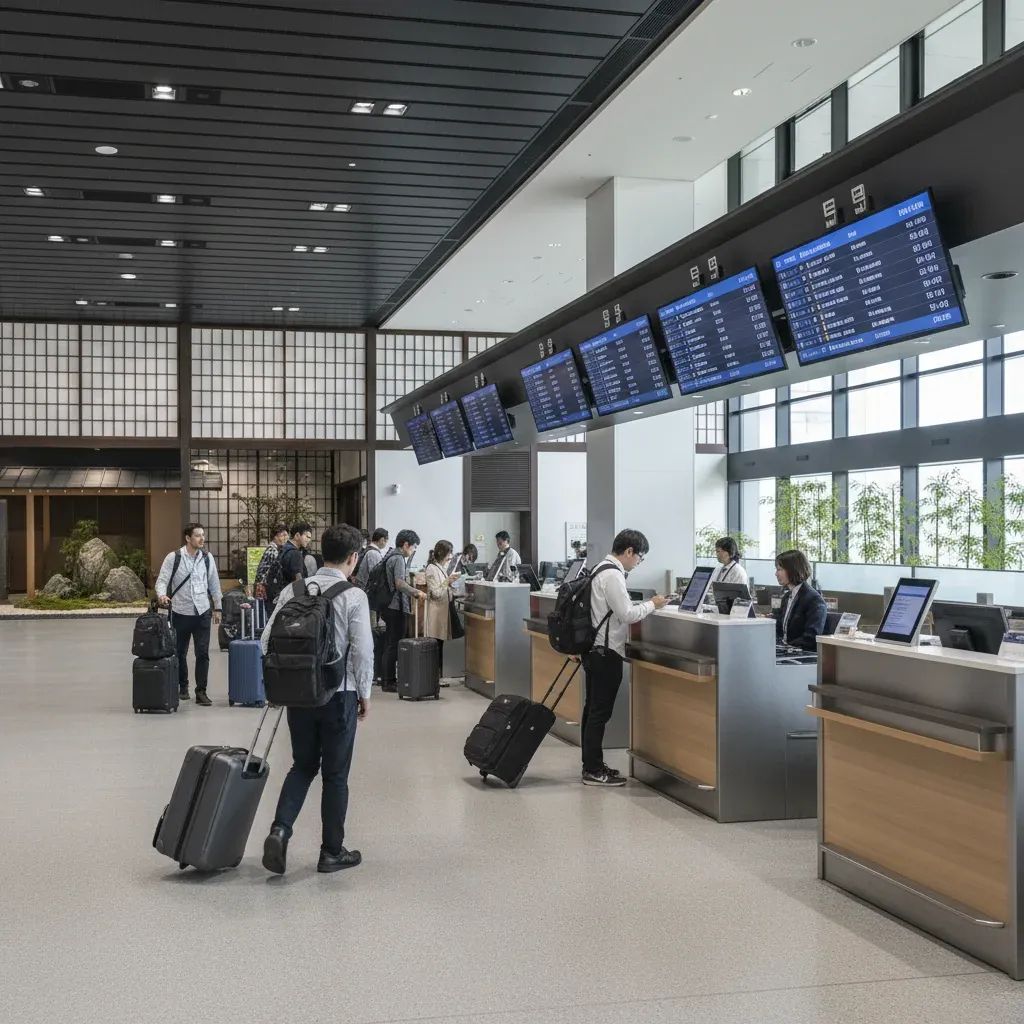
Thailand passport holders preparing travel to Japan face an evolving immigration landscape—but not immediately. While initial reports suggested urgent online approval requirements, the Thailand Ministry of Foreign Affairs and Japan Immigration Services Agency clarify that the system will not roll out until fiscal year 2028, giving travelers roughly two more years under the current framework.
This article addresses requirements for all residents of Thailand—both Thai nationals and foreign expats—planning tourist or business trips to Japan.
Why This Matters
• No immediate change: Thai nationals can still travel to Japan under the 15-day visa-exempt rule without online pre-authorization through 2026 and 2027.
• Future requirement: Starting 2028, all visitors must obtain JESTA (Japan Electronic System for Travel Authorization) approval online before boarding, similar to the U.S. ESTA system.
• Residence visa fees increasing: Japan is raising fees for long-term residence applications in fiscal 2026, with standard applications climbing to ¥100,000 (~20,800 THB) and permanent residency permits jumping to ¥300,000 (~62,400 THB). Tourist visits remain unaffected by these fee increases.
• Stricter enforcement: Tokyo is implementing a "Zero Illegal Overstayers Plan" with enhanced screening, deportation escorts, and penalties including up to 3 years imprisonment or ¥3 million fines for visa violations.
Current Rules for Thai Travelers
Thai citizens enjoy one of the shortest visa-exempt windows to Japan among Southeast Asian nations. The 15-day tourist allowance remains intact for 2026, requiring only a valid passport with six months validity, proof of return travel, accommodation bookings, and sufficient funds. Immigration officers retain discretion to deny entry if financial documentation is insufficient or travel plans appear inconsistent.
For stays exceeding two weeks, Thai applicants must secure a formal tourist visa through the Japan Visa Application Center (JVAC) in Bangkok or the Consulate-General in Chiang Mai for northern province residents. The process demands bank statements showing 2M THB balance or monthly income of 200,000 THB, certified birth and marriage certificates, daily itineraries, and employer verification letters. Processing typically takes five to ten business days, though timelines can extend during peak travel seasons.
The Coming JESTA System
Japan's upcoming pre-screening platform mirrors the U.S. and European Union models, designed to filter out security risks and overstay candidates before they board aircraft. The Japan Electronic System for Travel Authorization will collect passport details, travel itineraries, occupation, accommodation addresses, and answers to security questions. Approval links electronically to the passport, valid for multiple entries over two to three years until the document expires.
Importantly, JESTA approval does not guarantee entry. Upon landing at Narita, Haneda, Kansai, or regional airports, visitors must still register facial images and fingerprints, then undergo standard customs and immigration interviews. Automated facial recognition gates will expedite processing for compliant travelers, but the final admissibility decision rests with border officers.
The anticipated application fee hovers around ¥3,000 (~600 THB), comparable to the U.S. ESTA charge of $21 and the European ETIAS fee of €7. Unlike the European system, which exempts minors and seniors, Japan's preliminary guidelines apply the cost uniformly across all age groups.
Why Japan Is Tightening the Border
Prime Minister Sanae Takaichi confirmed the government's commitment to reducing illegal overstayers through enhanced pre-entry verification. Japan recorded approximately 82,000 visa overstayers as of 2024, a figure officials aim to address through the combination of JESTA screening and domestic enforcement measures.
Starting April 2027, permanent residency status can be revoked for deliberate tax or social insurance evasion. The Immigration Services Agency plans to increase state-funded deportations involving escort officers by 2027, addressing a backlog of foreign nationals who evade removal orders. A comprehensive policy framework approved in January 2026 mandates additional verification documents for renewals, status changes, and permanent residency applications, while foreign residents may face mandatory courses on Japanese language and societal systems.
Ibaraki Prefecture has proposed a cash-reward program for reporting undocumented workers, currently under legislative review for the 2026 fiscal year. Civil rights groups have expressed concerns about the measure, though prefectural officials defend it as a tool for labor law enforcement.
Penalties for Visa Violations
Thailand nationals caught overstaying—even by a single day—are subject to penalties under the Immigration Control and Refugee Recognition Act. These include imprisonment up to three years, fines reaching ¥3 million (~624,000 THB), or both. Violators face immediate deportation orders and re-entry bans lasting five years minimum, with longer prohibitions for repeat offenders.
An overstay violation creates additional consequences. Banks, employers, and landlords conduct routine visa status checks; an expired status triggers account freezes, contract terminations, and housing evictions. Future visa applications to Japan and other developed nations face heightened scrutiny, with immigration databases flagging prior violations. Voluntary surrender to immigration authorities may qualify for the Departure Order System, which allows self-funded departure without escort officers and shorter re-entry bans, though approval is discretionary.
Planning Your Japan Trip: What To Do Now
For Thailand residents making regular trips to Japan, the shift to JESTA introduces new administrative requirements. The two-to-three-year validity eliminates the need for repeated applications, unlike the current system where border officers stamp and question travelers on every entry.
For tourist visits through 2027: Maximize the current visa-exempt period while it lasts. Book shorter itineraries within the 15-day window to avoid visa application costs and processing delays. For business travelers requiring longer stays, initiate visa applications six weeks before departure to account for document preparation and potential additional evidence requests.
For 2028 and beyond: Monitor the Japan Ministry of Foreign Affairs website and Thailand Ministry of Foreign Affairs bulletins through 2027 for JESTA pilot program announcements. Once the platform launches, apply several weeks before booking non-refundable flights to account for potential system adjustments. Maintain meticulous records of previous Japan entries; border officers increasingly cross-reference passport stamps, airline manifests, and immigration databases to verify travel history consistency. A record of compliance with the 15-day limit strengthens future JESTA applications.
The U.S. ESTA now mandates five years of social media accounts, phone numbers, and email addresses, plus detailed family information as of December 2025. If Japan adopts similar data collection standards, applicants should prepare comprehensive digital profiles and accurate employment histories. Inconsistencies between JESTA applications and border interviews can trigger secondary inspections or entry denials.
Regional Context
Japan's move follows a global pattern of digital border management. The U.S. ESTA has operated since 2008, collecting data as security standards evolve. Europe's ETIAS and EES systems aim for late 2026 implementation, creating a synchronized pre-screening environment across developed economies. Thailand itself launched an eVisa platform in 2022 for tourist applications, streamlining inbound visitor processing while digitizing applicant data.
The shift reflects tourism volume pressures. Japan welcomed 25.1 million visitors in 2024, with Thailand ranking among the top ten source markets. Tokyo projects 40 million annual arrivals by 2030, necessitating infrastructure upgrades and automated processing.
Southeast Asian neighbors face varying timelines. Singapore passport holders enjoy Japan's longest visa exemption at 90 days, while Malaysia and the Philippines also receive 15-day allowances. Indonesia negotiated a visa-exempt agreement in 2023. All nationalities will require JESTA authorization starting 2028, creating a level administrative framework across the region. The requirement applies based on passport nationality, not residence—so foreign expats living in Thailand will also need JESTA under their home country's passport.
The Broader Enforcement Campaign
JESTA represents only the external face of Japan's immigration oversight. Domestically, the government is scrutinizing visa renewals for unpaid medical bills, a growing concern as hospitals absorb costs from foreign patients who leave Japan with outstanding balances. Work visa holders face verification of employer compliance with labor standards, particularly in construction and hospitality sectors.
The Immigration Services Agency expanded its investigative staff in fiscal 2026, adding field officers in Tokyo, Osaka, Nagoya, and Fukuoka. Employers caught hiring undocumented workers face fines up to ¥3 million per violation, with repeat offenders subject to criminal prosecution. Language schools and vocational programs undergo annual audits to prevent visa fraud schemes where "students" work full-time instead of attending classes.
For Thailand's Japanese diaspora—estimated at 50,000 to 70,000 including mixed heritage families—the tightened environment raises new administrative demands. Long-term residents report increased document requests at city offices, with bureaucrats demanding proof of continuous residence, tax payment histories, and Japanese language proficiency for routine renewals. The proposed ¥300,000 permanent residency fee has drawn criticism from advocacy groups as a financial barrier.
Timeline Summary
2026: Current visa-exempt system remains; fee increases for residence applications take effect; stricter screening guidelines implemented.
April 2027: Permanent residency revocation penalties for tax evasion take effect; deportation program expansion completed.
Fiscal Year 2028 (April 2028–March 2029): JESTA system launches; online pre-authorization becomes mandatory for all passport holders traveling to Japan; automated facial recognition gates fully operational at major airports.
Thai residents should bookmark the official Immigration Services Agency portal at www.moj.go.jp and subscribe to updates from the Royal Thai Embassy in Tokyo for system launch announcements. Given Japan's bureaucratic approach, expect pilot programs and technical adjustments through the first six months of implementation.
The window for visa-exempt Japan travel under the current framework is closing, but not immediately. Thailand residents have two years to capitalize on the existing system before digital pre-screening becomes standard.


