
A generation of Thai agricultural wealth is quietly remaking itself. Rajburi Sugar Group, led by second-generation operators, has committed over ฿1.5 billion since 2024 to acquire and renovate two major hospitality assets—converting a commodity-dependent empire into a diversified business. The shift reflects broader economic reality: family offices with deep industry expertise recognize that tourism generates more predictable cash flows than volatile global commodity markets.
Why This Matters
• Provincial hotels now attract serious capital: A ฿1 billion commitment to Khon Kaen signals that secondary cities have become institutional asset destinations for Thai family offices, not speculative sidelines.
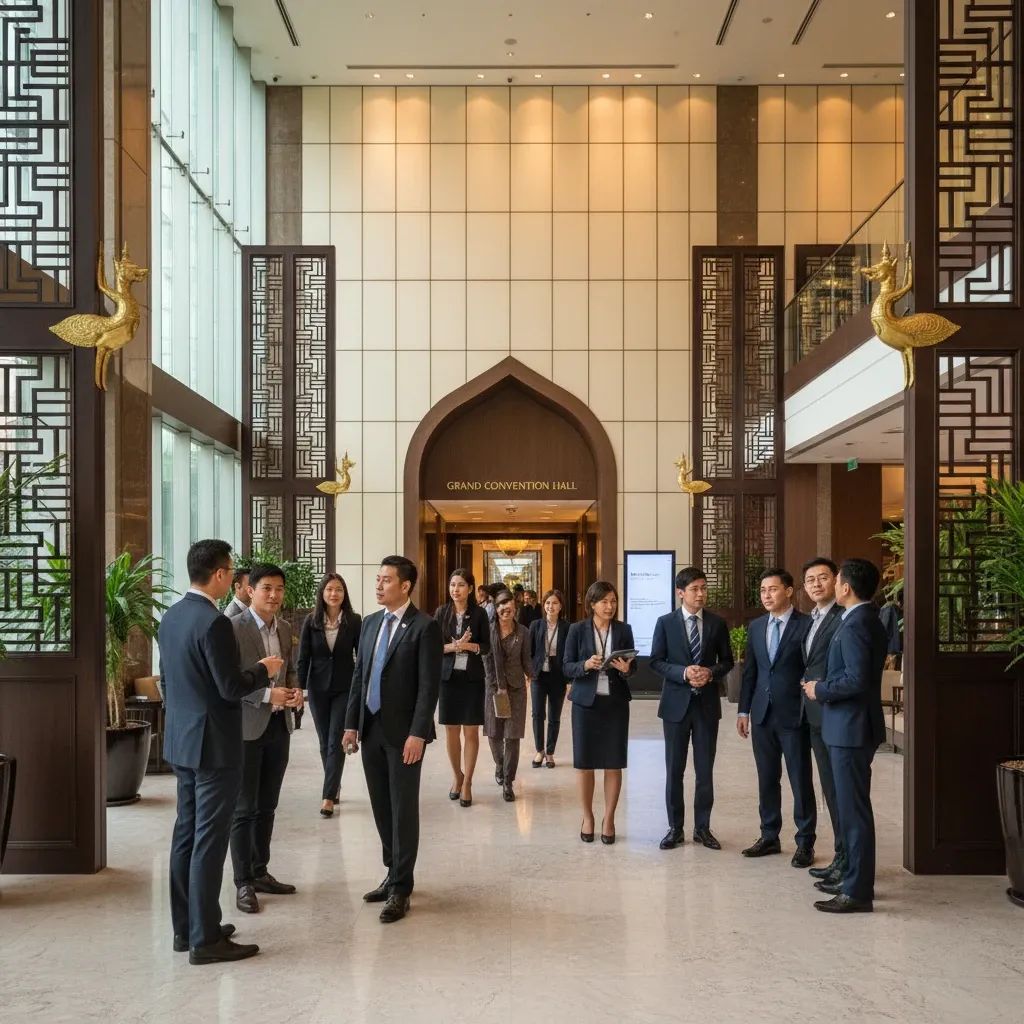
• MICE infrastructure outside Bangkok creates tangible opportunities: The March 1 launch of The Heritage Grand Khon Kaen's 1,800-seat convention capacity absorbs regional event overflow and generates employment for event specialists, audiovisual contractors, and hospitality workers.
• Sugar economics have deteriorated structurally: Recurring drought, regional competition, and Thailand's sugar tax have narrowed industry margins, forcing portfolio reallocation among operators with available capital.
• Island hospitality standards are consolidating: Professional European chain management of Samui properties may accelerate, potentially improving service consistency across the island.
The Sugar Sector's Long Decline
Rajburi Sugar has operated since 1985, processing approximately 14,000 tonnes of sugarcane daily. The operation combines refined sugar sales with 25-year electricity contracts selling biomass-generated power to Thailand's grid—a dual revenue model that provided stable cash generation for decades.
That stability is eroding. Thailand faces three structural headwinds. First, climate reliability has declined. Monsoon patterns have become genuinely uncertain, concentrating rather than dispersing agricultural risk. Second, regional competition is permanent and acute. Vietnamese and Indonesian producers now compete directly on price with lower labor costs, structurally depressing Thai margins. Third, Thailand's health-focused sugar tax, implemented despite industry opposition, has durably reduced domestic consumption and reflects policy consensus unlikely to reverse.
Agricultural lenders have tightened standards accordingly, demanding sustainability credentials and diversification evidence that traditional sugar operations struggle to demonstrate. For family offices accustomed to reliable capital access, this friction is both costly and psychologically significant—a clear signal that institutional lenders no longer view pure sugar production as core strength.
Why Tourism Offers Different Economics
Hospitality assets operate on fundamentally different principles. A 300-room hotel with 70% occupancy generates recurring nightly revenue independent of monsoon patterns or commodity swings. That revenue compounds through consistent room pricing, minimized vacancy, and disciplined maintenance.
Thailand's tourism tailwinds are unmistakable. Visa liberalization has accelerated visitor arrivals dramatically—projections for 2026 range from 38 to 40 million international tourists. Infrastructure improvements to provincial airports and highways have made regional destinations genuinely accessible to business travelers. Government offices, universities, and logistics hubs in Isan have created stable weekday demand for business accommodations. These demand drivers are unlikely to reverse through 2030.
Capital markets reflect this conviction. Hotel transaction volumes in Thailand exceeded ฿12 billion in 2024, with favorable financing spreads remaining available. For a family office with operational experience and balance sheet strength, the mathematics support reallocation.
Khon Kaen's Strategic Repositioning
Rajburi acquired the Pullman Khon Kaen property in May 2024 for ฿1 billion—a fully transparent transaction demonstrating how serious pricing operates in provincial markets. The property occupied nine rai in Khon Kaen's commercial core: a 300-room full-service hotel with aging infrastructure that competed poorly against beach destinations in Samui or Phuket.
Rajburi committed additional hundreds of millions toward comprehensive systems overhauls and environmental certifications. The rebranding launching March 1, 2026, introduces The Heritage Grand Khon Kaen Hotel & Convention Center, repositioning entirely toward MICE—meetings, incentives, corporate conferences, exhibitions.
This reflects practical market analysis. MICE events book 6 to 18 months in advance, generating group rate premiums and concentrated occupancy. Convention planners demand specific infrastructure: multiple breakout rooms, audiovisual capabilities, reliable internet, and catering capacity. The Heritage Grand's convention halls seating 1,800 and 1,200 provide exactly this—capacity regional competitors in Udon Thani or Nakhon Ratchasima cannot match.
The timing matters. Government consolidation in Khon Kaen continues. University conferences cluster during academic calendars. Trade logistics forums increasingly occur in Isan rather than defaulting to Bangkok. A newly certified, professionally managed convention venue with 1,800-person capacity creates structural supply where none previously existed.
Samui's Competitive Upgrade
The Impiana Resort Chaweng Noi acquisition in December 2025 carries strategic significance. Rajburi deployed several hundred million baht to acquire this 96-room beachfront property and commenced plans to elevate it from four-star to five-star status. Negotiations with a major European international hotel chain for operational management are in advanced stages.
The strategy reflects precise market segmentation. Phuket dominates Chinese and Indian leisure traffic; competition there is intense. Samui has historically anchored to European charter connections—Scandinavian tour operators, UK vacation clubs, German adventure travelers. European-standard brand management fundamentally changes competitive positioning. International chains operate standardized procedures: consistent pricing logic, predictable service protocols, recognized loyalty programs. Samui's fragmented property market suddenly faces institutional standardization.
What This Means for Residents and Expats
For business travelers and event attendees, this infrastructure expansion has direct practical impact. Convention venues in secondary cities mean conferences, product launches, and corporate events that previously required Bangkok travel can now execute regionally. This reduces travel costs and time commitments for attendees and organizers. If you're a business professional or event planner, expanded provincial capacity means more opportunities to attend industry events without Bangkok congestion.
For expat residents traveling domestically, European-managed properties with standardized service protocols may offer greater consistency and reliability when booking hotel accommodations on Samui. Professional management often translates to dependable service, transparent pricing, and reliable amenities—practical benefits for regular travelers.
For employment, expanded tourism infrastructure creates jobs. The convention center requires ongoing staffing. Event management, audiovisual operations, catering, and transportation services grow with increased business event activity. Khon Kaen's hospitality sector gains employment in skilled positions.
For accommodation options and pricing, increased competition in secondary markets could influence pricing dynamics. While The Heritage Grand targets MICE rather than leisure segments, expanded institutional-quality properties typically improve overall market sophistication and service standards across regions.
The Ongoing Sugar Business
Critical clarification: Rajburi has not exited sugar. The group's cogeneration plants continue feeding electricity into Thailand's national grid. The 'BEE' brand still manufactures and distributes refined sugar. Biomass electricity generation continues. What is changing is portfolio concentration. Second-generation operators inheriting single-industry businesses are deliberately constructing diversified operations capable of weathering sector-specific downturns.
This represents intelligent portfolio management, not distress exit. Sugar operations remain operational; returns have simply become insufficient to justify exclusive capital commitment given available alternatives.


