Updated: May 2026
As of early May 2026, the Taiwan Centers for Disease Control has confirmed 2 hantavirus infections this year, including the island's first fatal case in more than 2 decades—a development that has triggered intensified sanitation sweeps across the capital and its suburbs. While the case count remains consistent with recent years, the January death of a man in his 70s from sepsis and multi-organ failure has prompted authorities to expand rodent control programs and issue fresh public health guidance for residents across the Taipei metropolitan area.
Why This Matters:
• First hantavirus death in 26 years recorded in Taiwan, raising the profile of a disease that typically causes 0-4 cases annually.
• Taipei and New Taipei City governments have deployed "rodent control specialists" and mandated pest reports for building demolitions.
• Residents are urged to seal gaps larger than 2 cm, install drain mesh, and follow the "three no's" protocol to prevent exposure.
Fatality Marks a Turning Point
The deceased patient, a Da'an District resident with chronic health conditions, was posthumously diagnosed with hantavirus after dying on January 13. Family members reported rodent activity inside the home, and health inspectors later trapped 4 rats near the property—2 of which tested positive for hantavirus antibodies. The case marked Taiwan's first hantavirus-related fatality since 2000 and immediately elevated the disease from a low-profile endemic concern to a priority for municipal and national health agencies.
A second confirmed patient, also a man in his 70s from New Taipei City, survived after hospitalization in late March. He presented with fever, chills, muscle pain, decreased urine output, and diarrhea—classic symptoms of Hemorrhagic Fever with Renal Syndrome (HFRS), the form of hantavirus illness most common in East Asia. Unlike the first case, no rodents were found at his residence, and the source of infection remains under investigation. He was discharged March 30 following supportive treatment.
What This Means for Residents
Hantavirus is a zoonotic pathogen carried primarily by rodents, and human infection occurs when people inhale aerosolized particles from contaminated rodent urine, droppings, or saliva. The Seoul virus strain, which predominates in Taiwan, causes HFRS—a syndrome that can lead to kidney dysfunction and, in severe cases, multi-organ failure. The case fatality rate for HFRS in Asia ranges from 5% to 15%, though prompt medical care significantly improves outcomes.
For residents in urban areas like Taipei, the risk is not theoretical. Both confirmed cases involved individuals living in residential neighborhoods, not rural or agricultural settings. The Taiwan CDC emphasizes that everyday behaviors—storing food improperly, leaving gaps in walls or floors, or failing to secure trash—can create hospitable environments for rats and, by extension, hantavirus exposure.
The Ministry of Environment has instructed local governments to seal home openings 2 cm or larger, fit drains with metal mesh narrower than 1 cm, store food in airtight containers, and promptly remove pet food after feeding. Kitchen waste should be secured, and clutter eliminated to deny rats both food and nesting sites. If rodents are detected, traps placed along walls are recommended as the first line of defense; rodenticides should be used only as a last resort and according to label instructions.
Citywide Sanitation and "Rodent Control Specialists"
Taipei Mayor Chiang Wan-an announced a second round of citywide sanitation measures in response to the January fatality, including the deployment of "rodent control specialists" who visit homes to assess infestations and provide tailored prevention advice. Households can apply for these services through district offices.
The Taipei Department of Urban Development has also implemented new regulatory requirements: pest control reports are now mandatory before demolition begins on old buildings, with updates required every 6 months. Large commercial venues and restaurants must complete rodent prevention measures before receiving renovation permits. Meanwhile, the city is tightening sanitation standards at traditional markets by installing drain mesh, sealing structural gaps, and improving waste handling. Subsidies for grease traps are followed by mandatory inspections to ensure compliance.
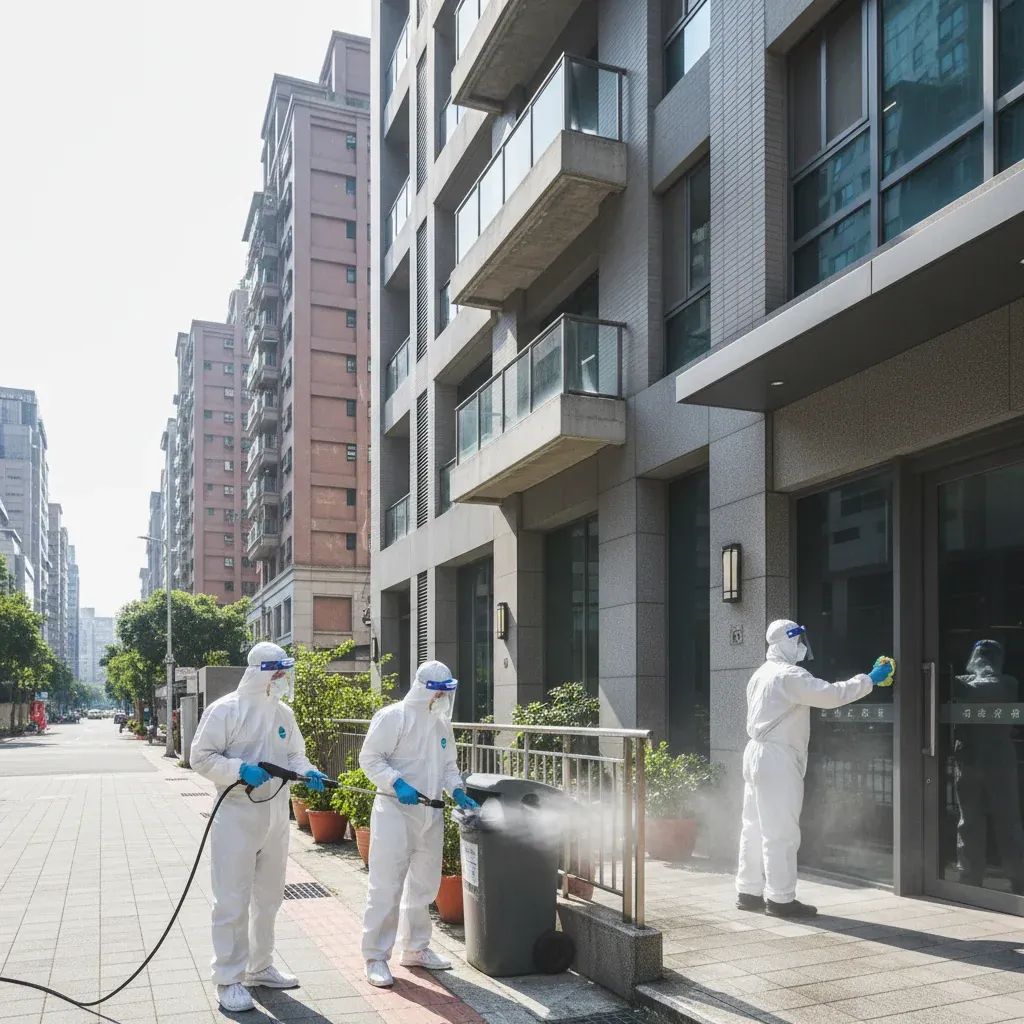
The Department of Environmental Protection is leading patrols and disinfection efforts across all 12 districts, targeting fire lanes, drainage systems, debris piles, and structural cracks—hotspots for rodent activity. The Department of Health is monitoring hantavirus surveillance data, and the Department of Civil Affairs is conducting public awareness campaigns and maintaining cleanliness in community parks.
In New Taipei City, health and environmental protection bureaus are conducting rat trapping, extermination, and disinfection in areas where cases occurred, including the application of diluted bleach to potential breeding sites and the removal of sewage sludge. Authorities have distributed rodenticide in targeted zones and are maintaining heightened vigilance in residential neighborhoods.
Regional Context: Taiwan in Line with East Asian Trends
Taiwan's 2 confirmed cases by early May are consistent with the same-period totals from 2022 to 2025, indicating endemic transmission rather than an outbreak. Across East Asia, hantavirus remains a persistent public health challenge, though incidence has declined over recent decades. While hantavirus strains and disease presentations vary by region, rodent control principles apply universally.
China historically reports 10,000 to 15,000 HFRS cases annually—more than half the global burden—but incidence has dropped from 11.06 per 100,000 in 1986 to below 0.4 per 100,000 in recent years, largely due to a national vaccination program. However, geographic areas with hantavirus transmission are expanding, raising concerns about potential resurgence.
South Korea records approximately 400 to 500 cases each year, with an average fatality rate of 0.8% from 2011 to 2024. More than 60% of infections occur between October and December, coinciding with increased rodent activity during harvest season and colder weather when rats seek indoor shelter.
Japan assesses its hantavirus risk as low and has not reported a new HFRS case in over 2 decades, though anti-hantavirus antibodies have been detected in wild rodent populations. Japanese health authorities have stated that person-to-person transmission risk is minimal and that proper containment measures are effective.
Symptoms and When to Seek Care
HFRS symptoms typically appear 1 to 2 weeks after exposure and can initially resemble the flu: severe headache, back and abdominal pain, fever, chills, nausea, and blurred vision. As the disease progresses, kidney involvement becomes apparent, with protein or blood in the urine and decreased urine output. In severe cases, acute kidney failure and multi-organ dysfunction can occur.
Patients with chronic conditions such as diabetes, cardiovascular disease, or kidney disease—conditions common among Taiwan's aging population—are at higher risk for severe outcomes. Both confirmed 2026 cases involved men in their 70s with underlying health issues.
Anyone experiencing flu-like symptoms that worsen over several days, especially with difficulty breathing or reduced urination, should seek medical attention immediately and inform healthcare providers of any potential rodent contact or exposure to areas with rodent activity.
The "Three No's" Protocol
The Taiwan CDC and Ministry of Environment have issued unified public health guidance centered on the "three no's" principle: no entry for rats, no food for rats, and no habitat for rats.
No Entry: Regularly inspect and seal potential entry points around pipes, vents, doors, and windows. Rats can squeeze through openings as small as 2 cm.
No Food: Store all food in sealed containers, promptly clean up pet food, and secure kitchen waste in covered bins. Avoid leaving food scraps or open bags accessible.
No Habitat: Clear clutter, remove piles of debris, and eliminate nesting materials. Keep storage areas organized and inspect basements, attics, and crawl spaces regularly.
The government has also advised residents to avoid direct contact with rodents or their droppings. When cleaning areas with rodent activity, ventilate the space, wear gloves and a mask, and disinfect surfaces with a 1:10 diluted bleach solution rather than sweeping or vacuuming, which can aerosolize infectious particles.
No Outbreak, but Vigilance Required
The Taiwan CDC has emphasized that there is no indication of increased disease risk as of early May 2026, and case counts remain within historical norms. However, the January fatality—the first in a generation—has underscored the potential severity of hantavirus infection and the importance of sustained prevention efforts.
Urban rodent populations are influenced by factors including construction activity, waste management practices, and aging infrastructure, all of which are present in densely populated areas like Taipei and New Taipei City. As the island continues to urbanize and renovate older neighborhoods, the intersection of human and rodent habitats may create ongoing opportunities for viral transmission.
Public health officials are urging residents to view rodent control not as a one-time campaign but as an ongoing hygiene and infrastructure maintenance practice. The deployment of rodent control specialists, new building code requirements, and coordinated municipal sanitation efforts represent a shift toward integrated, long-term prevention strategies rather than reactive extermination campaigns.
For now, the message from health authorities is clear: hantavirus remains a manageable risk in Taiwan, but only if residents, businesses, and local governments maintain consistent vigilance and hygiene practices.