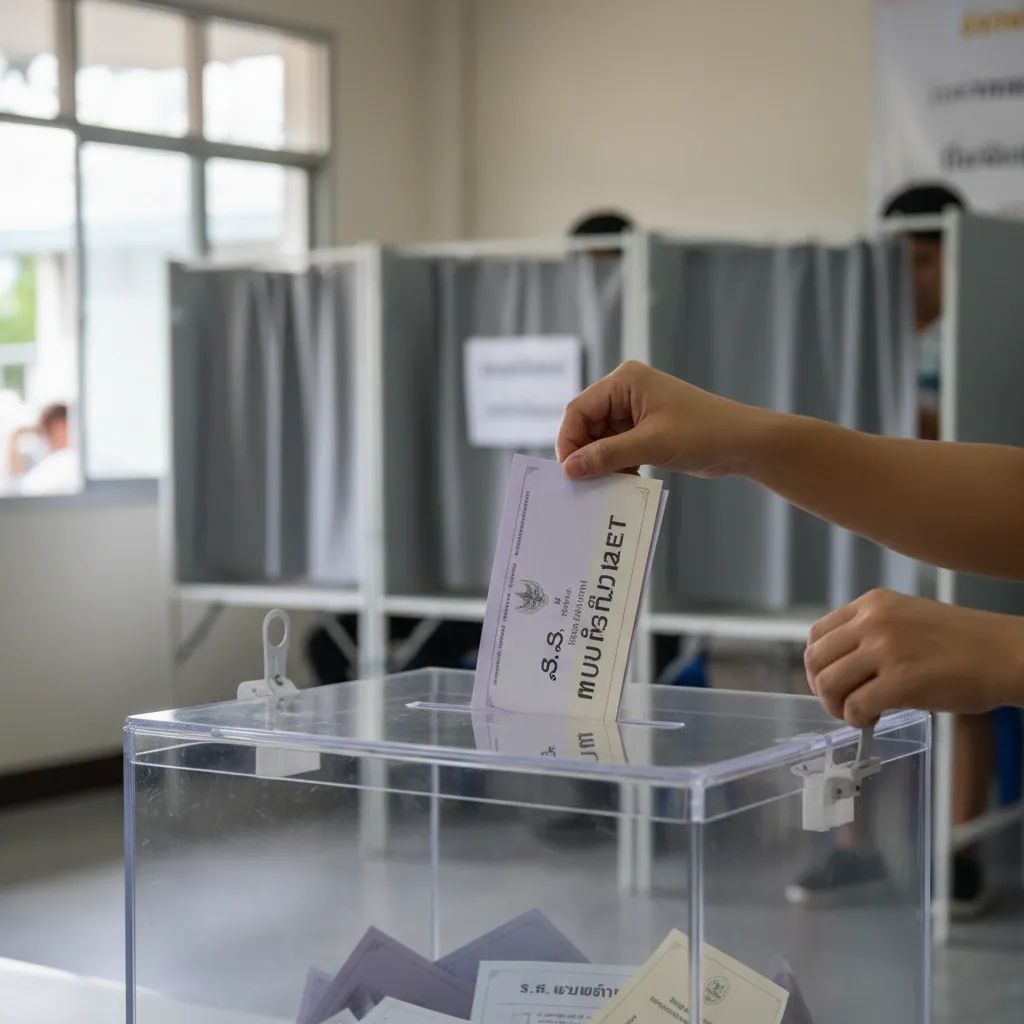
On 14 May 2023, the Thailand Election Commission has folded a one-sentence referendum on whether the nation should write a completely new constitution into Sunday’s general-election ballot, a decision that could redefine how power is distributed — or freeze the current 2017 charter in place for years. Only Thai citizens are eligible to vote in the referendum.
Why This Matters
• Single yes-or-no question – voters decide if a new charter process even starts; no draft exists yet.
• Bundled with the general election, so campaign noise may drown out constitutional arguments.
• Outcome sets the timetable: a ‘yes’ leads to up to 3 more referendums and a drafting assembly; a ‘no’ locks the 2017 rules in place.
• Unclear red lines – parties disagree on whether chapters on the monarchy and state structure are touchable, adding uncertainty for businesses and civil society.
Anatomy of Sunday’s Ballot
You will receive two coloured sheets: one for MPs and one for the referendum. The referendum paper contains a single, deceptively simple question: “Do you agree that Thailand should have a new constitution?” Mark ‘agree’ or ‘disagree’. There is no explanatory note, draft outline, or cost estimate attached. That absence worries election-law specialists who argue that informed consent requires more detail. Yet the Constitutional Court insists the first referendum may ask only this question before any text is penned.
The Case for Starting From Scratch
Academics such as Sukhothai Thammathirat Open University’s Yuthaporn Issarachai say the 2017 charter was born under military rule, empowered unelected bodies and diluted the voters’ mandate by letting the appointed Senate co-select the prime minister. Critics stress three pain points: civil-rights enforcement, executive-legislative balance, and overactive independent agencies that have dissolved parties and ousted elected leaders. They dismiss piecemeal tweaks as band-aids, arguing the document’s architecture is so interlinked that only a rewrite can restore public trust.
Why Caution Remains Strong
Constitutional scholar Khomsan Phokhong counters that a blank-cheque referendum risks letting MPs remake rules to their own benefit. He values the 2017 charter’s strict ethics clauses, which automatically disqualify corrupt officials. Removing the Senate entirely, he warns, could return Thailand to the “husband-and-wife parliament” era when a single party controlled every oversight panel. Skeptics also highlight polling data showing about one in four voters still undecided, proof that many Thais lack clarity on what, precisely, would change.
What Happens After the Count
● If ‘agree’ wins: Parliament must amend Section 256 to insert procedures for writing a new charter. Expect debates on how many drafters are elected versus appointed, and whether key chapters — especially those on the monarchy — are off-limits. The Court demands at least two more referendums: one on drafting principles and one on the final text. The entire cycle could last 2-3 years.
● If ‘disagree’ prevails: The 2017 constitution stays. Reformers may attempt targeted amendments, but they still need a two-thirds vote of the current bicameral legislature, including senators whose terms end in 2029.
Lessons From Past Referendums
Thailand’s 2016 vote bundled a long “bonus question” about military oversight into the ballot; many voters confessed they never read it. Internationally, Chile (2022) shows how vague mandates can backfire: citizens first demanded a new charter, then rejected the draft when details emerged. The takeaway: clarity at each stage is cheaper than rerunning the entire process.
What This Means for Residents
• Daily life: No immediate policy shifts occur Monday morning, but a ‘yes’ verdict could unlock lively town-hall meetings nationwide as drafters seek input on everything from land rights to digital privacy.
• Your wallet: Transition costs – extra polling days, drafting salaries, public consultations – will come from the annual budget, competing with infrastructure and welfare funds. Watch for mid-year budget adjustments.
• Legal environment: Entrepreneurs should track proposed changes to independent regulators; stronger or weaker watchdogs can alter licensing timelines and dispute resolution.
• Civic engagement: Residents may be invited to submit clause proposals online, a first in Thai political history if the ‘open drafting’ model is adopted.
Investor & Expat Angle
Foreign chambers note that a decisive ‘yes’ could initially raise political-risk premiums, but also signal a commitment to a more inclusive, stable governance framework over the long haul. A ‘no’ vote might preserve immediate predictability yet leave lingering questions about representation. Either way, keep an eye on exchange-rate volatility early next week and on any constitutional-court petitions that could delay certification of results.
Practical Tips for Voting Day
Polls open 8 a.m.–5 p.m. Bring your Thai ID card; passports are not accepted.
The referendum ballot is light purple – separate it carefully from the MP ballot to avoid accidental spoiling.
Mark one box clearly; stray marks may void your vote.
Expect queues. Combining two national ballots has historically increased average wait times by 15–20 minutes.
The bottom line: Sunday’s single question is not about endorsing any specific text; it is about deciding whether the current ground rules deserve a full rewrite. The simplicity of the ballot hides a far-reaching fork in the road for Thailand’s political future.