
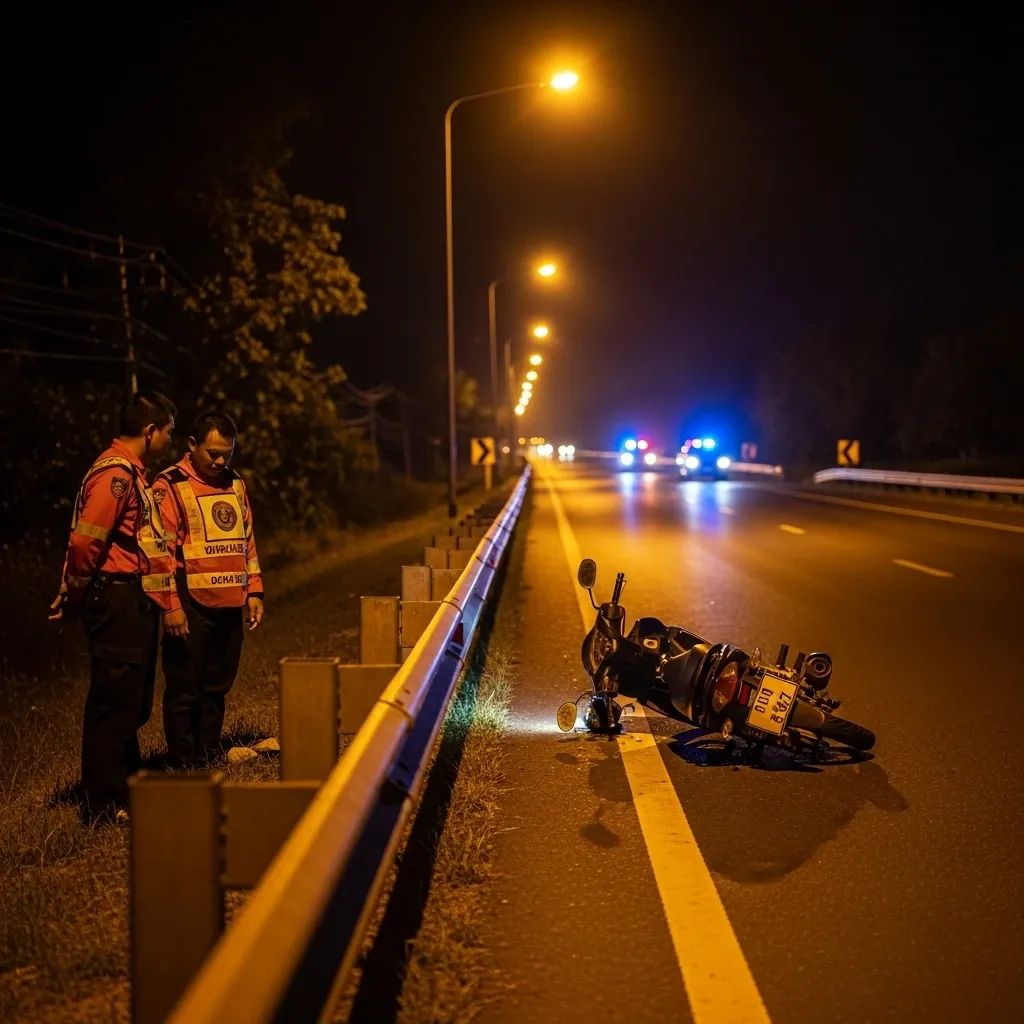
The holiday glow has barely begun, yet Thailand’s roads are already exacting a heavy toll. Two days into the annual “Seven Dangerous Days” safety blitz, the new Road Safety Command Centre has logged a surge of crashes that echoes the grim patterns of years past: speeding, alcohol, and motorcycles on long, straight stretches are sending dozens to hospital morgues before the calendar has turned.
The Situation at a Glance
• 469 separate crashes have been recorded in just 48 hours
• 86 people have died; another 452 are nursing injuries
• Speed is blamed for ≈41 % of wrecks, while drink-driving accounts for ≈27 %
• Motorbikes feature in nearly three-quarters of collisions
• Peak danger window: 6 p.m.–9 p.m., when traffic builds and parties begin
Why Holiday Nights Turn Deadly
Even with stepped-up checkpoints, the combination of after-work rush-hour, festive drinking, and open rural highways creates a perfect storm. Most accidents occur on straight roads, lulling riders into a false sense of security before a blind overtake or quick phone glance ends in disaster. Emergency physicians add that reaction time drops sharply after a single beer, yet many riders feel invincible once helmets come off and the night air hits.
Hot-Zone Provinces
• Phetchaburi tops the list for total crashes on Day 2, logging 12 incidents.
• Nakhon Ratchasima and Suphan Buri each recorded 4 fatalities, the worst daily death counts so far.
• Tourist gateways Phayao and Surat Thani suffered the highest injury tallies, with 12 wounded apiece.Bangkok, traditionally congested but slower-moving, still posted 5 deaths, tying the capital with three other provinces for the highest cumulative fatalities.
What the Numbers Say About Us
The Command Centre’s age breakdown is striking: Thais aged 40–49 form the single largest casualty group. Experts attribute this to “middle-age multitasking” — juggling family gatherings, work deadlines, and long drives home. Add to that the country’s love affair with 150 cc motorbikes and the result is high-energy impacts that helmets and seatbelts often cannot mitigate.
Voices From the Field
Public-health researchers praise the government for launching a national operations room this year, but warn that “dashboard dashboards” alone will not save lives. They argue for:
• Automatic speed-cameras on rural arterials.
• Interlocks that prevent ignition for drivers over the legal blood-alcohol limit.
• A long-overdue helmet law for passengers on pickups and in cargo beds — still common sights during holiday migrations.
Historical Trend — Progress, Then Plateau
Official data show fatalities during the New Year window fell from 392 in 2021 to 284 in 2023, thanks to tougher enforcement and social-media shaming campaigns. Yet the downward trend plateaued last year, and early 2024 figures hint at a possible reversal. Road-safety NGOs say the next breakthrough must come from behaviour change, not just roadblocks.
Tips for Travellers Hitting the Road
Before you join the exodus out of Bangkok or Phuket this weekend, consider these life-saving tweaks:
Plan to stop every 150 km — fatigue rivals alcohol as a crash trigger.
Nominate a sober driver or use an app-based ride service if your celebration involves alcohol.
Check tyre pressure and brakes; December heat cycles can mask slow leaks.
Keep an ICE (In Case of Emergency) card in both Thai and English to speed up hospital triage.
The Bottom Line
Until speedometers read lower and beer bottles stay capped before riders climb onto bikes, Thailand’s roads will keep turning joyous reunions into tragedy. The Command Centre promises daily updates; residents should brace for more sobering figures unless drivers adopt a different holiday tradition: arriving alive.


