
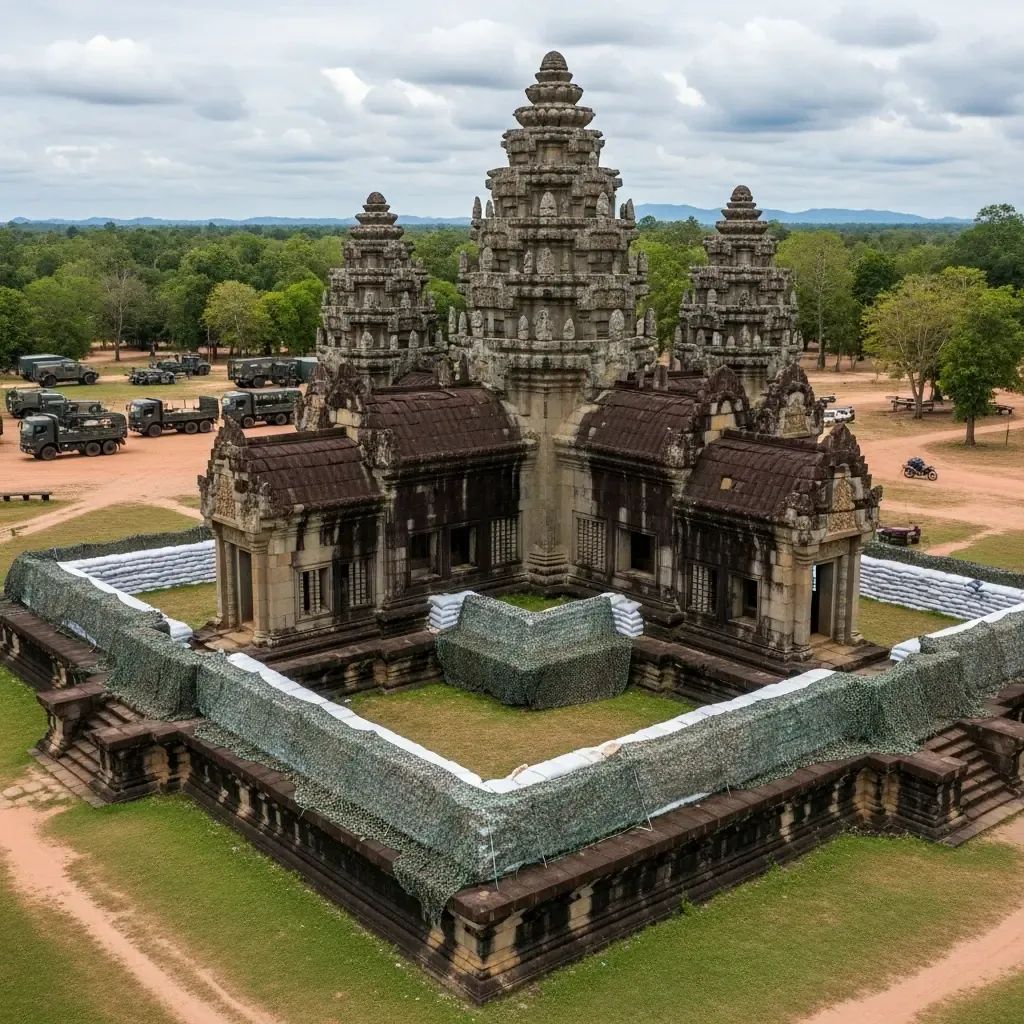
Skirmishes on the Thai-Cambodian frontier have turned an obscure sandstone monument, Prasat Ta Kwai, into the newest flash-point between culture and conflict. Bangkok says Phnom Penh has converted the ancient sanctuary into a forward operating base, stripping it—at least temporarily—of the legal shield normally granted to heritage sites. Cambodia insists Thailand is using that argument as cover for cross-border shelling. While legal experts debate the fine print of the 1954 Hague Convention, villagers from Surin to Si Sa Ket are packing trucks and motorcycles, fleeing an artillery duel that shows no sign of easing.
Need-to-know in one glance
• Prasat Ta Kwai now hosts Cambodian surveillance gear and weapons stockpiles, according to the Thai Army.
• Thai artillery answered rocket fire at Hill 500 and a ridge locals call Phu Makua, but reports list zero casualties so far.
• Under the Hague rules, a heritage site loses protection if used for military purposes—Thailand says that clause applies here.
• Seven Isan provinces have tightened checkpoints, and ad-hoc shelters hold tens of thousands of evacuees.
• A phone call brokered by former US president Donald Trump failed to deliver a ceasefire.
Why this border temple matters at home
Few Thais had heard of ปราสาทตากวย until last week, yet the site sits barely 2 km from Surin’s Phanom Dong Rak Range, where families on both sides share markets, dialects and Buddhist festivals. Isan farmers depend on cross-border trade routes that now lie under military closure. Losing access during the current rice harvest hits household incomes just as fertiliser prices flirt with record highs.
From sanctuary to stronghold
Thai field commanders released drone images showing sand-filled blast walls, BM-21 rocket tubes, and a rough-hewn helipad wedged between laterite towers of the 11th-century complex. Phnom Penh’s defence ministry denies staging heavy weapons on site but has not disputed the presence of troops. Thai shelling on 8 December cut a cable-hoist line used to move ammunition up neighboring Hill 350, a move the army says was critical to slow Cambodian resupply.
The legal crossfire
Under Article 4 of the 1954 Hague Convention, cultural assets enjoy immunity—unless an “imperative military necessity” demands otherwise. The 1999 Second Protocol narrows that loophole: attackers must prove no viable alternative targets exist and issue an effective warning first. Bangkok argues Cambodia created the legal exemption by nesting fire positions inside the shrine; Phnom Penh counters that Thai retaliation breaches the treaty’s proportionality clause. International law scholars warn that both armies risk investigation if evidence later shows excessive damage or civilian harm.
Toll on the Isan heartland
Sirens in Kantharalak and Khun Han now sound almost daily. Provincial halls in Ubon Ratchathani, Buri Ram and Sakaeo have opened makeshift dormitories lined with canvas cots; the Interior Ministry counts over 120,000 displaced residents. Insurance agents report a spike in claims for shattered windows and stray-shrapnel injuries. Border schools have switched to online classes, though spotty 4G signals near the mountains often leave lessons frozen on screens.
Diplomacy on a knife-edge
ASEAN envoys convened twice in Jakarta this month without issuing even a joint communiqué—a sign, diplomats say, of how far apart the neighbours remain. Thai officials privately admit they will not withdraw artillery until Cambodia dismantles launchers around Preah Vihear, a UNESCO site already scarred by older clashes. Meanwhile, Phnom Penh is lobbying UNESCO and the UN Security Council to censure Thailand. Bangkok’s response: open the area to independent inspection, but only after Cambodian troops pull back 5 km.
What happens next—and what residents should watch
Ceasefire feelers: Quiet talks via Singapore could test a limited stand-down during New Year travel.
Monsoon window: Rains taper in late January, historically widening the dry corridor for mechanised units—locals may face more, not less, shelling.
Mine hazard: Both sides seeded fresh anti-personnel mines; stay within marked roads, and report any tampered signposts.
For now the sandstone towers of Prasat Ta Kwai remain caught in a tug-of-war between heritage and hard power—an uneasy reminder that ancient stones offer little shelter once modern armies move in.


