
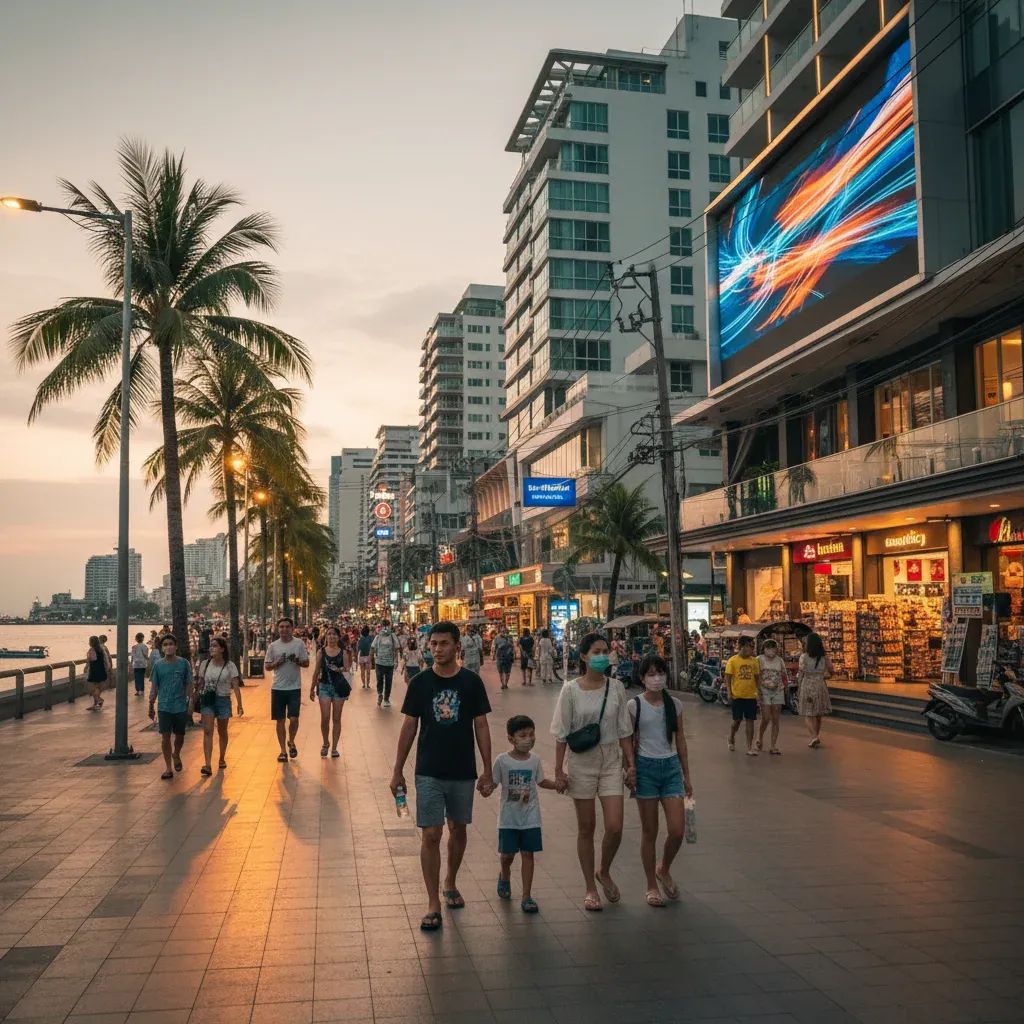
Street-level service transactions in Thailand's seaside entertainment zones carry real physical and financial risks—a reality underscored by what happened to a 33-year-old Japanese visitor in mid-March when a casual arrangement spiraled into assault, property destruction, and theft exceeding 11,000 baht in Pattaya.
Why This Matters
Informal agreements made outside licensed establishments lack verification systems, documentation, or legal recourse. When disputes arise, there's no intermediary to de-escalate—conflicts can turn violent within minutes. Pattaya's nightlife corridors, particularly Walking Street, function as open marketplaces where tourists and service providers meet as strangers with no accountability structures. While Pattaya authorities have deployed over 2,500 AI-enabled surveillance cameras, technology responds after incidents occur—it cannot prevent tourists from inviting unknown individuals into private hotel rooms.
The Pattern: Multiple Incidents in Early 2025
Pattaya has seen an intensifying series of crimes targeting foreign travelers. According to local reports, incidents in late February involved tourists losing significant cash and valuables near Beach Road and entertainment zones. Days later, another visitor was robbed after inviting a service provider to their hotel room. On March 13, a Japanese tourist was injured during a dispute that escalated in a hotel room.
The consistency is striking: all documented incidents involved hotel rooms, cash-based payments, and initial contact in or near nightlife entertainment zones. The pattern suggests calculated theft by individuals who recognize hotel rooms as spaces without witnesses or intervention capacity.
Thailand's Tourist Police and Chonburi provincial authorities have logged these incidents, but many tourists never file complaints due to language barriers, immigration concerns, or the belief that losses are an unavoidable travel cost.
What Happened: The March 13 Incident
Around 3 a.m., a Japanese visitor negotiated a private massage service at his Pattaya hotel room for 1,000 baht. Within minutes of entering the shower, approximately 2,000 baht disappeared from his wallet. When he discovered the loss and confronted the service provider, the situation escalated. The individual allegedly damaged the room and became physically aggressive. During the struggle, about 9,000 baht scattered on the floor, which the individual seized. The visitor's phone was damaged in the chaos.
Hotel CCTV footage captured the suspect's entry. The visitor filed a police complaint and shared the footage with authorities. The suspect subsequently turned themselves in, though investigations continue.
What made this case significant was the victim's willingness to cooperate with authorities and media—a rarity among victimized tourists that helped bring attention to the broader safety issue.
Practical Safety Tips: What Actually Works
Use licensed establishments exclusively. Thailand's Ministry of Tourism and Sports maintains registries of certified spas and massage businesses. These providers accept traceable payments, carry liability insurance, and face penalties for misconduct. The additional cost—typically 500-1,000 baht more than street-level prices—is negligible compared to the risk reduction.
Never carry visible cash. Keep large amounts in your hotel safe. Use credit cards and digital payment apps whenever possible. When cash is visible and informal transactions occur in private spaces, theft risk escalates dramatically.
Never invite strangers to your hotel room. Hotel rooms eliminate witnesses and accountability structures. Disputes in private rooms can escalate without intervention. Licensed businesses operate in fixed locations where staff can respond to problems.
Share your location and plans. Contact the Thailand Tourist Police hotline (1155) or use the TPB mobile application to share your location with trusted contacts. This reduces isolation and enables faster assistance if problems occur.
Coordinate with hotel security. Inform your hotel concierge of planned activities. Hotel staff can arrange services through trusted providers and can respond quickly if issues arise. Many hotels maintain relationships with vetted service providers specifically for guest safety.
What to Do If You're Victimized
Report to hotel security immediately. Your hotel can document the incident and contact police on your behalf.
Contact the Tourist Police. Call 1155 (free, English-speaking operators available). They can file an official report and coordinate with local police.
Document everything. Photograph any injuries or damage. Note names, descriptions, and timeline details while the memory is fresh.
Contact your embassy or consulate. They can provide guidance on police procedures and victim support resources.
Check your travel insurance. Most international policies cover robbery. File a claim with clear documentation and police report numbers.
Request CCTV footage. Hotels typically retain security footage for 7-14 days. Request copies immediately if you're a victim.
Security Measures Taking Effect
Over the past 18 months, Pattaya has invested substantially in the "24/7 Safe City" initiative. The deployment of 2,500+ AI-enabled CCTV cameras with real-time facial recognition systems connected to the Central Investigation Bureau enables rapid identification and response.
The MyDel Pattaya initiative deploys mobile AI cameras across high-risk zones: beaches, Walking Street, and ferry terminals. Data feeds into a Crime Dashboard that maps hotspots and alerts patrol units to emerging patterns. A One Stop Safety Center is being developed to consolidate police, tourism authority, and hotel management operations in one location.
Crime statistics show mixed results. Documented incidents declined from 600 in April 2025 to 231 by July 2025, though this represents city-wide aggregates. Technology has improved perpetrator apprehension times significantly, but cameras cannot prevent the initial decision to invite a stranger into a private room.
Why These Crimes Happen: The Underlying Factors
Pattaya's economy depends on coexisting licensed establishments and street-level freelancers. Requiring background checks and licensing for every service provider would either drive activity underground or push operations to less-regulated areas. The current approach relies on warnings—in multiple languages—telling tourists to avoid informal arrangements.
Yet many tourists underestimate risk, particularly when intoxicated or seeking cheaper services. The calculation of danger often happens after problems emerge—too late to change the decision. This is why practical prevention depends entirely on tourist behavior discipline, not on infrastructure alone.
Civil liberties advocates note that stricter enforcement targeting entertainment workers risks disproportionately profiling marginalized communities, particularly LGBTQ individuals who comprise substantial portions of Pattaya's informal service economy. Most operate lawfully. Authorities acknowledge this tension: they cannot prevent high-risk transactions through regulation without triggering discrimination complaints. Instead, they've invested in rapid-response technology to apprehend perpetrators quickly.
The Bottom Line
Pattaya's security apparatus works well after crimes occur. Surveillance captures evidence, databases facilitate identification, and perpetrators face consequences. For prevention—stopping the initial invitation into a private room—technology offers no solution. The constraint remains human decision-making.
For residents and visitors: the path to safety is straightforward. Use licensed services, avoid cash visibility, never invite strangers to private spaces, and coordinate activities with hotel staff. These practices, consistently applied, reduce risk dramatically. No amount of surveillance can substitute for basic personal security discipline.


