
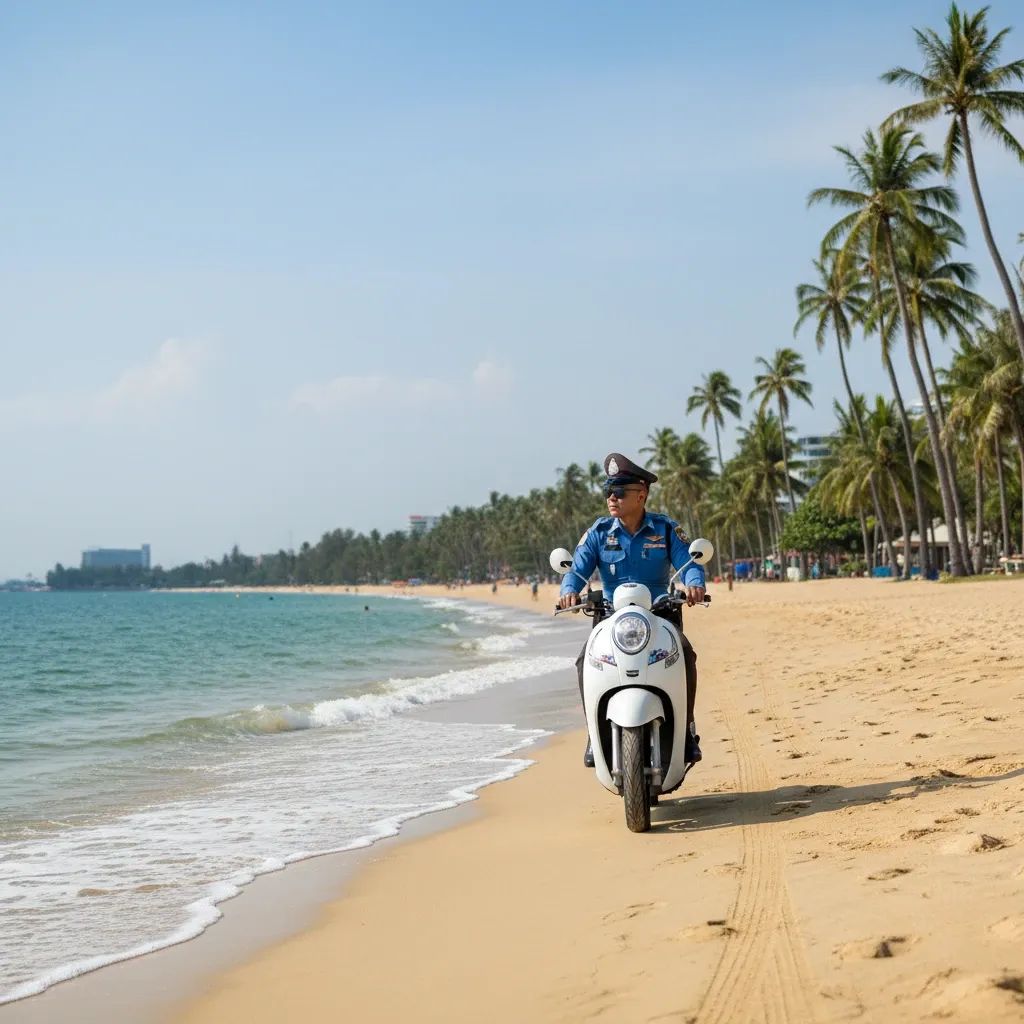
Thailand's Pattaya City has intensified its campaign to reclaim public beach space from unauthorized commercial operators, a move that will reshape the coastline experience for residents and tourists while keeping personal beach gear entirely legal.
Why This Matters
• Personal gear is allowed: Residents and tourists can bring their own mats, folding chairs, and umbrellas to the beach without restriction.
• Commercial rentals banned: Unlicensed operators face immediate confiscation of equipment and legal penalties.
• No overnight camping: Setting up tents, sleeping on the beach, lighting fires, or playing loud music remains prohibited.
• Enforcement is ongoing: Municipal teams conduct regular patrols along the entire Pattaya beachfront as part of the "Better Pattaya" urban upgrade initiative.
The Regulatory Reality on the Ground
Pattaya Municipal Enforcement has conducted regular sweeps along the city's coastline, targeting vendors who rent mats, chairs, and umbrellas on public sand without permits. Officers have conducted multiple enforcement operations, seizing illegal rental items from unauthorized operators. Equipment confiscated during raids is transported to the Pattaya Municipal Enforcement Center for storage pending legal proceedings, with violators facing fines under local land-use regulations.
Authorities stress that the enforcement does not target beachgoers. "Tourists and local residents are free to bring their own equipment," a city official clarified in a public statement. "What we prohibit is the commercial occupation of public space without authorization." The distinction is critical: a family spreading their own mat is welcome; a vendor staking out space with rental inventory is not.
The policy is part of Thailand's broader Eastern Economic Corridor (EEC) development strategy, which positions Pattaya as a modern tourism and business hub. City planners are balancing accessibility with order, aiming to project a cleaner, safer image to international visitors while preserving the principle that beaches belong to everyone.
What Remains Prohibited
Even with personal gear allowed, several activities remain off-limits under Pattaya municipal code:
• Overnight camping and tent setup: Designed to prevent semi-permanent encampments that degrade beach cleanliness and block access.
• Bonfires and open flames: Fire hazards and environmental concerns drive this ban.
• Amplified music or noise disturbances: Loud speakers, party systems, or extended noise that disrupts other users are subject to immediate enforcement.
• Unauthorized commercial activity: Any rental, sale, or service operation without a city permit triggers confiscation and fines.
Violators of camping or fire regulations can face penalties under both municipal bylaws and Thailand's environmental protection statutes, which classify beaches as national property under the Civil and Commercial Code (Articles 1304–1306). These laws stipulate that beaches are inalienable public assets; no individual or entity can claim ownership or adverse possession.
Licensed Rental Zones in the Region
The enforcement in Pattaya contrasts with the regulated rental zones operating at Jomtien Beach and Bang Saen Beach in neighboring Chonburi Province. At Jomtien, licensed umbrella and sunbed vendors adhere to strict pricing: ฿50 per chair per day (roughly $1.40 USD), with operation hours limited to 06:00–20:00 Monday through Thursday and 06:00–21:00 on weekends and holidays. Operators must close every first and third Wednesday of each month unless a national holiday intervenes, and all equipment must be removed from the sand each evening.
At Bang Saen, the Saen Suk Municipality enforces similar caps, forbidding vendors from pressuring tourists to order food and allowing visitors to bring their own meals (excluding alcohol). The municipality issues numbered permits and mandates regular closures for beach restoration. These systems show that commercial activity can be permitted through tight controls—pricing ceilings, mandatory rest days, and geographic zoning. Pattaya's outright ban on unlicensed rentals suggests a preference for enforcement simplicity over managing a permit regime.
Impact on Residents and Long-Term Visitors
For residents and long-term visitors in Pattaya, the policy shift offers both clarity and practical changes. On one hand, the absence of rental clutter opens up more usable sand and eliminates the haggling culture that some found intrusive. On the other, the ban means anyone seeking a beach day must now carry their own gear or visit a licensed zone like Jomtien.
Practically speaking, a lightweight folding chair and a beach mat now become essential items for households near the coast. For older residents or those with mobility challenges, the extra effort to transport gear may be a drawback, though the tradeoff is more predictable access to open space.
The camping and noise bans have particular relevance for families and long-term residents planning beach activities. Visitors to the beach must plan for day trips only, and late-night beach gatherings are now subject to police intervention if noise complaints arise. The Pattaya Tourist Police have stationed officers at the Central Pattaya Beach Information Center to handle complaints and provide guidance.
Public Reaction and Consistency Questions
Local reaction in Pattaya has been mixed. Some Thai residents and community leaders have praised the crackdown for restoring beaches to genuine public use. "It feels less commercialized, more like a shared space again," one long-term resident told local media. Others have questioned whether enforcement is uniform; reports suggest some beach zones continue to see rental operations, particularly at the southern end near Pratumnak Hill.
Pattaya City Hall has responded by pledging regular patrols and urging the public to report violations via the municipal hotline. The consistency of enforcement through the busy seasons ahead will be the true test of whether the city maintains this policy commitment.
What Comes Next
Pattaya's beach policy is part of the larger Better Pattaya urban transformation, a multiyear initiative that includes drainage upgrades, smart city infrastructure, and public space redesign. The beach component is just one piece of a comprehensive effort to reposition Pattaya as a livable, orderly city.
For residents, the immediate takeaway is practical: invest in your own beach equipment, respect noise and camping rules, and expect to see municipal officers on the sand conducting regular patrols. For tourists, the message is equally clear: Pattaya's beaches remain free and accessible, but only if you bring your own gear and follow the rules. The days of renting a chair from a beachfront vendor are now over in Pattaya proper.


