
Vietnam Shutdown Signals Deeper Supply Crisis for Thai Manufacturers
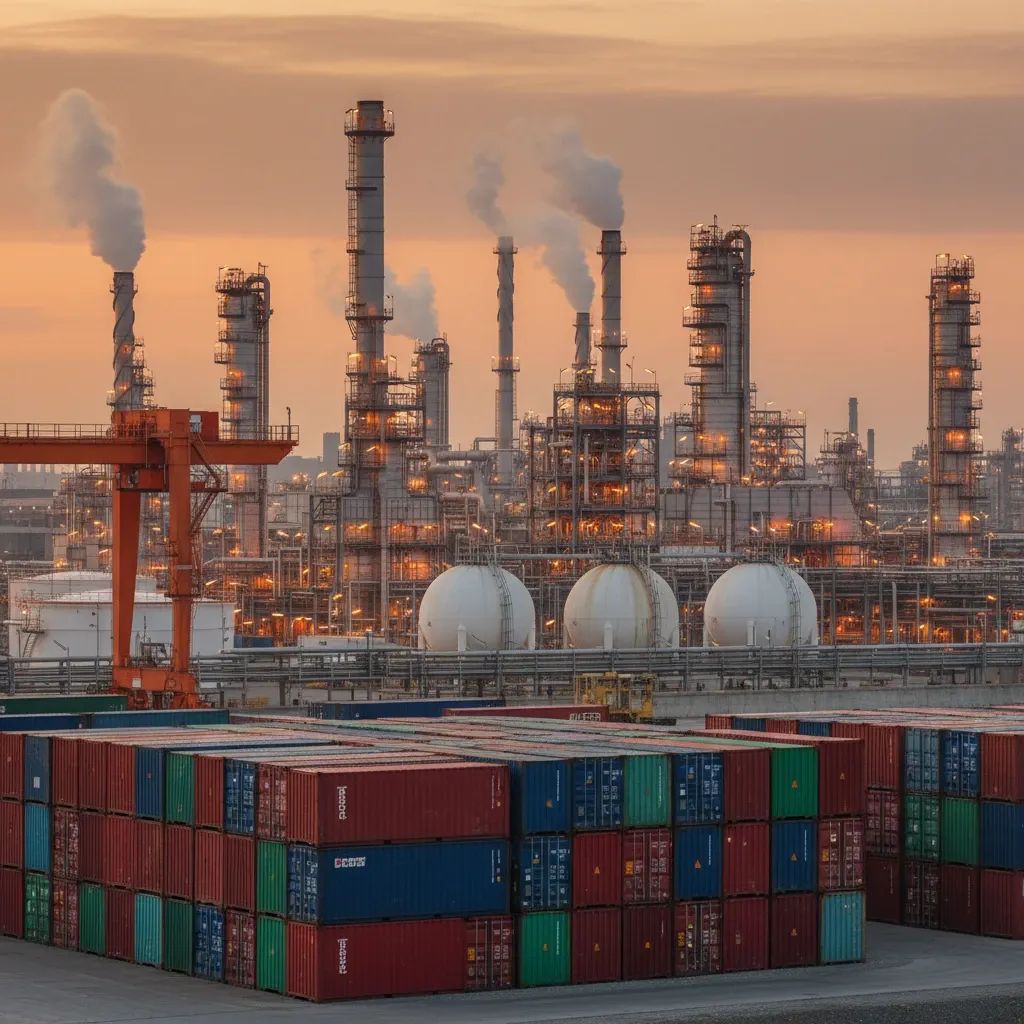
Siam Cement Group (SCG) has announced a temporary halt to operations at its Long Son Petrochemical complex in Vietnam, expected to begin mid-May, marking a stark reality check for Thailand's manufacturing ecosystem. The suspension—driven by geopolitical chaos in the Middle East and severely disrupted maritime shipping lanes—will cost the company roughly ฿250M monthly and expose a larger vulnerability: Thai factories depend heavily on a supply corridor now effectively closed by political conflict.
Why This Matters
• LSP's shutdown removes a critical regional source of polypropylene and polyethylene feedstock, forcing Thailand-based manufacturers to compete for limited alternative sources at significantly inflated prices.
• Plastic resin costs have jumped 50–70% across specific polymer grades; transportation and insurance premiums have surged 50–140%, cascading into higher retail prices for packaged food, beverages, and consumer goods.
• Factory closures across Thailand jumped 58% in January 2026, with small and mid-sized enterprises most vulnerable due to limited capital buffers and no access to bulk-storage hedging strategies.
• The Thailand Ministry of Commerce is exploring import controls and strategic stockpiling to prevent downstream supply collapses in food packaging, pharmaceuticals, and automotive sectors.
How a Distant Conflict Became a Thai Factory Problem
The Strait of Hormuz—a 21-mile-wide waterway between Iran and Oman—handles roughly one-fifth of all global oil and liquefied natural gas flowing worldwide. Escalating military tensions between Iran and US-allied forces have transformed this chokepoint into an effective blockade. Iran's Islamic Revolutionary Guard Corps now requires all transiting vessels to submit to inspections, pay security fees, and follow prescribed routes or face military interdiction.
Rather than navigate these risks, most shipping lines have rerouted cargo around Africa's Cape of Good Hope, adding 15 days and substantial premiums to voyage costs. This isn't a temporary inconvenience—the geopolitical standoff shows no signs of resolution, meaning petrochemical shipments originating in the Persian Gulf face indefinite delays and cost inflation. For Thailand, which historically sourced roughly 70% of its naphtha and propane from Gulf suppliers, the math becomes untenable quickly.
Crude oil prices have breached $100 per barrel, with forecasters warning of $200-plus levels if tensions further escalate. Each dollar-per-barrel increase translates to roughly ฿300M in annualized cost increases for Thailand's petrochemical sector.
The Cascade: From Vietnam to Your Grocery Shelf
Long Son Petrochemicals is no peripheral facility. The complex processes 1.35M tons of olefins annually and produces 1.4M tons of polyolefins—foundational materials for the region's plastic packaging, automotive components, and consumer products. The plant also exports refined feedstock back to Thailand, where downstream converters (companies that transform raw resin into finished goods) rely on consistent, price-stable input.
SCG's domestic Rayong Olefins operation has already announced its own temporary shutdown, unable to secure adequate naphtha and propane. The combined effect: a structural gap in regional polypropylene and polyethylene availability that competitors like PTT Global Chemical (PTTGC) and IRPC cannot easily fill.
PTTGC retains some advantage through access to natural gas reserves in the Gulf of Thailand, but even this partial insulation provides only limited relief. Excess global supply and margin compression mean both companies are operating razor-thin profit buffers while simultaneously absorbing freight and feedstock inflation.
Downstream Manufacturers Face Existential Pressure
The shortage propagates immediately through Thailand's consumer-facing industries. Thai President Foods, the nation's iconic producer of "Mama" instant noodles, reports difficulty sourcing film materials for package wrapping—some suppliers are refusing new orders entirely. Eka Global, which manufactures preservation packaging for food, has stockpiled materials through May but flagged production cutbacks if delays persist beyond that window.
Small and mid-sized enterprises in plastics and packaging are the most exposed. Unlike multinational conglomerates, these firms cannot afford to carry three to four months of inventory or absorb 30–50% input cost swings without immediately eroding profitability. The Federation of Thai Industries (FTI) reports that manufacturing confidence has plummeted to its weakest level in over four years—a direct reflection of visible supply pressure, not just economic noise.
TOA Paint, a major regional coatings manufacturer, has flagged shortages of titanium dioxide and specialty chemical inputs, adding cost pressure to construction and home improvement sectors. These cascading shortages are already translating into higher shelf prices: a typical plastic bag now costs 20–30% more than six months ago; bottle caps and automotive fasteners follow similar trajectories.
Strategic Responses: Diversification and Government Intervention
Thailand's largest petrochemical producers are pursuing multiple mitigation strategies simultaneously, though these carry real trade-offs. PTTGC is accelerating ethane imports from the United States—cheaper than Gulf naphtha and more environmentally efficient—but this requires new terminal infrastructure and shifts geographic dependency rather than resolving it. IRPC is rebalancing its product portfolio toward specialty chemicals and high-margin specialty resins, effectively abandoning commodity-grade plastic to escape pricing pressure.
The Thailand Ministry of Commerce has moved beyond passive observation. Officials are now evaluating a "Domestic First" allocation policy that would temporarily restrict exports of plastic resin and designate certain materials as controlled commodities. The aim is transparent: funnel scarce supply toward critical downstream industries—food packaging, pharmaceuticals, medical devices—before allowing export sales.
The Thai Plastics Industry Association has proposed a centralized inventory dashboard to track feedstock availability in real time across the sector, enabling coordinated production planning to prevent localized shortages from triggering broader supply collapses. This soft-coordination approach leverages industry transparency without heavy-handed state direction.
The Longer Reckoning
SCG's Vietnam shutdown is administratively temporary—the company plans to use downtime for maintenance and acceleration of an ethane feedstock expansion project—but the underlying supply shock is structural. No amount of plant maintenance resolves the Hormuz blockade. No timeline for Middle East conflict resolution is visible. Shipping delays measured in weeks are the new normal.
For Thailand's residents and business operators, this translates into visible cost escalation for everyday goods over the next 6–12 months. Packaged foods will incrementally increase in price; automotive parts will reflect transportation premiums; construction materials will follow suit. For investors, the environment presents genuine strategic tests: companies that successfully pivot to alternative feedstocks or specialize in higher-margin products may emerge from this crisis with competitive advantages, while commodity players face erosion.
Manufacturing confidence across Thailand remains fragile, contingent on either a Middle East de-escalation that seems distant or successful adaptation by the petrochemical sector itself. The next few months will reveal which Thai manufacturers can bend without breaking—and which cannot.


