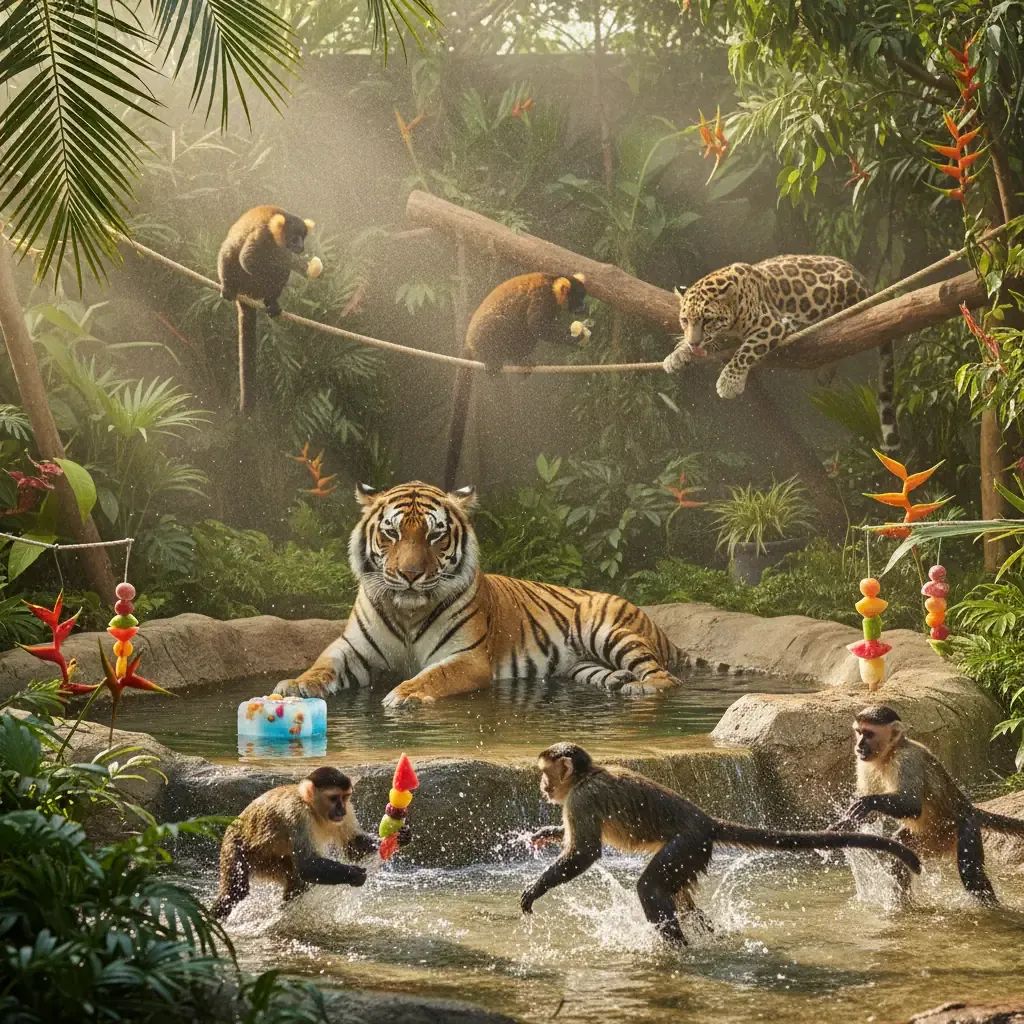
The Thailand's Khao Kheow Open Zoo in Chon Buri province has rolled out a comprehensive animal welfare program centered on frozen fruit treats and enrichment activities, a seasonal response designed to help its diverse collection of wildlife endure the country's punishing hot season temperatures.
Why This Matters
• Visitor experience enhanced: The zoo, located approximately 1 hour from Pattaya, offers residents and tourists a chance to observe innovative animal care practices during peak heat months.
• Animal welfare precedent: The cooling protocols demonstrate modern zoo management techniques that could influence similar institutions across Southeast Asia.
• Educational opportunity: The program illustrates practical solutions to climate challenges affecting captive wildlife populations.
Cooling Protocol Targets Multiple Species
Zoo director Narongwit Chodchoy confirmed that the facility has implemented species-specific heat mitigation strategies across its animal collection. The centerpiece involves frozen fruit "ice lollies" distributed to primates, carnivores, and omnivores throughout the grounds. Gibbons, Malayan sun bears, Asiatic black bears, and spotted hyenas receive these chilled treats, which serve dual purposes: lowering core body temperature while simultaneously triggering natural foraging behaviors.
The enrichment approach extends beyond simple frozen snacks. Two-toed sloths and giant anteaters undergo regular water bathing sessions supervised by keepers. Carnivorous residents including tigers and hyenas receive portions of their meat rations in frozen form, forcing them to work for their meals in a manner that mimics wild feeding patterns while providing thermal relief.
Large primates such as orangutans and chimpanzees benefit from fruit-filled ice blocks that encourage manipulation and problem-solving. Zoo staff report observing extended periods of engagement with these enrichment items, suggesting both physical cooling and mental stimulation occur simultaneously.
Infrastructure Modifications for Extreme Weather
Beyond food-based interventions, the Thailand zoo facility has installed permanent cooling infrastructure in several habitats. The African savanna exhibit now features misting systems that reduce ambient temperatures and maintain humidity levels suitable for giraffes and ostriches, species native to hot climates but still vulnerable to Thailand's intense heat combined with high humidity.
Capybaras, the world's largest rodents native to South American wetlands, have access to expanded water pools where they exhibit their natural semi-aquatic behavior. This accommodation aligns with the species' thermal regulation needs, as capybaras typically spend significant portions of hot days partially submerged.
The zoo's approach emphasizes what animal care professionals term "food enrichment"—a technique where meals are concealed, frozen, or presented in challenging formats that require animals to employ natural hunting, sniffing, and problem-solving behaviors. This methodology addresses both physical needs (temperature regulation, hydration) and psychological requirements (mental stimulation, stress reduction).
Star Resident Draws Attention to Program
The facility's celebrity resident, pygmy hippopotamus "Mu Deng," has become an inadvertent ambassador for the cooling program. Visitors recently observed the diminutive hippo enthusiastically consuming fresh watermelon prepared by keepers, displaying the playful behavior that has made the animal a local attraction. Pygmy hippos, native to West African forests and swamps, require regular access to water and moisture-rich foods to maintain health in captivity.
Zoo representatives emphasized that the watermelon feeding serves multiple functions: hydration supplementation, natural behavior encouragement, and public education about species-appropriate care standards.
What This Means for Residents
For Thailand residents and expatriates considering zoo visits during hot season months (typically March through May), the Khao Kheow Open Zoo offers a case study in how modern facilities can maintain animal welfare under challenging environmental conditions. The approximately 100-kilometer distance from Pattaya makes it accessible for day trips, with visitors now able to observe cooling protocols in action during regular operating hours.
The facility's strategies also reflect broader animal welfare trends in Thailand's tourism sector, where international standards increasingly influence management practices at attractions featuring wildlife. Understanding these protocols can inform visitors' choices when selecting ethical wildlife experiences in the country.
From a practical standpoint, the zoo's location in Chon Buri province—positioned between Bangkok and Pattaya—makes it a convenient destination for families and wildlife enthusiasts seeking alternatives to beach activities. The cooling program provides optimal viewing opportunities, as animals tend to be more active during feeding and enrichment times rather than retreating to shaded areas during peak heat hours.
Regional Context for Animal Welfare Standards
The Thailand zoo sector faces unique challenges compared to temperate climate facilities. Ambient temperatures regularly exceed 35°C during hot season peaks, with humidity levels that impede natural evaporative cooling mechanisms in many species. The Khao Kheow facility's response demonstrates how institutions can adapt international animal care standards to tropical conditions.
Zoo officials note that these programs form a critical component of their long-term welfare strategy, particularly as climate patterns show increasing temperature extremes. The protocols aim to reduce heat-related stress, improve overall health metrics, and maintain quality of life standards for approximately 300 species housed at the facility.
The enrichment approach also addresses behavioral health, a dimension of animal care that receives growing attention from wildlife professionals. By encouraging natural behaviors—whether foraging, swimming, or problem-solving—the zoo attempts to prevent the stereotypical behaviors (repetitive pacing, swaying) that can develop in captive animals experiencing stress or insufficient stimulation.
Visitor Experience Considerations
The facility operates year-round, though the hot season cooling programs typically run from March through June when temperatures peak. Visitors during these months can observe keepers distributing frozen treats at scheduled times, providing educational opportunities to understand both animal behavior and conservation management.
For residents planning visits, early morning hours (8:00-10:00) typically offer the most comfortable viewing conditions before daily temperature peaks. The zoo's open-concept design means much of the experience occurs outdoors, making heat considerations relevant for human visitors as well as animal residents.
The Khao Kheow Open Zoo represents one of Thailand's major zoological institutions, housing species from multiple continents with emphasis on Southeast Asian wildlife conservation. The facility's animal welfare protocols, including the hot season cooling program, contribute to its positioning as an educational resource for understanding modern zoo management adapted to tropical conditions.