
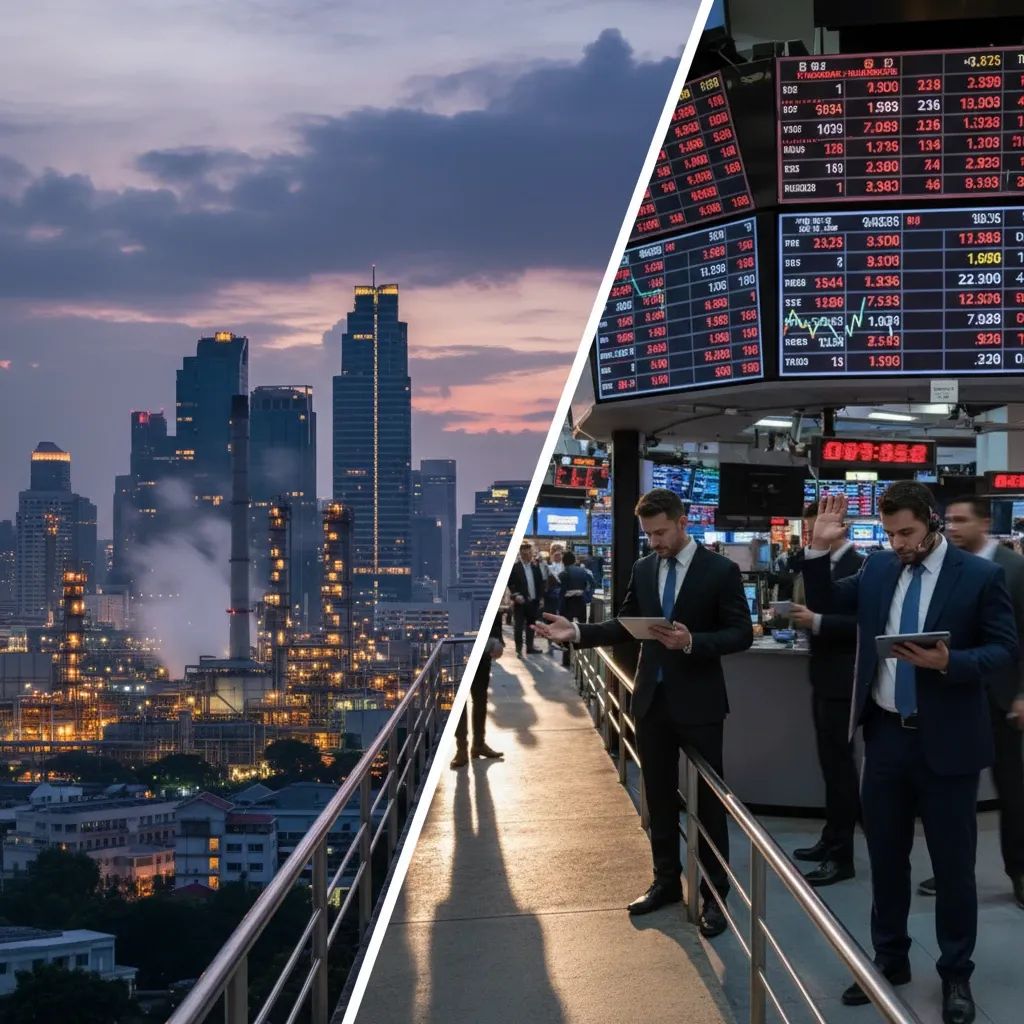
The Stock Exchange of Thailand dropped more than 1% on Monday morning as escalating hostilities between Iran and the United States sent shockwaves through Asian equity markets, with the SET Index slipping below the 1,500-point threshold amid growing regional concern.
Why This Matters
• Portfolio impact: The SET decline signals risk aversion affecting Thai equity holders and regional index funds amid geopolitical uncertainty.
• Energy costs rising: Oil prices have surged following the conflict, with analysts warning that crude price increases could translate to higher fuel bills and electricity tariffs in Thailand.
• Safe-haven shift: Investors are reportedly rotating toward defensive assets like gold and government securities, a typical response to geopolitical tension.
• Middle East escalation: The conflict between Iran and the United States poses risks to global energy supplies, particularly through the Strait of Hormuz, a critical shipping route for oil exports.
Regional Markets React
Equity benchmarks across Asia opened lower on Monday. Japan's Nikkei 225, Hong Kong's Hang Seng Index, and China's Shanghai Composite all recorded declines. Australia's S&P/ASX 200 also fell. Analysts attribute the regional selloff to concerns about energy prices and potential supply disruptions affecting the broader Asian economy.
The decline mirrors weakness in major U.S. and European indices, where markets reflected concerns about geopolitical uncertainty and its potential economic impact. Analysts warn that if the conflict escalates, pressure on emerging markets—including Thailand—could intensify.
Oil Prices Surge Amid Supply Concerns
Oil prices have risen sharply following the conflict escalation. Energy analysts caution that if the Strait of Hormuz—a critical chokepoint for global oil shipments—faces disruption, prices could rise substantially. The strait is vital for global energy security and supplies a significant portion of the world's oil.
For Thailand, which imports a substantial portion of its crude oil, refined products, and energy from the Middle East, higher energy costs could ripple through manufacturing expenses, inflation, and household budgets. The government maintains strategic petroleum reserves to help weather potential supply disruptions, though analysts debate how long such reserves could sustain the economy if a conflict prolongs.
Gold and Safe-Haven Assets Rally
Gold has climbed as investors seek defensive positions during geopolitical uncertainty. Market participants note that precious metals typically gain during periods of risk aversion. The Thai baht has experienced fluctuations against the U.S. dollar—a development that could affect import costs and export competitiveness.
What This Means for Thailand Residents
Energy Bills and Inflation
Thailand's energy costs are vulnerable to Middle Eastern disruptions. If oil prices remain elevated, analysts expect electricity tariffs and fuel pump prices will likely increase over time. The Electricity Generating Authority of Thailand (EGAT) and fuel retailers may pass rising costs to consumers.
Tourism and Air Travel
Airlines operating in Thailand face potential cost pressures from elevated jet fuel prices. Analysts suggest that higher fuel costs could eventually translate to increased ticket prices on long-haul routes, potentially affecting tourist arrivals and tourism-related businesses.
Labor and Expatriate Communities
Thai workers employed in the Middle East represent an important source of remittances for households. Any prolonged conflict could affect employment in the region and disrupt remittance flows to rural communities.
Supply Chains and Trade
Shipping costs may increase if vessels must take alternative routes or if insurers raise premiums. Thai exporters in electronics, automotive, and processed foods sectors could face higher logistics costs if disruptions to traditional shipping routes persist.
Market and Investment Outlook
Local investment advisors are counseling clients to monitor developments closely. Energy sector companies that benefit from higher crude prices may outperform, while fuel-intensive industries—such as airlines, petrochemicals, and some hospitality businesses—face margin pressures. Defensive sectors like telecommunications and infrastructure concessions continue to attract investors seeking lower-volatility alternatives during uncertain periods.
Government Monitoring
Thai government agencies, including the Ministry of Finance and Bank of Thailand, are monitoring the situation and coordinating with energy and commerce ministries to assess potential economic impacts. Officials are preparing contingency measures should the conflict affect energy supplies or market stability.
Outlook Ahead
International analysts warn that the situation remains fluid, with potential for either de-escalation or further escalation. A protracted conflict could sustain pressure on emerging markets and keep energy prices elevated, though current market levels reflect near-term uncertainty rather than certainty of prolonged supply disruption.
Key Takeaways
• SET Index declined more than 1% on Monday amid regional market pressure.
• Energy sector exposure provides some Thai market resilience as crude prices rise.
• Oil prices have surged; extended disruptions could push prices substantially higher.
• Gold has rallied as investors seek defensive positions.
• Thailand imports significant energy from the Middle East; strategic reserves provide near-term buffer.
• Tourism and airlines face potential headwinds from elevated fuel costs.
• Government agencies are monitoring the situation and preparing contingency measures.
• Thai residents should anticipate potential modest increases in energy and transportation costs if the conflict persists.
Investors holding Thai equities should maintain diversified portfolios and monitor geopolitical developments, while households should remain aware that sustained energy price elevation could gradually affect living costs.


