
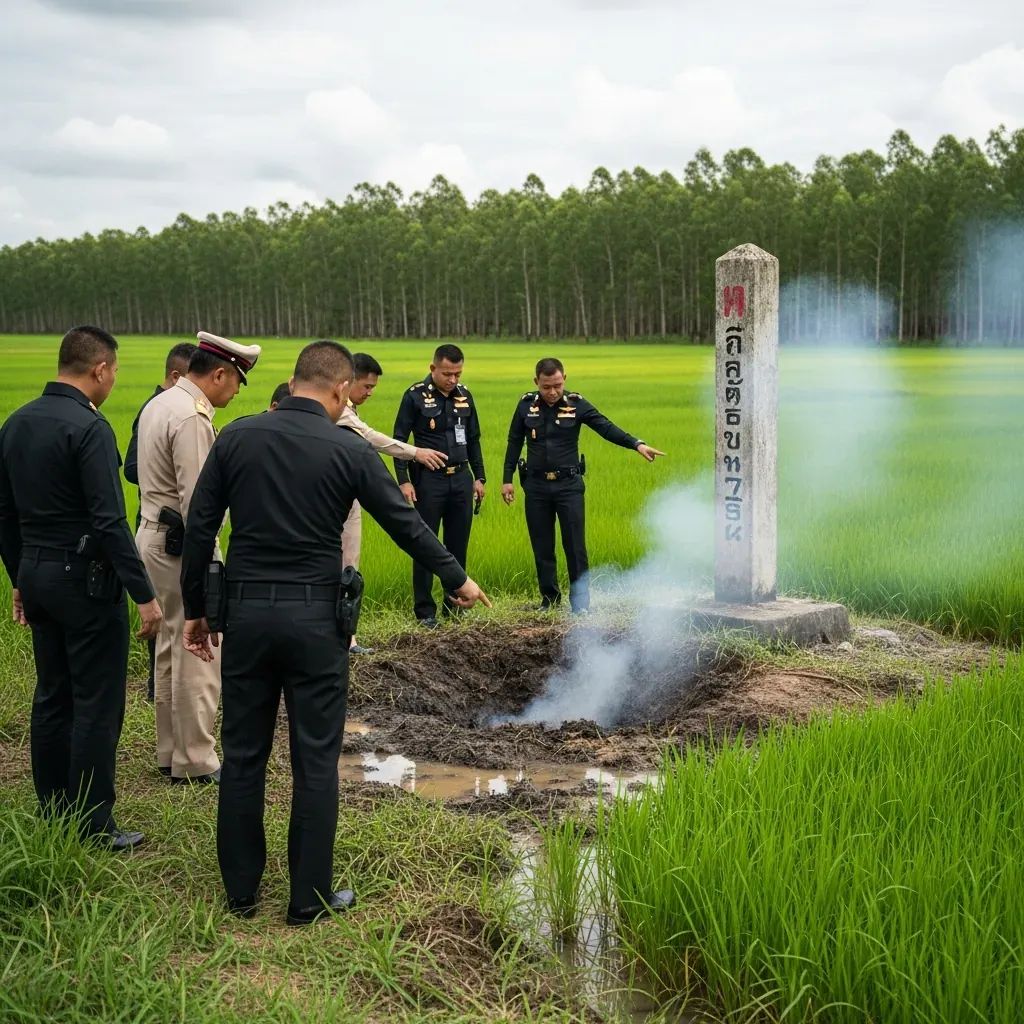
A quiet legal battle unfolding in Nakhon Ratchasima could shake the delicate détente along Thailand’s eastern frontier. Thai prosecutors have begun grilling army officers about allegations that top Cambodian politicians sanctioned cross-border assaults that left dozens of Thai civilians dead. The probe, unprecedented in scope, tests Bangkok’s resolve to pursue justice beyond its borders while preserving fragile ties with Phnom Penh.
Snapshot of the stakes
• 32 Thai civilians killed, 238 injured during late-July skirmishes, investigators say
• Nearly ฿100 M in property losses tallied in four Isan provinces
• Former Cambodian premier Hun Sen and his son, current PM Hun Manet, named in the complaint
• Thai prosecutors invoke Section 20 of the Criminal Procedure Code to pursue an extraterritorial case
• Police Region 3 chief appointed lead investigator under Attorney-General oversight
Why people in Thailand should care
Border flare-ups rarely stay local. Trade through the Aranyaprathet-Poipet corridor alone is worth $3 B a year; any spike in tension threatens jobs from Sa Kaeo fruit warehouses to Bangkok logistics firms. Beyond the economy, the case puts Thailand’s justice system on display: can it defend citizens harmed abroad without reigniting a regional feud?
Inside the evidence room
Senior prosecutors, more than twenty strong, traveled to Korat on Friday to synchronize with Police Region 3. Their closed-door session focused on:
• Timeline reconstruction: matching artillery trajectories and phone intercepts to the July 24-29 clashes
• Military debriefings: frontline Thai officers recounting shell impacts in Si Sa Ket, Surin, Buriram and Sa Kaeo
• Forensic mapping: drone images and crater analysis aimed at proving rounds were fired from inside Cambodia
Officials describe the offense as "extraterritorial homicide", a label that allows Thai courts to claim jurisdiction when nationals are killed abroad or by foreign forces. The strategy mirrors past Thai cases against drug syndicates operating in Laos, but it is the first time Bangkok has aimed the statute at a neighboring head of government.
Who is under the spotlight
Hun Sen, Cambodia’s longest-serving leader until handing power to his son in August 2023, has weathered international lawsuits before—most were civil, none criminal. Adding Hun Manet, a West Point graduate, raises the diplomatic temperature: the younger leader positioned himself as a modernizer seeking tighter ASEAN cooperation. Phnom Penh has not formally responded, though Cambodian state media dismissed the accusations as "politically motivated".
Legal road map and potential hurdles
Witness credibility: Many Thai soldiers posted near Preah Vihear Temple owe their careers to joint training missions with Cambodia, complicating testimony.
Service of process: Thailand must deliver indictments to defendants abroad, likely via the Treaty on Mutual Legal Assistance in Criminal Matters—a pact Cambodia has signed but rarely activated.
Sovereign immunity: International law shields sitting heads of government from prosecution in foreign courts; Thai lawyers argue immunity does not extend to war-crime-type allegations.
Political calculus: Bangkok and Phnom Penh are co-hosts of several Mekong infrastructure plans. A full trial could stall cross-border railway funding and power-purchase agreements.
Voices from the border
Villagers in Kantharalak district tell Post Today they still avoid farmland after unexploded ordnance surfaced in August. "We heard three loud booms and the house shook," said a rubber tapper, gesturing toward a roof patched with tin sheets. Local administrators have petitioned Bangkok for a ฿50,000 emergency stipend per household; so far, only medical reimbursements have arrived.
Historical backdrop
Thai-Cambodian border tensions spike every few years, most memorably during the 2011 Preah Vihear firefights that killed 10 soldiers. Yet bilateral trade climbed regardless, suggesting politics and commerce often operate on separate tracks. The current case is unique because it shifts confrontation from trenches to courtrooms—placing legal precedent ahead of artillery.
What happens next
Prosecutors are expected to finish witness interviews by February. If they recommend charges, Thailand’s Criminal Court could issue arrest warrants—symbolic unless Cambodian authorities cooperate, but influential enough to hamper international travel for the defendants. Observers anticipate ASEAN quietly mediating to prevent the dispute from overshadowing its 2026 summit, slated for Bangkok.
For Thais, the proceedings double as a litmus test: can a middle-power nation demand accountability from its neighbors while keeping borders open for trade and tourism? The answer may set the tone for regional justice long after the shell craters are filled.


