
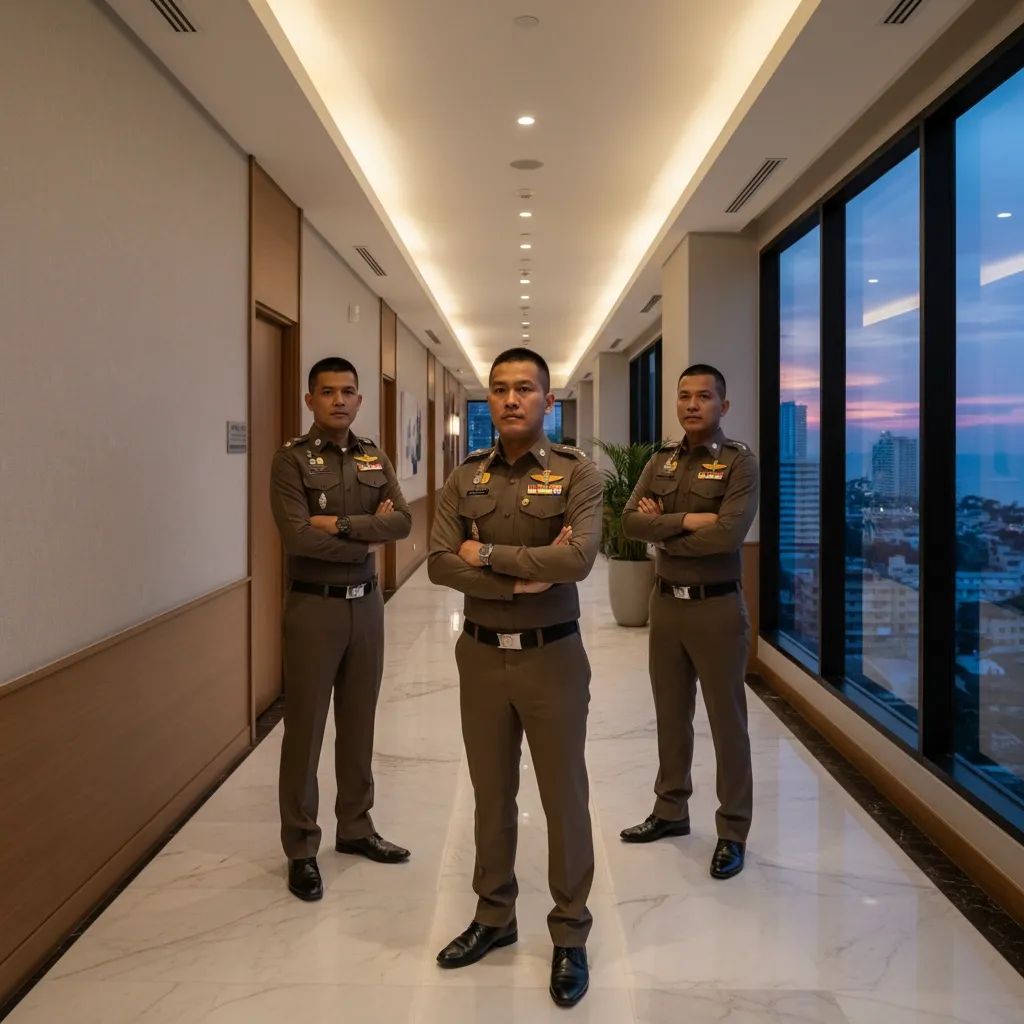
Thailand immigration police have detained a 76-year-old Turkish engineer wanted in connection with a building collapse during the catastrophic 2023 Turkey earthquake that killed 40 people. The arrest, carried out in Pattaya on April 22, marks the culmination of a year-long international manhunt and raises important questions about how Thailand handles international law enforcement cooperation.
The Arrest in Pattaya
Officers from the Chonburi Immigration Police, operating out of the Pattaya subdivision, raided a hotel in the coastal city around 5:00 PM on April 22 following a tip-off. The suspect, identified as Abdullah Aybaba, a Turkish national, was apprehended without incident and transferred to immigration custody. His permission to remain in Thailand was immediately revoked, triggering detention procedures under Section 12(7) of Thailand's Immigration Act B.E. 2522, which bars individuals subject to international arrest warrants.
Aybaba had been the target of an Interpol Red Notice issued at the request of Turkish prosecutors. The notice, a global alert for provisional arrest pending extradition, linked him to the deadly collapse of the Sami Bey Apartment building in Adana province on February 6, 2023, shortly after a magnitude 7.7 earthquake struck southern Turkey and northern Syria. The disaster claimed over 51,100 lives across both countries, with more than 44,300 fatalities in Turkey alone and over 122,500 injured.
What Went Wrong in Adana
The 16-story Sami Bey structure was among thousands of buildings that crumbled during the seismic event. Yet investigators quickly determined that the collapse was not solely the result of natural forces. Post-disaster inspections revealed the use of illegal, substandard construction materials — a finding that prompted Turkish authorities to open criminal proceedings against those responsible for the building's design, supervision, and construction.
Aybaba, who served as the contractor and construction supervisor for the project, is accused of negligence causing death. Prosecutors allege that his failure to adhere to safety regulations and his approval of non-compliant materials directly contributed to the building's structural failure. Turkish courts are seeking prison terms of up to 2 years for Aybaba and three co-defendants. He reportedly fled Turkey during the early stages of the legal proceedings and had been on the run for over a year before his capture in Pattaya.
The Larger Crackdown
Aybaba's case is part of a sweeping judicial response by Turkish authorities to hold builders, engineers, and contractors accountable for preventable deaths. In the immediate aftermath of the quakes, more than 100 arrest warrants were issued, and over 200 contractors and developers were detained. The Turkish Justice Ministry established dedicated "Earthquake Crimes Investigation" bureaus to scrutinize building permits, analyze construction materials, and gather evidence of regulatory violations.
Some of the sentences handed down have been severe. In September 2024, contractor Hasan Alpargun received 865 years in prison and 62 life terms for the collapse of an apartment block in Adana that killed 96 people. Another 34 defendants in the same case were sentenced to 25 years each. In February 2025, chief contractor Tevfik Tepebaşı and cooperative head Atilla Öz were each sentenced to more than 18 years for "causing death and injury through conscious negligence" after a tower block in the Ebrar complex in Kahramanmaraş collapsed, killing 115.
Despite these high-profile prosecutions, criticism persists over the lack of accountability for public officials responsible for building inspections, even when expert reports have identified their negligence as a contributing factor.
How Thailand Handles Interpol Red Notices
For foreign nationals living in or visiting Thailand, the Aybaba arrest underscores the country's responsiveness to Interpol alerts. While a Red Notice is not technically an international arrest warrant, Thai authorities treat it as sufficient grounds for detention and the initiation of extradition proceedings.
Once a suspect is identified, Thailand immigration police can detain the individual for up to 48 hours for initial investigation, extendable to 7 days with further approval. Detention beyond that period requires court authorization. Suspects are typically transferred to an Immigration Detention Centre (IDC), most commonly in Bangkok, where they await the outcome of legal and diplomatic processes.
For extradition to proceed, the requesting country — in this case, Turkey — must submit a formal petition through diplomatic channels. The alleged crime must be punishable under both Thai and Turkish law with a minimum sentence of one year, and it cannot be classified as a political or military offense. The Thai Ministry of the Interior holds the authority to issue a deportation order, and the process generally takes between 2 weeks and 3 months after police checks are completed.
The case illustrates how foreign nationals in Thailand face swift visa revocation once flagged by international warrants. Legal status is terminated immediately upon confirmation of an Interpol Red Notice, regardless of prior authorization or legitimate entry into the country.
Implications for Foreign Nationals
The arrest serves as a reminder that Thailand actively participates in international law enforcement cooperation, even when individuals have committed no offense on Thai soil. For expats, investors, and long-term residents, the case highlights the legal vulnerability of anyone subject to international warrants.
This cooperation includes not only Red Notices but also bilateral extradition treaties and regional security agreements. Those facing legal issues abroad should be aware that fleeing to Thailand does not guarantee sanctuary, and that information-sharing between Thai immigration and global police networks is routine.
Individuals who believe they have been wrongly flagged can challenge the validity of a Red Notice by submitting a request to Interpol's Commission for the Control of Files (CCF). Legal counsel can also contest extradition requests on grounds such as lack of dual criminality, risk of unfair trial, or potential for inhumane treatment in the requesting country. Appeals against deportation orders can be made to the Ministry of the Interior or, as a last resort, to the Administrative Court.
Extradition Process Underway
Aybaba has been handed over to investigators at the Nong Prue Police Station for further legal proceedings. Turkish authorities are expected to formally request his extradition in the coming weeks. If approved by Thai courts and the Ministry of the Interior, he will be returned to Turkey to stand trial on charges of negligence causing death.
The arrest demonstrates Thailand's ongoing commitment to international law enforcement collaboration, particularly in cases involving serious crimes abroad. For Turkish prosecutors, Aybaba's capture represents a significant breakthrough in efforts to ensure accountability for one of the deadliest natural disasters in the country's modern history.


