
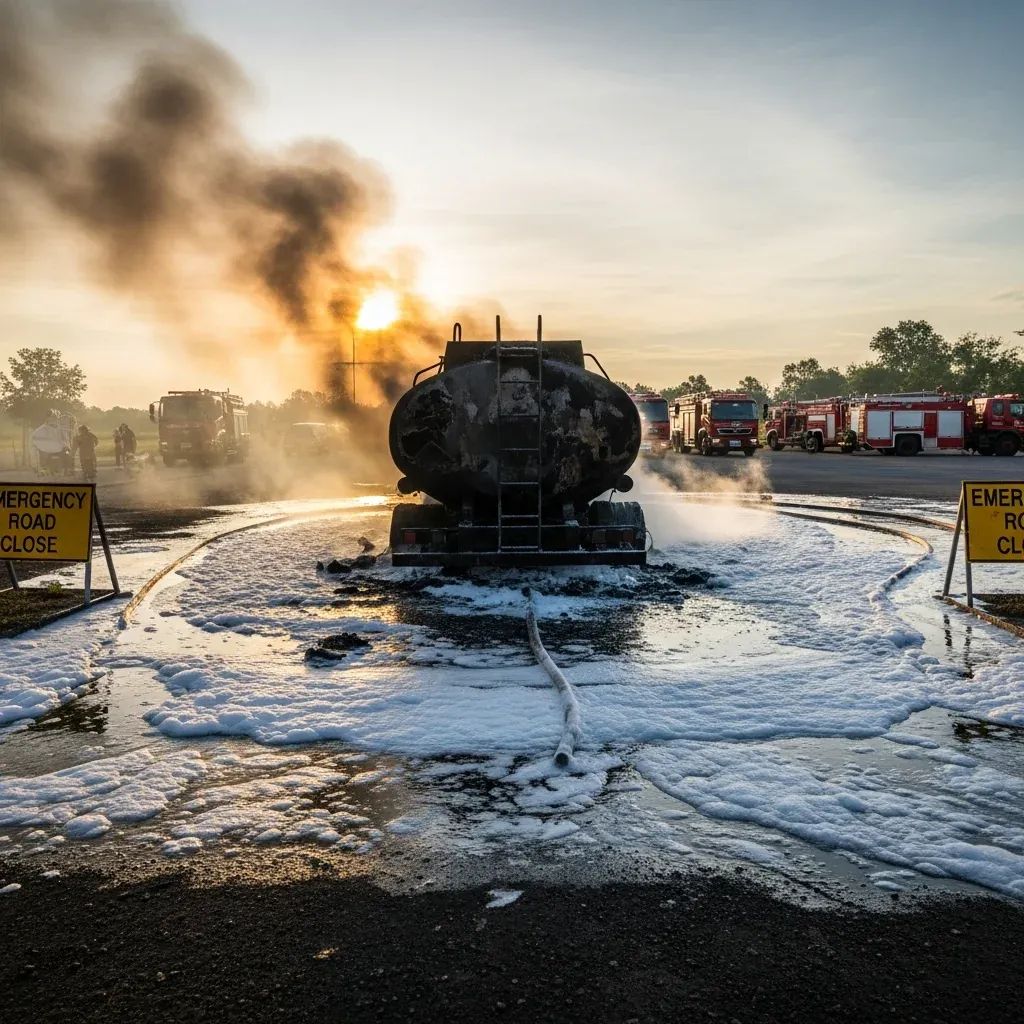
The Khon Kaen Provincial Disaster Prevention and Mitigation Office has confirmed that a fuel-tanker explosion behind a petrol station in Kranuan district was contained in under three hours, yet the incident has reignited debate over how close hazardous facilities may operate to Thailand’s classrooms.
Why This Matters
• Classes resumed the same afternoon, but parents within a 3 km radius reported smelling fumes until nightfall.
• 1 driver was killed and 2 workers injured; authorities now estimate direct losses of at least ฿8 M, with some insurers bracing for bigger claims.
• The Energy Ministry will audit every fuel depot in Khon Kaen for compliance with the 200-metre school-safety rule.
• Traffic on Highway 2302 remains partially closed while investigators inspect charred tankers—expect detours through Ban Nong Ko for several days.
How the Fire Unfolded
Witnesses told the Kranuan police station that at about 10:00 AM a driver was off-loading gasoline when a series of sharp bangs sent black smoke billowing over the town. Fire marshals say four tankers—each carrying up to 36,000 L—ignited in sequence. Heat from the blaze cracked five above-ground storage drums, prolonging the fire. More than 20 engines from three districts arrived, using foam-laced water to smother the flames before they reached the forecourt pumps.
Was the Station Even Allowed to Be There?
Under the 2009 Fuel Station Ministerial Regulation, any petrol outlet must sit at least 200 m from a school. Google-map measurements put Srikranuanwittayakom School somewhere between 200-500 m from the depot fence, depending on the entry gate used. The Khon Kaen Energy Office has opened a file to verify the licence, layout drawings and the depot’s electrical-grounding log. If inspectors find the site encroaches on the safety buffer, the operator faces fines up to ฿100,000 and possible permit suspension.
Emergency Response & Containment
Firefighters switched off district power within minutes, preventing sparks from overhead lines. Provincial Electric Authority crews re-energised the grid by 1:30 PM, but only after thermal cameras showed the tankers had cooled below 60 °C. Air-quality vans from the Pollution Control Department recorded volatile organic compounds slightly above guideline levels at noon; readings normalised by 4 PM after steady winds dispersed the plume toward open farmland.
School Disruption Was Brief
Teachers evacuated 1,200 students to the football field, then bussed younger pupils to a temple 2 km away. By early afternoon, the Khon Kaen Secondary Education Service Area Office announced that O-NET examinations scheduled the next day would proceed. No student injuries were reported, though counsellors were deployed for trauma-support discussions in classrooms this week.
What This Means for Residents
• Health: If you live nearby and smell petrol, ventilate your home and monitor for headaches. Local clinics are offering free check-ups for seven days.
• Insurance: Home-insurance policies that include “fire and explosion” riders should cover soot damage. Photograph residues before cleaning; adjusters are already making rounds.
• Commuting: Until the charred tankers are towed, expect 10-minute delays on Highway 2302; motorbikes can bypass on rural road 4052.
• Regulation: The Energy Ministry’s audit may prompt upgrades—automatic foam lines, anti-static flooring—at petrol stations across Northeastern Thailand, potentially leading to brief service interruptions.
Next Steps and Accountability
Forensics officers are focusing on static electricity as a probable trigger, given two empty trailers were parked beside a full gasoline tanker. Final results are due within 30 days. Meanwhile, the victim’s family is eligible for ฿50,000 funeral compensation from the Workmen’s Compensation Fund, plus civil damages. The depot operator has publicly pledged to cover medical bills of injured staff and any verified property loss in the surrounding community.
Expert View: Reducing School-Adjacent Fire Risk
Fire-safety consultant Rattawut Phrommas recommends that every Thai school within 500 m of a fuel facility
Conduct drill rehearsals twice a year, not merely once.
Install rooftop smoke sensors capable of detecting external fires.
Map multiple evacuation routes that avoid main roads likely to clog with emergency vehicles.While the Kranuan blaze ended without student casualties, said Rattawut, “the next incident might not be so forgiving.” The takeaway for families: ask principals about updated fire-response plans, and keep a personal go-bag with basic first-aid supplies at school for your child.


