
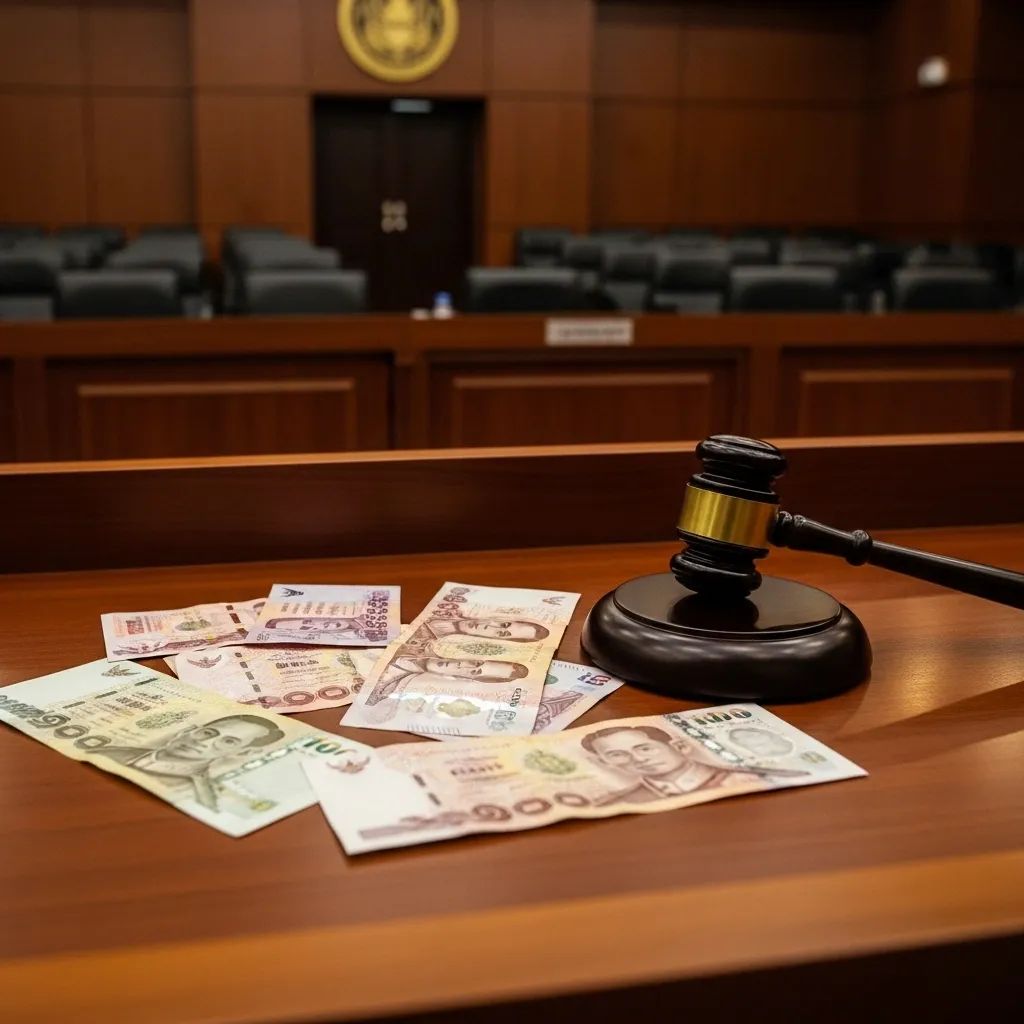
The Thailand Royal Police has successfully prosecuted a former immigration officer in Phuket for distributing child sexual abuse material, concluding a case that drew observers from the FBI and Australian Federal Police to the courtroom—a signal of how deeply international agencies are now embedded in the country's fight against online exploitation.
Why This Matters
• Suspended sentence precedent: Despite a combined sentence of 4 years and 28 months, the defendant will serve zero jail time if he complies with probation for 3 years.
• Massive scale: Authorities seized more than 250,000 files of child sexual abuse material from the former officer's devices.
• International scrutiny: Foreign law enforcement presence in Thai courts reflects Thailand's role as a regional nexus for cross-border child exploitation networks.
The Conviction
On March 10, the Criminal Court in Thailand handed down judgment against Jetsada Thipmanee, a former police sub-lieutenant with the Immigration Bureau in Phuket. He faced charges of possessing and distributing explicit images and videos of minors under 18 years of age. Investigators discovered that Thipmanee had systematically uploaded this material to online platforms accessible to the public over a continuous period stretching from 2021 through late 2024.
The court imposed a combined prison term of 4 years and 28 months, along with a fine of ฿120,000. However, because Thipmanee confessed to all charges and paid ฿25,000 in compensation to each of the four identified victims—a gesture the victims accepted—the judge suspended the entire sentence for 3 years. Under the terms, Thipmanee must report to a probation officer three times within the first year, complete 24 hours of community service, and remain crime-free. All seized devices and files were ordered forfeited to the state.
Operation Blackwrist and Global Collaboration
This case emerged from Operation Blackwrist, a multinational investigation led by Thailand's Department of Special Investigation (DSI) in partnership with the Australian Federal Police (AFP), the FBI, Homeland Security Investigations (HSI), and Interpol. The operation has targeted individuals across Asia-Pacific who produce, distribute, or possess child sexual abuse material, with a particular focus on networks operating through encrypted file-sharing platforms.
The presence of FBI and AFP representatives in the Phuket courtroom underscores the transnational nature of these crimes. Child exploitation material circulates globally, often uploaded from one jurisdiction and consumed in dozens of others within hours. For Thailand, cases like this one are not isolated incidents but data points in a broader pattern: the country's geographic position, relatively affordable internet infrastructure, and status as a tourism hub make it both a target and a transit point for exploitation networks.
The Suspended Sentence Debate
The decision to suspend Thipmanee's sentence has sparked debate among victim advocacy groups. While the court cited his confession and compensation as mitigating factors, ECPAT Foundation Thailand—a nonprofit combating child sexual exploitation—has argued that suspended sentences for possession of such a large volume of material send a contradictory message. Each file, advocates point out, represents a real child subjected to abuse, and the cumulative harm of 250,000 files is difficult to quantify.
Thai legal experts counter that the judiciary must balance punishment with rehabilitation, especially for first-time offenders with no history of direct contact offenses. The probation conditions, including mandatory reporting and community service, are designed to reintegrate the offender while maintaining oversight. Recidivism monitoring will be critical: any violation of probation terms triggers automatic activation of the full prison sentence.
What the Case Reveals About Enforcement in Thailand
The conviction demonstrates that Thai authorities are applying the Computer Crime Act with increasing rigor, particularly when international cooperation amplifies investigative capacity. Legal analysts note that first-time offenders who confess and compensate victims often benefit from judicial discretion under Thai sentencing guidelines, a factor that shaped Thipmanee's outcome.
The case also reveals how Thailand's internet service providers operate under government cooperation frameworks. The DSI and Technology Crime Suppression Division (TCSD) maintain direct channels to foreign agencies, meaning flagged IP addresses or file hashes can trigger coordinated raids with little warning. This level of integration has accelerated investigation timelines significantly in recent years.
Phuket itself has become a focal point for enforcement. The province hosts a Child Advocacy Center established in 2017 by the TCSD in collaboration with For Freedom International and the FBI, providing medical, psychological, and legal support to child victims while streamlining forensic interviews to reduce trauma.
Thailand's Broader Anti-Trafficking Agenda
Thailand's efforts are occurring within a larger strategic context. The government has declared 2026 the year it aims to achieve "Trafficking-Free Thailand" status, a target that encompasses not just labor and sex trafficking but also the production and distribution of child exploitation material. In parallel, Operation Cyber Guardian—a regional initiative involving Singapore, Japan, South Korea, Hong Kong, Malaysia, and Thailand—ran intensive enforcement sweeps between February and March of this year. The TCSD investigated 25 cases of online sexual exploitation during this period alone, arresting 15 suspects, with 8 cases specifically involving possession of child sexual abuse material.
The U.S. State Department's Trafficking in Persons Report has historically ranked Thailand on its Tier 2 Watch List, citing prosecution rates as a key metric. Convictions like Thipmanee's—especially those involving cooperation with U.S. and Australian agencies—help the country demonstrate compliance with international anti-trafficking standards and maintain eligibility for foreign aid and trade preferences.
Implications for Digital Enforcement Going Forward
The Thipmanee case establishes a precedent that may influence how Thai courts handle similar high-volume possession cases. Whether the suspended sentence encourages more aggressive prosecution of first-time offenders—or conversely, emboldens defense arguments for leniency—remains to be seen. Legal observers will be watching recidivism monitoring outcomes closely, as probation violations could set a different tone for future sentencing decisions.
For now, the case represents a tangible outcome of years of international cooperation. Whether Thailand can sustain this momentum—and translate it into more aggressive sentencing for high-volume offenders—will determine how seriously foreign partners take its 2026 trafficking-free pledge. The message from Thai and international authorities is clear: child exploitation material is a global crime with local consequences, and enforcement operations continue to intensify.


