
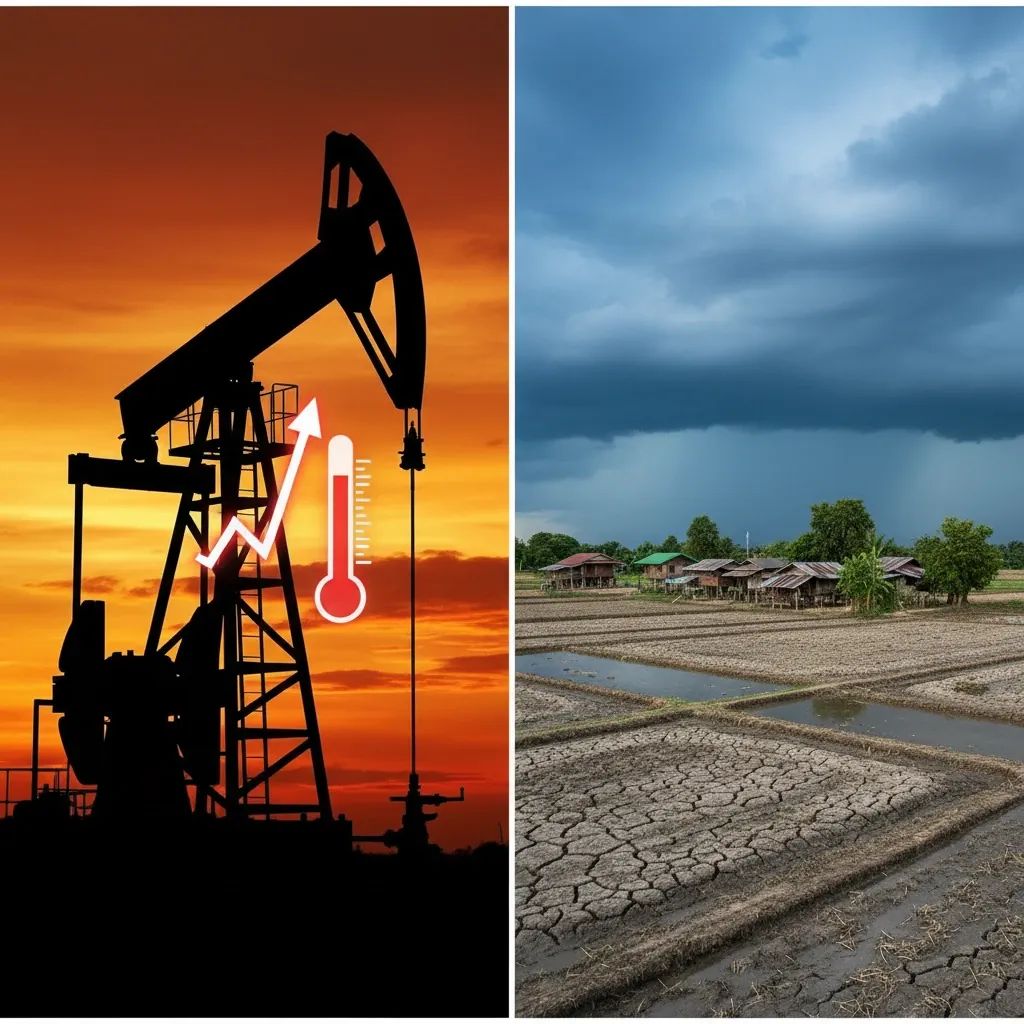
BANGKOK, May 15, 2026 — The European Centre for Medium-Range Weather Forecasts has confirmed that global ocean temperatures are nearing all-time highs, setting the stage for what is becoming one of the most powerful El Niño events in recorded history. For residents and businesses across Thailand, this shift is carrying direct implications: altered monsoon patterns, potential drought stress on agriculture, and heightened risks of extreme heat through late 2026 and into 2027.
Why This Matters Now
• Monsoon disruption: El Niño is already suppressing rainfall forecasts across Southeast Asia, threatening rice yields and water supplies in Thailand's central plains.
• Temperature spike: 2026 is forecast to rank among the top three warmest years on record globally, with peak heating expected during Thailand's hot season in early 2027.
• Marine impact: Coral bleaching and fishery disruption in the Andaman Sea and Gulf of Thailand are expected to intensify as sea-surface temperatures climb.
A Historic Warm Pulse Gathering Strength
Sea-surface temperatures in the Niño 3.4 region—a key monitoring zone in the central equatorial Pacific—are already running 3–4°C above normal, according to data from the World Meteorological Organization and the National Oceanic and Atmospheric Administration. Some forecast models project anomalies peaking above 4.5°C in eastern Pacific zones by November, a threshold that would rival the legendary El Niño events of 1877 and 2015.
The current warming is being driven by a massive subsurface Kelvin wave, a pulse of warm water triggered by a rare triplet cyclone pattern that swept the Pacific in April. This heat reservoir is now rising toward the surface, where it will reorganize atmospheric circulation and shift weather patterns across the tropics and beyond.
As of early May 2026, the ENSO system is in a neutral phase following a weak La Niña, but climate agencies assign a 61% probability that El Niño conditions will emerge between May and July and persist through year-end. If the forecast holds, the event will meet the criteria for a "super El Niño"—defined as sustained temperature anomalies exceeding 2.0°C in the Niño 3.4 region.
What Thailand Residents Face Right Now and in Coming Months
Thailand sits squarely in the zone where El Niño exerts its most disruptive influence. Historical records show that strong El Niño years correlate with below-average monsoon rainfall, reduced river flow in the Chao Phraya basin, and elevated fire risk in northern provinces.
Immediate Actions (May–July 2026):The Thailand Meteorological Department has already flagged the possibility of a prolonged dry spell extending into the 2026 wet season, with particular concern for provinces dependent on rain-fed agriculture. Farmers in drought-sensitive regions should contact their provincial Department of Agriculture offices to access drought-resistant crop varieties and information on accelerated irrigation repairs now underway.
Heat Stress in Urban Areas (May–October 2026):Bangkok and other major cities are experiencing and will continue to experience sustained temperature readings above 38°C from May through October, with humidity levels making outdoor activity hazardous during midday hours. The Thailand Ministry of Public Health has issued updated heat advisories and expanded cooling-center access in vulnerable neighborhoods. Residents can locate the nearest cooling center by:
• Contacting their local City Administration Office (Sai Yai)
• Calling the Ministry of Public Health hotline at 1556
• Visiting public libraries, shopping malls, and government buildings offering free air-conditioned spaces during peak heat hours (11 AM–4 PM)
Water Management Decisions (May–December 2026):Water managers in the Chao Phraya River basin are implementing accelerated draw-down schedules to ensure adequate water supplies through the dry season. Households in Bangkok and surrounding provinces should:
• Prepare for possible water restrictions beginning in July
• Store emergency water supplies (at least 20 liters per person)
• Report leaks in home plumbing to reduce waste
• Monitor announcements from the Metropolitan Waterworks Authority (MWA) at www.mwa.co.th for specific rationing schedules
Coastal and Marine Sectors:Warmer sea-surface temperatures are accelerating coral bleaching in reef systems that underpin dive tourism and artisanal fishing. The Department of Marine and Coastal Resources reported in January that approximately 12% of monitored reef zones in the Andaman Sea were already experiencing stress; that figure is projected to double if El Niño intensifies as forecast. Fishers should monitor the department's Weekly Reef Alert at www.dmcr.go.th and consult with provincial fisheries offices about alternative fishing zones and livelihood support programs now available.
A Global Pattern of Disruption
Beyond Southeast Asia, the emerging El Niño is reshaping weather patterns across continents. Southern Africa, India, the Philippines, Indonesia, and Australia are bracing for drought, while East Africa, northern Mexico, the southern United States, Peru, and Ecuador face elevated flood risk. Europe is experiencing milder winters, with wetter conditions across the Mediterranean and drier, colder weather in Scandinavia.
The jet stream—a high-altitude river of air that guides storm tracks—is shifting northward, pushing warmer-than-normal temperatures into western Canada and the northern United States. Meanwhile, the Pacific jet stream is amplifying, steering storms along the U.S. West Coast and potentially triggering heavy rainfall in California, a region still recovering from years of drought.
Tropical cyclone activity is also realigning. The Atlantic hurricane basin typically sees suppressed activity during El Niño years, while the western Pacific—including the South China Sea—experiences heightened storm frequency. This could mean a more active typhoon season for Thailand and neighboring countries, particularly during the traditional peak months of August through October.
Historical Context and Intensity Benchmarks
Climate scientists classify El Niño events by the magnitude of temperature anomalies sustained over five consecutive three-month periods. Weak events register 0.5–0.9°C above average; moderate range from 1.0–1.4°C; strong events reach 1.5–1.9°C; and very strong events exceed 2.0°C.
Only a handful of events since 1950 have crossed the 2.0°C threshold, most notably in 1982–83, 1997–98, and 2015–16. The 1997–98 event caused an estimated $36 billion in global economic losses, with severe drought in Indonesia sparking widespread fires and food shortages. The 2015–16 event, which featured record-breaking global temperatures, was amplified by an already-warm baseline ocean state—much like the conditions observed in early 2026.
What makes the current forecast particularly concerning is the combination of near-record baseline ocean heat and a powerful Kelvin wave injecting additional energy into the system. In January 2026, global mean sea-surface temperatures reached 20.73°C, the fourth warmest January on record, with 69% of the global ocean between 60°S and 60°N running above average. By the time El Niño peaks—likely in late 2026—those anomalies will have compounded, pushing global temperatures into uncharted territory.
Government and Humanitarian Response Currently Underway
The World Meteorological Organization has ramped up its monthly Global Seasonal Climate Updates, providing decision-makers with rolling forecasts to guide agriculture, water management, energy planning, and public health interventions. The International Federation of Red Cross and Red Crescent Societies has activated Early Action Protocols in vulnerable regions, releasing emergency funding when specific scientific thresholds are met.
In Thailand, actions are already taking place:
The Ministry of Agriculture and Cooperatives is actively distributing drought-resistant crop varieties to provincial offices and accelerating irrigation infrastructure repairs. Farmers can register for drought assistance programs through their District Agriculture Office. The ministry has established a Drought Hotline (1568) for real-time information on crop support and irrigation schedules.
Water managers in the Chao Phraya River basin have finalized reservoir draw-down schedules and are coordinating with provincial water authorities. Residents can access current water management updates via the Royal Irrigation Department website at www.rid.go.th.
Marine conservation agencies are mobilizing actively. The Thailand Department of Marine and Coastal Resources is expanding real-time monitoring in Marine Protected Areas and has deployed temperature sensors across reef systems in the Andaman Sea and Gulf of Thailand. Research teams are conducting rapid assessments to identify priority sites for restoration and enforcement. For marine communities, the department offers Fisher Support Programs providing financial assistance and alternative livelihood training—details available at provincial fisheries offices.
On the energy front, elevated temperatures are driving a surge in air-conditioning demand. The Electricity Generating Authority of Thailand is coordinating with regional operators to ensure supply continuity through peak summer months. Residents are urged to use electricity efficiently by setting air conditioners to 26–28°C and using timers to reduce consumption during peak hours (2 PM–5 PM).
The Lag Effect and 2027 Outlook
One of the less-understood aspects of El Niño is the three-month lag between peak ocean warming in the tropical Pacific and the maximum global surface temperature response. This means that even if El Niño peaks in late 2026, the most intense heat will likely arrive in the first half of 2027. Climate agencies are already flagging 2027 as a candidate for the warmest year on record, surpassing even the extremes anticipated for 2026.
For Thailand, this timeline suggests that the most acute impacts—prolonged drought, heat stress, and marine ecosystem damage—will extend well into 2027, complicating recovery efforts and requiring sustained government and humanitarian support. Residents should plan preparations for an extended period of above-normal heat and water stress through mid-2027.
The broader message from climate scientists is unambiguous: reducing greenhouse gas emissions remains the only long-term solution to mitigating the frequency and severity of such events. In the meantime, early warning systems, adaptive infrastructure, and community preparedness will determine how well vulnerable populations weather the storm.
For immediate assistance and current advisories, residents can contact:
• Thailand Meteorological Department: 1185 or www.tmd.go.th
• Ministry of Public Health Hotline: 1556
• Thailand Drought Hotline: 1568
• Royal Irrigation Department: 1185 or www.rid.go.th
• Department of Marine and Coastal Resources: www.dmcr.go.th


