
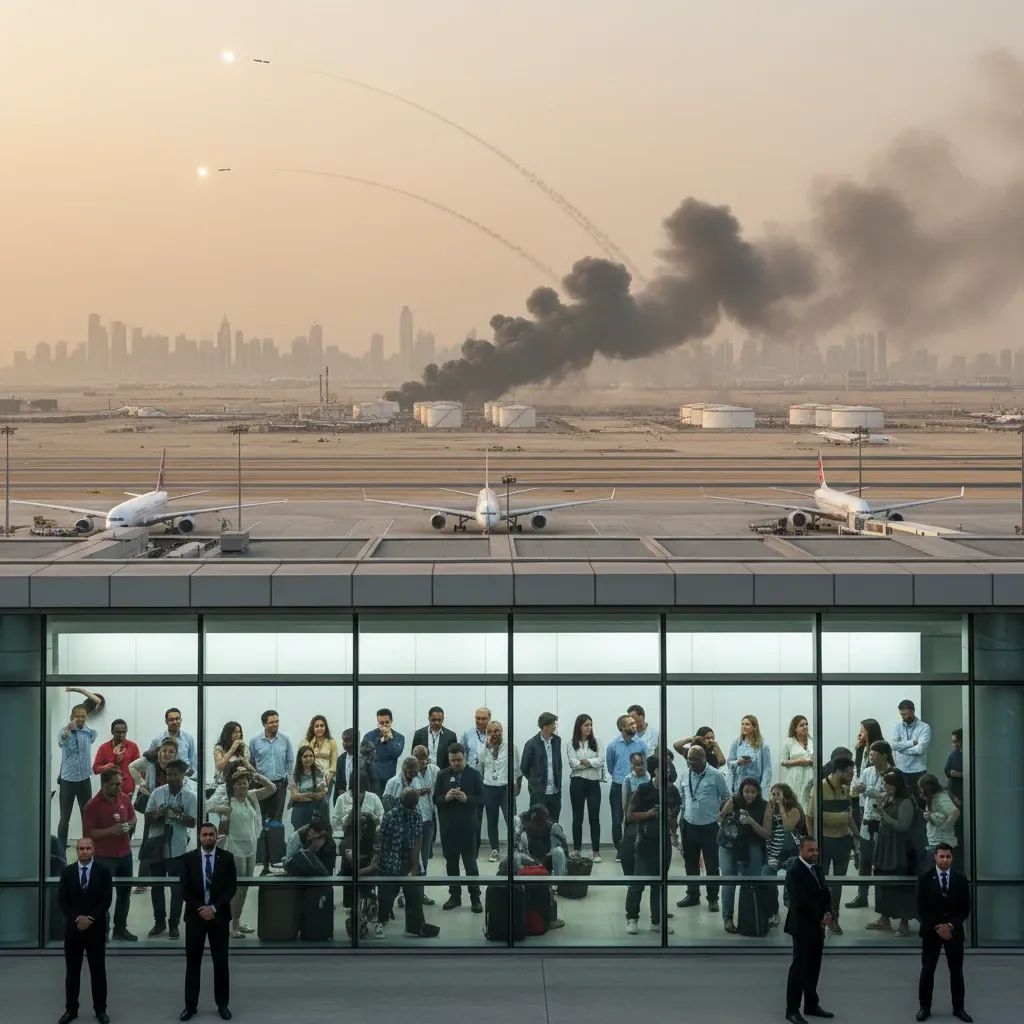
Dubai International Airport, the world's busiest hub for international passengers, experienced a drone strike on March 16, 2026 that ignited a fire near a fuel storage facility. The incident resulted in a temporary suspension of flight operations while authorities contained the situation. The UAE Ministry of Defence confirmed the attack was contained without casualties.
What Happened
Dubai Civil Defence teams extinguished flames at the fuel storage facility adjacent to the airport perimeter. The General Civil Aviation Authority ordered an immediate halt to departures and arrivals while explosive ordnance disposal units assessed the damage and swept runways for debris.
Airlines including Emirates, Air India, and British Airways suspended operations and diverted inbound flights to Al Maktoum International Airport, located 37 kilometers south in Dubai World Central. By afternoon, Dubai Airports announced a partial resumption of services, though delays rippled through global flight networks as crews and aircraft repositioned.
Road access to the terminal was briefly restricted but reopened the same day via the Airport Tunnel and Sheikh Mohammed bin Zayed Road.
Why This Matters for Travelers
For expatriates and Thai nationals living in or transiting through the UAE, the operational reality shifted temporarily. Dubai International Airport experienced brief disruptions to its normally reliable connections. Airlines advised passengers to monitor notifications and consider alternate routes through Doha, Riyadh, or Istanbul during the suspension period.
Travelers with bookings through Dubai should monitor airline notifications. Most carriers have activated flexible rebooking policies; many allow free changes for tickets issued around the time of the attack. Check whether your airline operates backup routes through Abu Dhabi or other Gulf hubs.
Residents near the airport should monitor official safety alerts from the UAE Ministry of Interior and follow civil defense instructions during any active incidents. Those living in affected zones near Al Garhoud and Al Twar should maintain awareness of official communications.
Historical Context
The UAE has faced security challenges in previous years. Yemen's Houthi rebels claimed responsibility for purported drone strikes on Dubai in 2018 and 2022, though international investigators assessed those claims as unverified. These earlier incidents prompted the UAE to significantly enhance its air defense capabilities.
The UAE's Defensive Response
Following security incidents in 2022, the UAE invested in advanced counter-drone technology. Its air defense network now integrates F-16 Block 60 fighters, Mirage 2000-9 interceptors, and South Korea's Cheongung-II missile system, which specializes in low-altitude threats.
At airports, security systems include net-equipped drones designed to capture intruders mid-flight, and portable jamming devices that disable control signals. Since 2022, recreational drone flight within 5 kilometers of any airport has been prohibited. Commercial operators must obtain Ministry of Defence clearance, complete certified training, and file flight plans in advance.
Practical Considerations
Residents should register with their embassies and download the UAE Alert app for real-time safety notifications. Keep physical copies of travel documents and emergency contacts readily available.
The attack has been contained, and normal operations have resumed. However, travelers and residents should remain informed through official channels and their embassy notifications about any ongoing developments that may affect travel or safety.


