
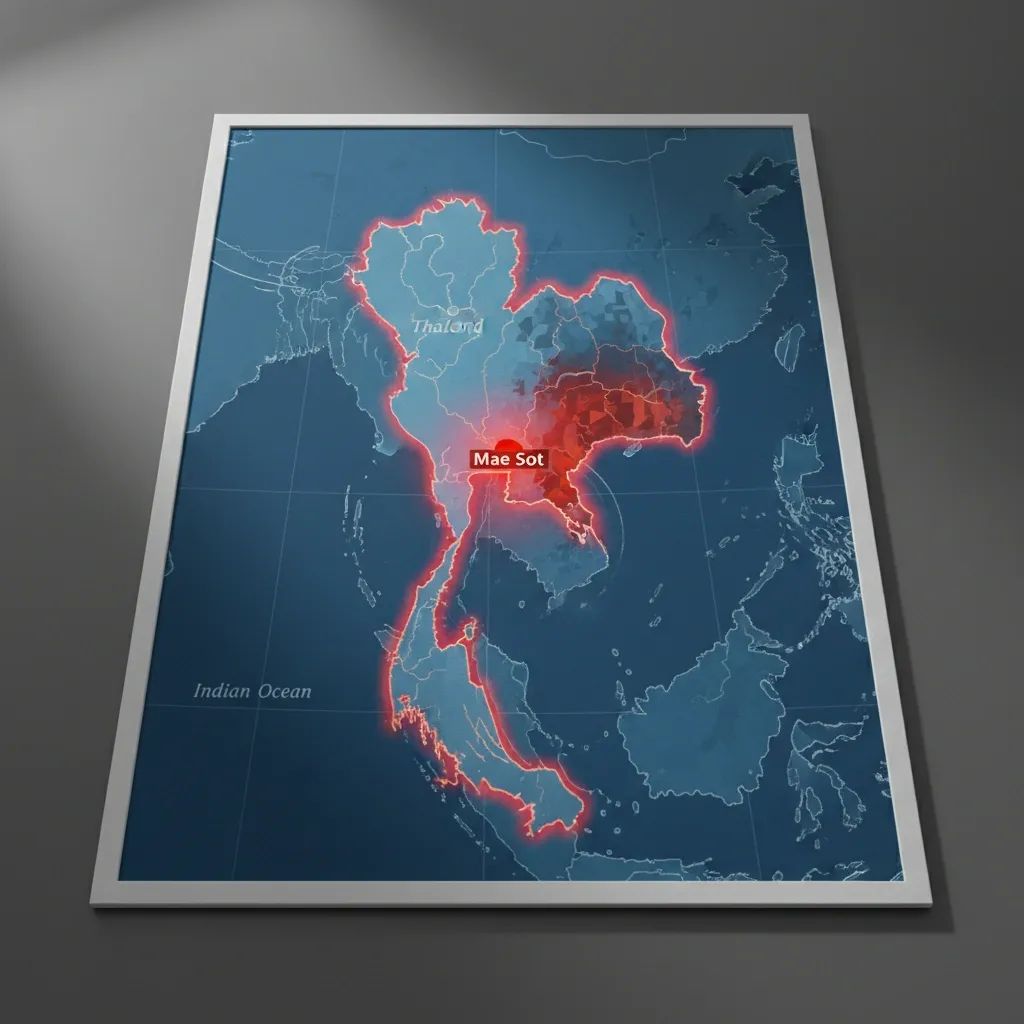
The Chinese government has unleashed a wave of economic interventions totaling approximately ฿2.2 trillion (500 billion yuan), significant policy measures aimed at stabilizing growth amid economic headwinds. For residents and businesses across Thailand—whose economic ties to China's manufacturing sector and consumer market remain substantial—understanding the implications is essential for planning ahead.
Why This Matters
• Trade exposure: Thailand exports roughly 12% of goods to China; any sustained downturn in Chinese demand directly affects Thai manufacturers, agriculture exporters, and tourism operators.
• Currency volatility: The People's Bank of China has signaled measured adjustment of the yuan, but depreciation pressures could create regional currency movements, affecting Thai baht stability.
• Regional growth drag: Analysts forecast East Asian developing economies will slow from 5.0% growth in 2025 to 4.6% in 2026, with weaker Chinese import demand as a contributing factor.
• Payment pressures: Reports from Chinese provincial authorities indicate fiscal pressures that could affect payment timelines for Thai suppliers and service providers operating across the border.
What This Means for Thailand Residents
Trade and Investment
Thai exporters of rubber, electronics components, and agricultural commodities should monitor market conditions carefully. China's trade surplus, driven by aggressive export promotion, has already increased competition from cut-price Chinese goods in Southeast Asian markets, affecting Thai manufacturers. Simultaneously, Chinese firms are diversifying supply chains, creating opportunities for Thai intermediaries. The Thailand Board of Investment has reported increased applications from Chinese manufacturers seeking production bases in the Eastern Economic Corridor—a trend that reflects broader supply chain adjustments.
Tourism and Services
Chinese tourist arrivals to Thailand remain below pre-pandemic levels, reflecting cautious consumer spending. Weak confidence is keeping middle-class travelers at home. The Tourism Authority of Thailand has pivoted marketing efforts toward alternative markets. On the positive side, Thai service providers targeting affluent Chinese consumers—medical tourism, international education—may benefit as wealthy families seek opportunities for education and healthcare abroad.
Currency and Remittances
Expect the Thai baht to trade in a volatile band against the yuan as Beijing balances stimulus with stability. Thai businesses with yuan-denominated receivables should consider currency risk management strategies; those with dollar liabilities may face pressure if the baht weakens regionally. Remittances from Thai workers in China could be affected if local payment pressures persist.
The Anatomy of a Slowdown
Official GDP targets hover around 4.5–5.0%, but independent forecasts cluster closer to 4.3–4.8%—a significant moderation from historical rates. Consumer confidence has been dampened by household debt concerns, particularly related to the real estate sector, and deflationary pressures persist. The property sector—once a major economic engine—continues adjustment, with analysts monitoring the timeline for stabilization.
At local government levels, fiscal pressures are mounting. Provincial authorities have reduced discretionary spending as property-related revenues declined. Reports from provincial administrations indicate delays in some government payments, affecting contractors and service providers. The China State Council has launched programs to address payment backlogs, prioritizing critical sectors. For Thai firms conducting business in China, this underscores the importance of clear payment terms and verification of counterparty financial capacity.
Four Pillars of Beijing's Response
1. Credit Expansion for Small and Medium Enterprises
The China Ministry of Finance has authorized lending programs worth ฿2.2 trillion, targeting enterprises in digital, green, and retail sectors. For Thai manufacturers reliant on Chinese component suppliers, these programs could support supply chain stability. Local Government Financing Vehicles (LGFVs)—specialized entities used by provincial authorities to fund infrastructure—are being restructured to improve transparency and sustainability.
2. The "Shopping in China" Campaign
Beijing has launched domestic consumption initiatives featuring discount programs and incentives for new retail channels, including AI-driven commerce and eco-friendly products. For Thai consumer goods exporters, success depends on whether these campaigns succeed in rebuilding confidence among Chinese households. Brands with established distribution networks may see modest recovery opportunities.
3. Monetary Easing Without Aggressive Depreciation
The People's Bank of China has adjusted policy rates and adjusted reserve requirements—the percentage of deposits banks must hold—to support lending. Governor Pan Gongsheng has stated the country has no intention to gain trade advantage through currency depreciation. For Thai exporters competing with Chinese goods, this measured approach offers stability but limits the extent of demand recovery from aggressive monetary stimulus.
4. Infrastructure and Debt Management
Provincial governments have been authorized to issue bonds for infrastructure projects and debt restructuring. The Debt-Swap Program aims to convert less transparent liabilities into standard bonds, improving fiscal clarity. Thai construction and engineering firms should verify contract terms and payment capacity carefully, given increased attention to fiscal discipline.
The Regional Context
China's economic adjustment has regional implications. East Asian developing economies are projected to experience slower growth, with export-dependent nations particularly affected. India's infrastructure expansion offers partial counterbalance, but Southeast Asia—including Thailand—must develop domestic growth drivers rather than relying primarily on Chinese demand recovery.
The Road Ahead
Beijing's stimulus approach is measured in scope, reflecting attention to fiscal sustainability. The 15th Five-Year Plan (2026–2030) emphasizes technology development and innovation, targeting investment in artificial intelligence, advanced semiconductors, and biopharmaceuticals. The strategic bet is that innovation can support long-term growth despite demographic transitions.
For businesses and residents in Thailand, a pragmatic approach is warranted. Diversify supply chains where feasible, implement appropriate currency risk management, and treat any Chinese recovery as a positive development rather than a planning baseline. Verify payment terms with Chinese counterparts, and stay informed through resources like The Thailand Board of Investment and The Tourism Authority of Thailand, which provide market updates and risk assessments. The relationship with China remains important, but sustainability requires careful management and realistic expectations about growth rates.


