
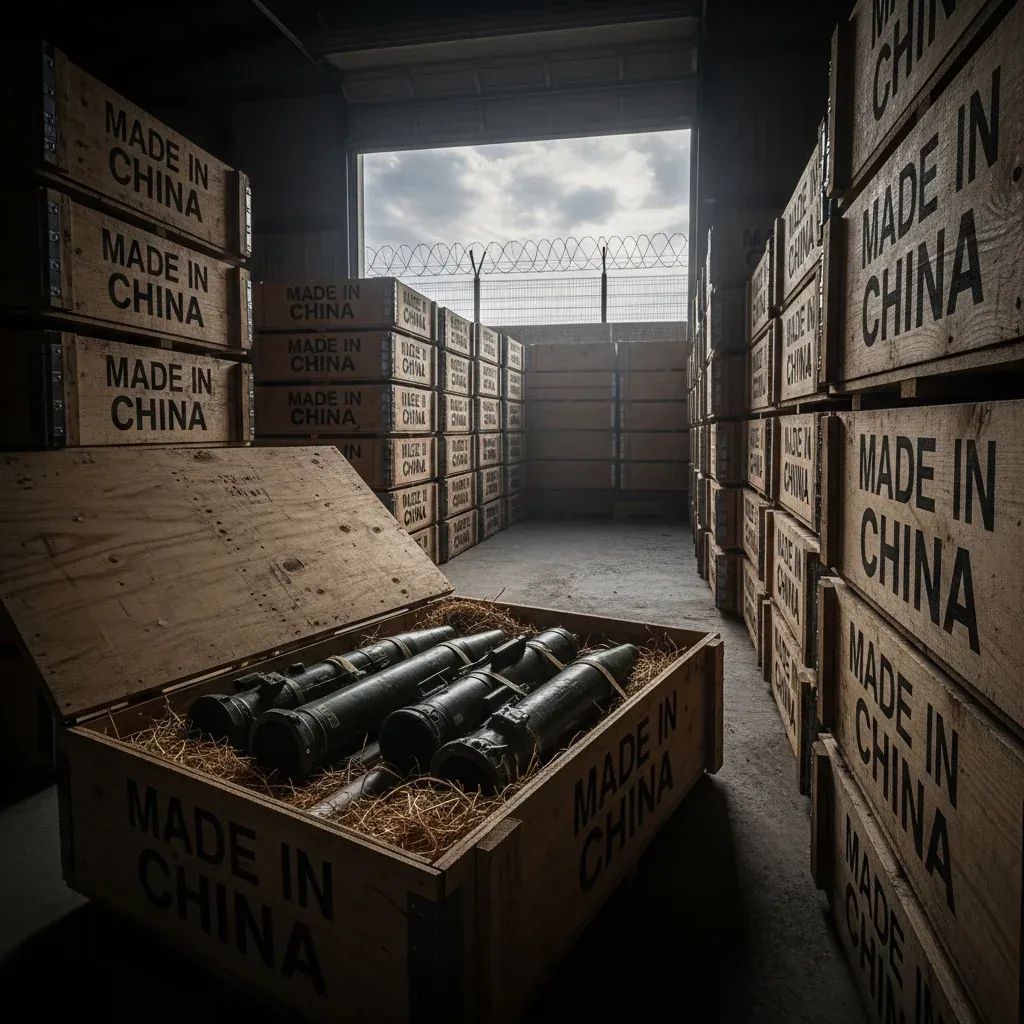
A late-night statement from Beijing is rippling through Thai newsrooms after troops in Sa Kaeo held up Chinese-made weapons captured from Cambodian positions. China insists it will not pick sides, but the episode exposes just how entwined the three capitals have become in one another’s security calculations.
What Beijing Said and Why It Matters
Spokesman Jiang Bin of the Ministry of National Defence broke his silence only after local reports showed photos of HN-6 anti-air rockets, PF-98 anti-tank launchers and drone components stamped “Made in China.” He underlined that Beijing’s military deals with both Phnom Penh and Bangkok are "transparent, lawful and never aimed at a third party." The carefully worded statement carried three core messages for Thai readers:
No favourites – China claims strict neutrality despite arming both sides.
Call for restraint – urging Bangkok and Phnom Penh to “step back from the brink.”
Hands-off image – portraying its role as that of a concerned neighbour, not an instigator.
For Thailand, the neutrality claim matters because it shields China from Western pressure while allowing Bangkok to keep purchasing Chinese hardware without fear of diplomatic backlash.
Weapons on Both Sides of the Fence
Trade records examined by SIPRI and Thai procurement documents reveal a long arc of rising Chinese arms sales:
• Cambodia has bought or received at least $530 M worth of Chinese equipment since 2010, including Pacer-C air-defence systems and Type-90B howitzers.
• Thailand shifted sharply toward Chinese suppliers after the 2014 coup. Deliveries since then top $450 M, highlighted by VT-4 main battle tanks, KS-1M surface-to-air missiles and the still-controversial S26T submarine deal.
Military analysts in Bangkok note that “equal supply” allows China to claim balance while still deepening dependence on its technology: spare parts, software keys and munitions must all come from the same vendor.
A Delicate Dance of Diplomacy
Beyond the sales figures, Beijing is rolling out an intense shuttle-diplomacy campaign:
• Foreign Minister Wang Yi has phoned counterparts in both capitals twice this month.
• A special envoy from the Foreign Ministry’s Asia bureau has visited Phnom Penh, Bangkok and Nakhon Ratchasima in quick succession.
• Chinese officials publicly endorse an ASEAN-led ceasefire framework, a nod to regional process while signalling they can still influence the outcome.
Diplomats in the Thai Foreign Ministry describe China’s approach as “quiet facilitation”—heavy on back-channel talks, light on press briefings—to avoid provoking nationalist sentiment on either side of the border.
Why Thai Residents Should Care
Thailand’s business community and border provinces face a trio of immediate risks—and opportunities:
• Cross-border trucking: Daily trade worth ฿320 M has slowed as insurance premiums spike.
• Tourism corridors: Siem Reap to Bangkok bus routes, popular with both backpackers and temple pilgrims, have been suspended.
• Chinese investment: Projects tied to the Belt and Road—especially the Laem Chabang deep-sea port rail spur—require a stable frontier. Prolonged clashes would dent investor confidence and job creation.
Conversely, a speedy ceasefire could cement Thailand’s image as a regional logistics hub, attracting more supply-chain relocations from China.
Scholars Split on Beijing’s Motives
Security experts at Chulalongkorn and Chiang Mai universities draw contrasting conclusions:
• Pro-Balancing View: Beijing’s “arms to both” policy discourages either side from achieving overwhelming superiority, reducing chances of a wider war.
• Critics’ View: By feeding both arsenals, China gains leverage regardless of who prevails—hardly the mark of true neutrality.
Most agree, however, that strong nationalist narratives in both countries will limit any direct Chinese mediation on border demarcation itself.
The Road Ahead
Thai defence sources say the captured launchers are now stored at Fort Suranari pending forensic checks. Beijing has not asked for their return, a sign it wants the matter to fade from public view.
Looking forward, three variables will determine whether the guns fall silent:
Ground commanders’ discipline along the disputed ridge near Phra Viharn/Preah Vihear.
ASEAN’s ability to convene an emergency foreign-minister meeting before year-end.
China’s quiet pressure—economic carrots, visa perks, or withheld spare parts—on both allies to stand down.
For Thai citizens and investors, the takeaway is simple: Beijing may not be cheering either flag, but its fingerprints are on almost every rifle on the battlefield. Understanding that reality is key to reading the next twist in this familiar but still dangerous border drama.


