
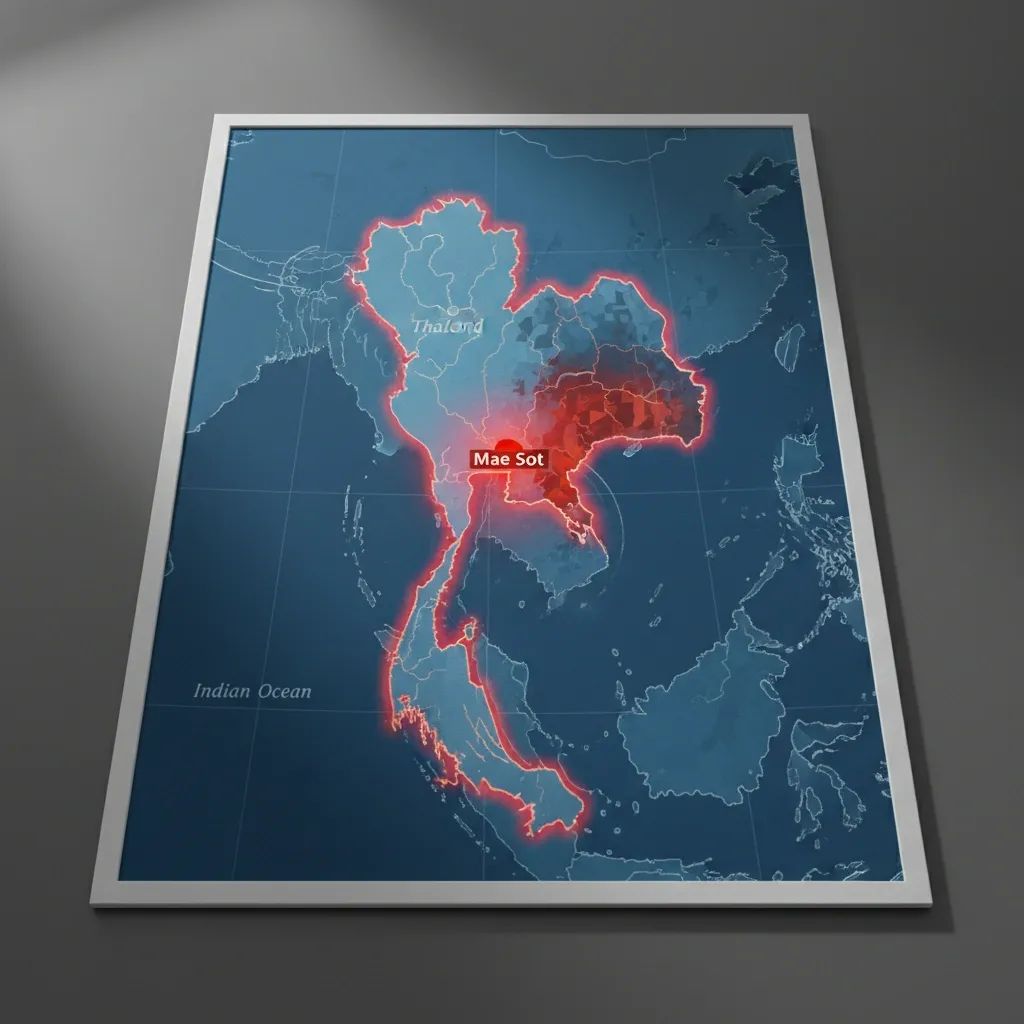
The Thailand Royal Police in Mae Chan District, Chiang Rai, arrested three 14-year-old boys transporting 25.8 kg of crystal methamphetamine on April 30, underscoring a troubling escalation in the exploitation of minors by Golden Triangle drug networks. The seizure forms part of a wider crackdown that netted 4.6 million methamphetamine pills, additional ketamine, and 10 suspects, with multiple cases involving teenagers as young as 14 acting as couriers for organized crime.
Why This Matters
• Youth exploitation is surging: Criminal syndicates increasingly recruit teenagers—some barely in their teens—because they charge less, attract less suspicion, and face lighter penalties if caught.
• Chiang Rai remains a drug superhighway: The province, anchored in the notorious Golden Triangle, consistently ranks among Thailand's top entry points for methamphetamine flowing from Myanmar's Shan State.
• Poverty fuels the cycle: Entrenched economic vulnerability, addiction, and false employment promises drive minors into smuggling networks with devastating legal and social consequences.
The Mae Chan Arrests
On April 30, patrol officers intercepted the trio in Sri Kham Subdistrict as they carried a backpack loaded with ice along a dirt road in Ban Wiang Sa. The boys, all 14 years old, were part of a coordinated trafficking operation moving product across the porous border separating northern Thailand from Myanmar. Pol. Col. Kiattisak Jitprasan, Superintendent of Mae Chan Police Station, detailed the case during a May 6 press conference alongside the Deputy Commander of Chiang Rai Provincial Police and the Deputy Governor.
The same sweep revealed a 15-year-old behind the wheel of an SUV carrying 1 million meth pills, while a 16-year-old on a motorcycle served as the convoy's guide. Authorities also dismantled another gang of 14-year-olds transporting ice and ketamine. Collectively, the operation seized 4.1 kg of ketamine alongside the methamphetamine haul, illustrating the scope and sophistication of networks willing to enlist minors as frontline mules.
Why Traffickers Target Children
Criminal organizations exploit a perfect storm of socio-economic desperation and legal loopholes. In hill-tribe communities and border villages—home to indigenous Lahu and Shan populations—entrenched poverty, discrimination, and lack of formal employment create a recruitment pool. Teenagers without legal papers, unaccompanied refugee minors, and street children are especially vulnerable.
Methamphetamine's low street price and ubiquity in northern Thailand mean curiosity often spirals into addiction. Once hooked, young users need cash to sustain their habit, and smuggling offers fast money. Some are lured by false employment agencies promising legitimate work in cities, only to be sold into trafficking networks. Others, driven by materialism or family financial strain, accept courier jobs to afford motorcycles or mobile phones.
Traffickers deliberately favor youth and women because they demand lower wages and are perceived as less threatening at checkpoints. Children as young as three have been used as "alibi props" to disarm police vigilance. Friends already embedded in the trade recruit peers, perpetuating a cycle in which trafficked individuals become traffickers themselves. Corrupt local officials and immigration officers, paid to look the other way, further grease the wheels.
The Golden Triangle Pipeline
Chiang Rai sits at the epicenter of the Golden Triangle, the tri-border zone where Thailand, Myanmar, and Laos converge. From October 2023 to June 2024, neighboring Chiang Mai province alone confiscated 108 million methamphetamine pills—the highest total among Thailand's 76 provinces—while northern Thailand accounts for an estimated 80% of all drugs entering the country.
The bulk originates in Myanmar's Shan State, where civil conflict and weak governance allow insurgent groups to operate industrial-scale "super labs" producing crystal meth and pills. Traditional horse and donkey caravans have given way to modified vehicles, agricultural produce trucks, and personal cars concealing shipments in hidden compartments. The Mekong, Salween, and Moei rivers serve as liquid highways, ferrying product into Thailand's northern provinces before distribution southward.
When enforcement tightens in one corridor, networks pivot. Intensified patrols along the Thai-Myanmar border have shifted traffic eastward through Laos, with northeastern provinces like Nong Khai, Bueng Kan, and Ubon Ratchathani now accounting for 49% of ice seizures in 2021—a fourfold jump from two years prior. Maritime routes via the Gulf of Thailand and Andaman Sea are also gaining traction, extending reach to Australia, New Zealand, and South Korea.
What This Means for Residents
For those living in northern Thailand, the surge in youth trafficking signals both heightened law enforcement activity and persistent security risks. Roadside checkpoints, especially along provincial highways in Chiang Rai, Chiang Mai, and Mae Hong Son, are routine. Expect delays during peak interdiction campaigns, particularly near border crossings.
Foreigners and expats residing in affected areas should be aware that checkpoint searches may be more frequent and thorough during intensified enforcement operations. While standard procedures apply equally to all travelers, it's advisable to carry identification documents and maintain transparency during routine inspections. Additionally, property values and investments in border communities may fluctuate based on perceived security conditions, though authorities maintain that tourist areas and established communities remain secure.
Parents and educators should be alert to recruitment tactics. Watch for sudden displays of wealth among teens—new phones, motorcycles—or unexplained absences. Friends already involved in the trade often serve as recruiters, and false job offers targeting rural families remain common.
If a minor is arrested, youth welfare agencies must be involved under current protocol. Since 2021, Thailand's legal framework has shifted toward rehabilitation over incarceration for drug offenders, though enforcement varies by case severity and local jurisdiction.
Enforcement and Rehabilitation Landscape
The Ministry of Interior's "Seal Stop Safe" campaign, launched in January 2025, targets 51 border districts across 14 provinces, including much of northern Thailand. The initiative deploys specialized units like the Pha Muang Task Force and establishes "MOI Youth Against Drugs" networks to engage young people in prevention.
The Narcotics Suppression Bureau (NSB) receives training from the International Law Enforcement Academy in Bangkok, enhancing investigative capacity. However, corrupt officials and the adaptability of trafficking networks—which shift routes faster than authorities can respond—remain persistent obstacles.
Rehabilitation infrastructure has expanded. Private centers in Chiang Rai and Chiang Mai, including Siam Rehab, Lanna Rehab, and The Cabin Chiang Mai, offer medical detox, cognitive behavioral therapy, and family counseling. Siam Rehab's programs, open to those 18 and older, incorporate equine-assisted therapy and skill development.
Government efforts include the Justice Ministry's "Kalae Tapae Project", operating 11 halfway houses offering four-month reintegration programs with job training. The Doi Tung Development Project, run by the Mae Fah Luang Foundation in Chiang Rai, provides alternative livelihoods, education, and youth leadership training to steer communities away from the drug trade. The Urban Light Youth Center in Chiang Mai offers at-risk males access to health, education, and recreational activities in a substance-free setting.
The Road Ahead
The Mae Chan arrests reflect a broader reality: drug trafficking organizations view children as expendable assets. Until economic opportunities expand in border communities and enforcement targets kingpins rather than couriers, the cycle will persist. For residents, vigilance around recruitment tactics, support for rehabilitation programs, and realistic expectations about checkpoint delays are practical responses to an entrenched problem that shows no sign of abating.
Northern Thailand's geography, socio-economic vulnerabilities, and proximity to the world's most prolific methamphetamine production zone ensure Chiang Rai will remain a frontline in the region's drug war. The question is whether enforcement and rehabilitation can evolve faster than the networks exploiting the region's youngest and most vulnerable.


