
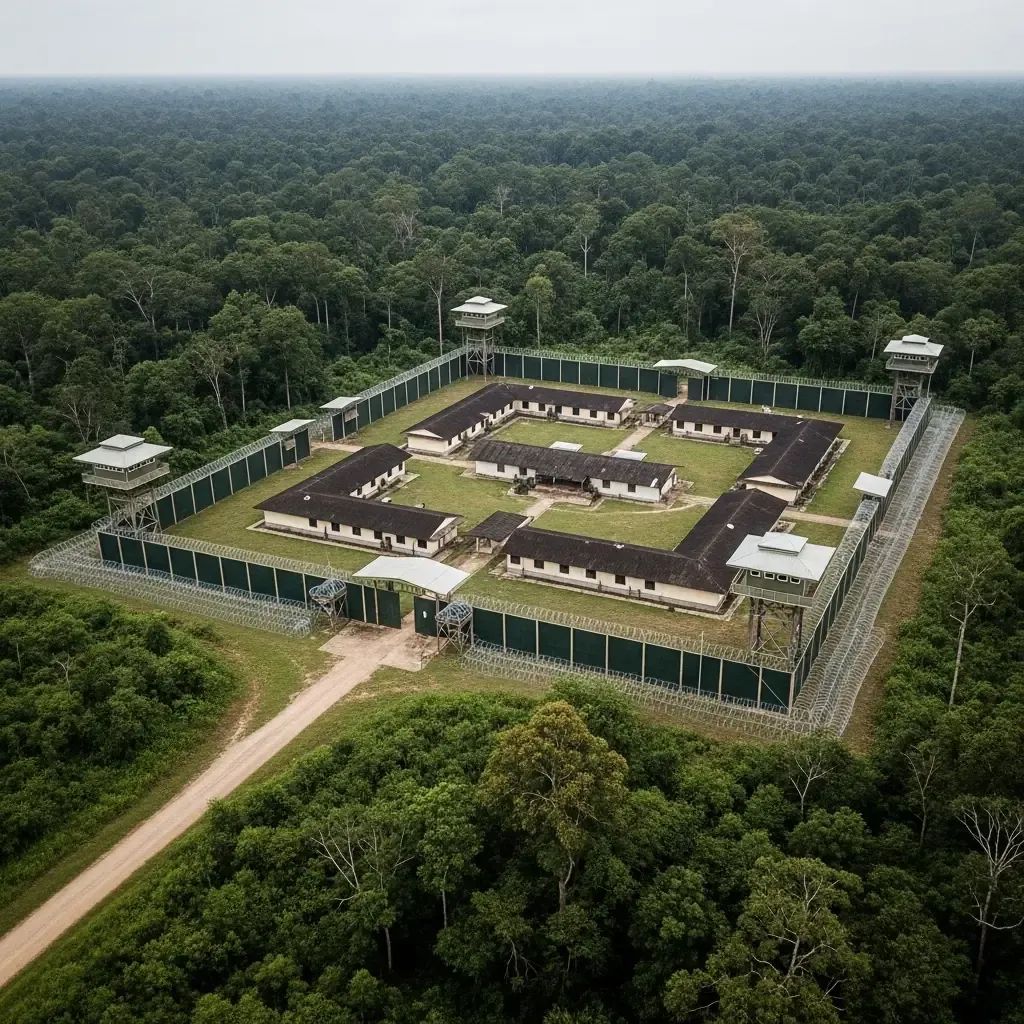
The Thailand Anti-Cyber Scam Centre (ACSC) has confirmed that a large-scale fraud complex has quietly moved 50 km beyond the Poipet crossing into Malai city, Cambodia—a shift that will likely push scammers out of easy reach of Thai police while pulling more unwary Thai job-seekers into forced labour.
Why This Matters
• Fresh risk zone – The compound sits outside the usual patrol corridor, complicating rescue missions for Thai nationals.
• Sophisticated AI tools – Fraud rings are now running deepfake video calls and instant language translation, making scams harder to spot.
• Growing human toll – At least 5 Thai workers have died in Cambodian scam sites in the past month; thousands more remain trapped.
• Wallet impact – Thai victims lost ฿220 M in one week alone; new cross-border tactics could push that figure higher.
From Border Raids to Interior Hideouts
For two years Thai and Chinese task forces hammered scam centres hugging the Aranyaprathet–Poipet line. Raids netted thousands of suspects, and telcos on both sides slashed illegal cell coverage. The pressure worked—up to a point. Intelligence now shows syndicates are leasing land deeper inside Banteay Meanchey, beyond the immediate jurisdictional dance near the frontier. Malai, once known mainly for its quiet cassava trade, is fast becoming the "safer back office" for cross-border fraud.
Inside the Malai Compound
Eyewitness photos reviewed by ACSC depict two-storey blocks, one wing rigged with cubicles, the other converted to dorms fenced with razor wire. Chinese supervisors allegedly run the floor, steering teams of Thai, Indian, and Indonesian recruits. Intercepts suggest each "agent" must generate US$3,000 in daily stolen funds or face beatings. Construction crews are adding fibre links and backup power, hinting at a long stay.
Thai Lives Caught in the Middle
Non-profit rescuers report a spike in distress calls: detained workers have had passports seized, and at least five Thai citizens—including a university student—were beaten to death after trying to escape. Survivors describe electric shocks, iron-bar assaults, and "dark rooms" for under-performers. Recruiters often masquerade as legitimate HR firms on Thai social media, luring applicants with ฿40,000 starting salaries.
Tech Arms Race: Scammers’ AI vs Thailand’s Defences
Criminal coders are deploying AI-generated voice clones of Thai bank staff, real-time deepfake video chats, and malware that self-updates to dodge antivirus scanners. In response, the Thailand Digital Economy Ministry is rolling out SIM re-verification by facial match, while True Corp has cut rogue cell towers along 1,000 km of borderland. The Royal Thai Police now analyse SMS patterns with machine-learning models that flag mass phishing within minutes. Still, experts warn Thailand lacks a clear statute covering AI-fabricated evidence, leaving prosecutors to stretch existing fraud laws.
Diplomatic Squeeze Tightens
Last quarter China flew home 1,200 suspected operators snagged in joint sweeps across Myanmar and Laos, and Thai negotiators are pressing Phnom Penh for similar hand-overs. Cambodia’s Interior Ministry publicly backs cooperation but has yet to green-light large-scale extraditions from Malai. Regional envoys will revisit the matter at the Mekong Security Forum in March.
What This Means for Residents
Job offers abroad promising quick cash—especially in gaming or e-commerce "support"—require extra vetting. Confirm employers with the Thai labour attaché before departing.
Triple-check caller ID. A bank officer who knows your nickname, balance, or ID number could now be an AI voice model.
If a strange app asks for camera, mic, and accessibility permissions, delete it; many Malai-origin APKs siphon one-time passwords.
Suspicious transfers? Dial ACSC hotline 1441 or freeze funds immediately through your mobile-banking "Fraud Emergency" tab.
Red Flags to Watch
• Messages claiming you owe import tax on parcels you never ordered.
• Video calls from relatives whose mouth movements feel slightly off—possible deepfakes.
• Requests to "rent" your bank account for "foreign remittances"; this is often the first step in money-laundering, punishable by up to 10 years in Thai prison.
The Road Ahead
Thailand’s cyber-crime units have scored wins along the frontier, yet the Malai relocation proves fraudsters adapt as quickly as the law. Until extradition pipelines and AI-specific statutes catch up, residents will need a blend of vigilance—scrutinising every unsolicited call—and new tech shields supplied by their banks and telcos. For now, the safest rule remains simple: if the offer looks unreal, it probably originated 50 km beyond Poipet.


