
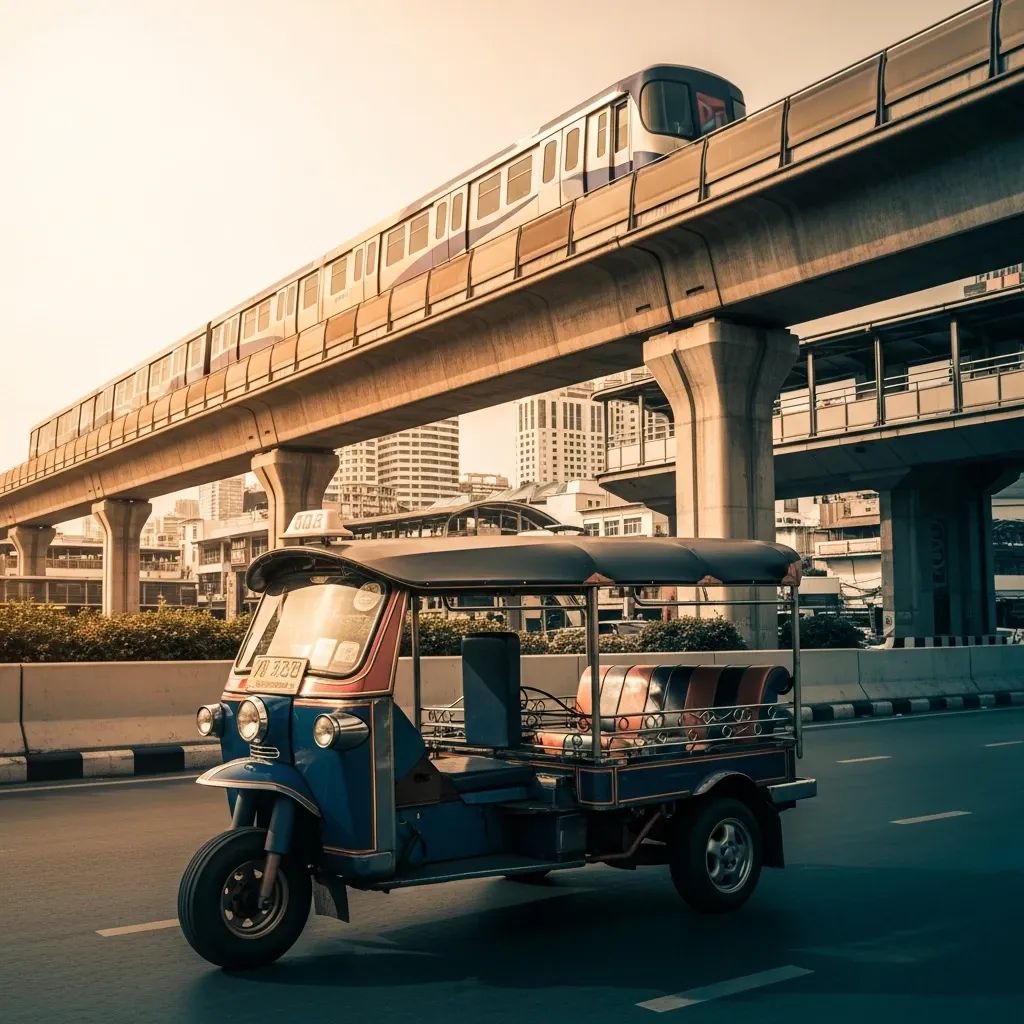
Bangkok keeps rewriting itself, yet every so often a new project reminds us just how quickly the city sprinted from khlong-side shophouse to megacity. A freshly edited video archive, scheduled for public release later this month, has triggered a wave of reminiscence— and a few timely questions about where the capital is heading next.
Quick Glimpses of a Vanishing Bangkok
• Tuk-tuk exhaust rather than Grab icons defined the commute
• Weekend pilgrimages to MBK’s seventh-floor concert hall replaced arena shows
• Patpong neon stood alone as the city’s global nightlife brand
• The first BTS pylons looked like alien concrete vines above Sukhumvit
• Cassette stalls doubled as social networks long before smartphones
Those fragments are more than nostalgia; they form the backdrop to policy debates still shaping Bangkok in 2025.
The Home-Movie Turning Heads
The crowd-sourced film, titled "Remembering Bangkok in the 80s and 90s," stitches together family camcorder reels, tourist Super-8 footage and a rare clip of David Bowie’s Serious Moonlight stopover at the old Thai Army Sports Stadium. Its curator, Thai-British filmmaker Chanin N., insists the project is "non-profit, just a love letter to pre-internet Bangkok." Early screenings for academics and city officials quickly sold out, underscoring a hunger to revisit a period that already feels mythic to Gen Z commuters tapping Rabbit Cards.
Street Symphony: Before the Skytrain Tamed the Din
Step into the soundtrack of that era and you meet a wall of two-stroke scooter whines, the hollow roar of non-air-conditioned buses and the melodic pitch of hawkers selling khao moo daeng. Traffic gridlock was legendary—yet strangely sociable. Drivers leaned out of windows to trade jokes; vendors weaved between bumpers with ice-cold nam daeng. Urban historians point out that Bangkok averaged 14 km/h weekday speeds, slower than some bicycle lanes today, but carbon emissions were still lower thanks to fewer private cars.
Lanes, Ribbons and Superblocks: What Planners Learned
Architects who now draft Bangkok’s "Sustainable Metropolis" blueprint regard the late-century sprawl as a cautionary tale. Ribbon development along highways, a maze of dead-end soi and land-use shifts driven by speculative zoning produced the superblocks that still choke airflow and public transit. Four headaches still echo from that boom:
Green-space deficit—only 7.6 m² per person
Hostile pavements that push pedestrians onto asphalt
Healthcare deserts in expanding suburbs
Persistent flood risk amplified by lost canals.The new master plan’s carrot is generous Bonus FAR incentives for builders who fund skywalks, parks or drainage upgrades.
Shopping, Gaming, Courting: Micro-cultures of the 90s
Walk past Baiyoke Tower II— then freshly crowned Thailand’s tallest—and you entered a consumer playground where pirate VHS tapes, bubble-letter stationery from 555 PaperPlus and arcade dance machines ruled youth culture. Researchers tracking informal economies estimate the lan kaeng, or street stalls, moved ฿18 B in 1993—roughly equivalent to a quarter of Central Group’s formal retail sales that year. Those unlicensed micro-hubs also incubated countless SMEs that later formalised in the 2000s.
Where to Time-Travel Today
Bangkok entrepreneurs have seized on the throwback fever. For an immersive flashback:
• Grab iced coffee at Akirart Coffee, a full 90s office mock-up, complete with beige CRT monitors.
• Browse vinyl reissues inside KIDKID Store x Cafe, where patrons battle on restored Street Fighter II cabinets.
• Spend Saturday at "Arcade of Dreams," an exhibition of nineties toys, snacks and pager culture—think n ฟอร์จูน นมอัดเม็ด.
• End at Ban Bangkhen, a museum-park built from recycled wood that showcases boxy Toyota Coronas and phat pha poom signage.Urban sociologists say these sites do more than cash in on kitsch; they help younger residents "visualise the stakes" of current transport and zoning debates.
Why This Flashback Matters Now
Bangkok’s fourth comprehensive land-use plan is under public review. City Hall wants buy-in for a multipolar model that pushes growth toward outer rail lines, expands pocket parks and respects historic corridors along the Chao Phraya. By revisiting an era when unchecked expansion created today’s headaches, officials hope to build support for tougher emission caps, targeted densification and extra canal restoration funds. As one veteran planner quips in the film, "We thought modern meant wider roads; now we know modern is walkable shophouse blocks served by rail."
For residents watching the archival footage, the take-away is simple: remembering old Bangkok is less about yearning for cheap noodles and more about ensuring tomorrow’s city retains the human-scaled chaos that made those noodles taste so good in the first place.


