
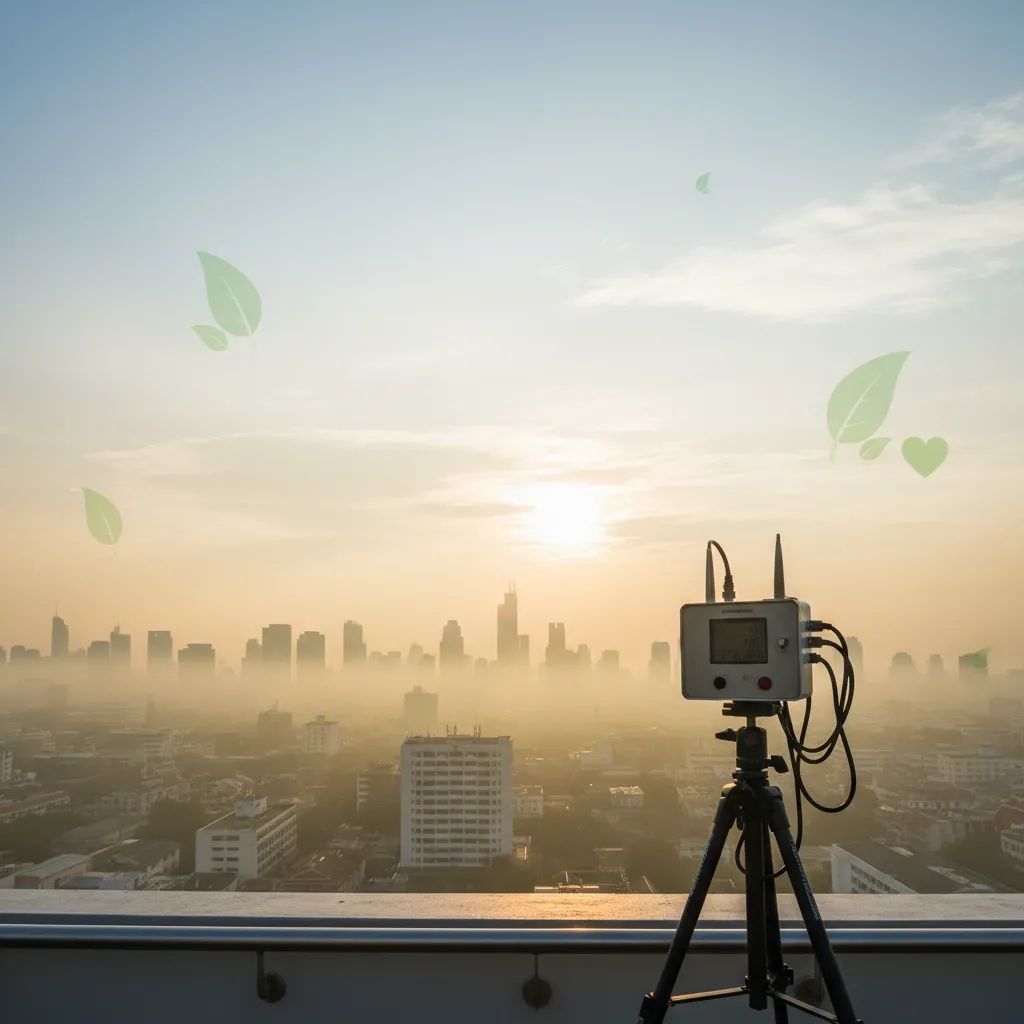
Thailand's capital has emerged from another volatile pollution cycle as citywide PM2.5 readings settle into "good" territory, a temporary reprieve that masks the persistent respiratory threat facing millions of residents each dry season.
Why This Matters
• Current levels: Bangkok's PM2.5 average fell to 22 µg/m³ as of 7:00 AM today, rated "good" across all zones—but just a week ago, 39 districts breached the 37.5 µg/m³ safety threshold.
• Health toll: PM2.5 exposure contributes to an estimated 4,240 non-accidental deaths annually in Bangkok alone, with cardiovascular and lung cancer fatalities climbing at every pollution spike.
• Economic burden: Over 1 million people have received treatment for PM2.5-linked conditions in the past fiscal year, costing the Thailand healthcare system 3 billion baht (US$83M).
• Vulnerable workers: Outdoor laborers and residents over 55 face the highest risk during prolonged exposure episodes.
The Roller Coaster of February Pollution
Bangkok's air quality has oscillated dramatically throughout the month, illustrating the unpredictable nature of seasonal haze. On February 19, the Bangkok Air Quality Information Centre recorded 24-hour averages ranging from 27.7 to 50.6 µg/m³, with Thawi Watthana district hitting the peak. An "orange level" warning was triggered across 39 areas as concentrations exceeded the revised national standard of 37.5 µg/m³—a threshold aligned with World Health Organization Interim Target 3.
By February 24, favorable wind patterns and atmospheric conditions pushed concentrations down to a moderate 22.35 µg/m³ by 11 PM local time, acceptable for most residents but still requiring vigilance from sensitive groups. Just two days later, on February 26, the pendulum swung back: the 7:00 AM average climbed to 33.1 µg/m³, with Prawet district (40.7 µg/m³), Lat Krabang (40.0 µg/m³), and Bang Rak (39.9 µg/m³) leading the city's worst zones.
Today's readings mark the clearest air Bangkok has seen in weeks, with most districts comfortably below the safety threshold. Yet Prawet continues to register elevated levels at 30.9 µg/m³, a reminder that air quality remains highly localized and fluid.
What This Means for Residents
For anyone living, working, or raising a family in the capital, these fluctuations translate into daily decision-making around outdoor activity, commute routes, and protective measures. Sensitive groups—including children, the elderly, pregnant women, and those with pre-existing respiratory or cardiovascular conditions—should monitor hourly updates via the Thailand Pollution Control Department app or the Traffy Fondue reporting platform.
Even "moderate" readings carry risks. Medical research shows that monthly PM2.5 levels between 30.1 and 37.5 µg/m³ correlate with a 3% increase in mortality, rising to 5% when concentrations exceed 37.5 µg/m³. For every 10 µg/m³ increase, cardiovascular deaths climb by 0.27%, stroke fatalities by 0.23%, and respiratory disease deaths by 0.29%. Over time, this exposure shaves 1.5 to 2.4 years off life expectancy in high-pollution zones across Thailand.
Outdoor workers—street vendors, construction crews, motorcycle taxi drivers—bear a disproportionate burden. A survey in central Bangkok found that informal workers reported significantly higher rates of headaches, sneezing, and eye irritation compared to office-based employees. For this population, the difference between a "good" and "moderate" day can determine whether symptoms become debilitating.
The Root Causes Behind the Haze
Vehicle Emissions
Diesel exhaust from Bangkok's vehicle fleet accounts for more than 50% of PM2.5 in the central business district during dry months. Old trucks, buses, and private cars—many still operating despite black-smoke regulations—concentrate pollutants along major arteries and expressways. The Thailand Royal Police and Bangkok Metropolitan Administration have ramped up inspections in 2026, but enforcement remains inconsistent.
Agricultural Burning
Beyond the city limits, biomass burning fuels the seasonal pollution surge. From November through April, farmers across Thailand's central plains ignite rice stubble and agricultural waste, with suburban areas around Bangkok experiencing 35% of PM2.5 from open burning alone. Transboundary haze from Myanmar, Laos, and Cambodia adds another layer of complexity, as smoke drifts across borders and settles over the capital when high-pressure systems stall atmospheric circulation.
Industrial Sources
Industrial emissions from factories in Samut Prakan, Pathum Thani, and Nonthaburi provinces contribute year-round, though dry-season meteorology amplifies their impact. Without rain to wash particles from the atmosphere and with stagnant air trapping pollutants close to ground level, concentrations spike even when local emission sources remain steady.
Government Response and Policy Evolution
The Thailand Cabinet has elevated PM2.5 mitigation to a national priority, deploying a "Single Command" system that requires provinces and the Bangkok Metropolitan Administration to act within hours when readings breach safety limits. Ahead of the 2026 haze season, the Pollution Control Department outlined four core strategies: heightened controls on burning in high-risk areas, aggressive enforcement of anti-burning laws, expanded incentives for farmers to deliver fresh (unburned) sugarcane, and the establishment of dust-free zones for vulnerable populations.
In January 2026, when PM2.5 levels soared between 79 and 108 µg/m³—nearly triple the safety threshold—the BMA urged government agencies and private companies to implement work-from-home arrangements. A strict ban on all forms of open burning, including waste, grass, and religious incense paper, remains in effect across the capital. Street cleaning and dust-vacuuming operations have intensified, with crews targeting high-traffic corridors during early morning hours.
The Thailand National Ambient Air Quality Standard was revised in June 2023, lowering the 24-hour average limit from 50 to 37.5 µg/m³ and the annual average from 25 to 15 µg/m³. This aligns Thailand more closely with WHO guidance, though the nation still falls short of the organization's ultimate recommendation of 5 µg/m³ for annual exposure.
Long-term plans focus on infrastructure and behavioral change. By 2029, the Bangkok Mass Transit Authority aims to expand public rail coverage to 510 kilometers, reducing reliance on private diesel vehicles. Incentive programs for farmers—including subsidies for non-burning crop residue management—have been extended through December 2025, with discussions underway for permanent adoption.
Practical Protection Strategies
While policy shifts unfold over years, residents need immediate tactics to minimize exposure:
• Monitor in real time: Check hourly PM2.5 readings via the Air4Thai app or the IQAir platform before outdoor exercise, school drop-offs, or evening commutes.
• Mask selection matters: N95 or KN95 respirators filter out 95% of particulate matter; cloth and surgical masks provide negligible protection against PM2.5.
• Indoor air quality: Portable HEPA filters reduce indoor concentrations by up to 70% in sealed rooms. Close windows during peak pollution hours (typically 6–9 AM and 6–9 PM) and run air conditioning with recirculation mode.
• Adjust activity timing: Schedule outdoor exercise for mid-afternoon when wind dispersal is strongest, or move workouts indoors during "moderate" to "unhealthy" days.
• Report violations: Use the Traffy Fondue app to report open burning, black-smoke vehicles, or construction sites violating dust-control regulations. The BMA responds to verified complaints within 24 hours.
For parents of young children, consider indoor play alternatives during prolonged pollution episodes. Schools across Bangkok have adopted "air quality protocols" that move recess and physical education classes indoors when PM2.5 exceeds 37.5 µg/m³, but policies vary widely by institution.
The Bigger Picture
Bangkok's air quality has gradually improved over the past five years. The annual average PM2.5 concentration dropped from 27 µg/m³ in 2018 to 22.7 µg/m³ in 2022, and the percentage of hours meeting WHO guidelines has increased incrementally. Yet hazardous spikes persist each dry season, and a significant portion of the capital's pollution—estimated at 30-40%—originates from sources outside city limits, including transboundary haze and emissions from neighboring provinces.
This reality underscores the limits of localized enforcement. While the BMA can crack down on Bangkok-registered diesel trucks and ban incense burning at temples, it cannot control agricultural fires in Suphan Buri or industrial emissions in Rayong. Regional cooperation and national-level coordination remain critical to sustained progress.
For now, Bangkok residents should treat "good" air quality days as windows of opportunity rather than guarantees. The next pollution episode is never more than a weather shift away, and preparedness—whether through mask stockpiles, air purifiers, or real-time monitoring habits—remains the most reliable form of protection.


