
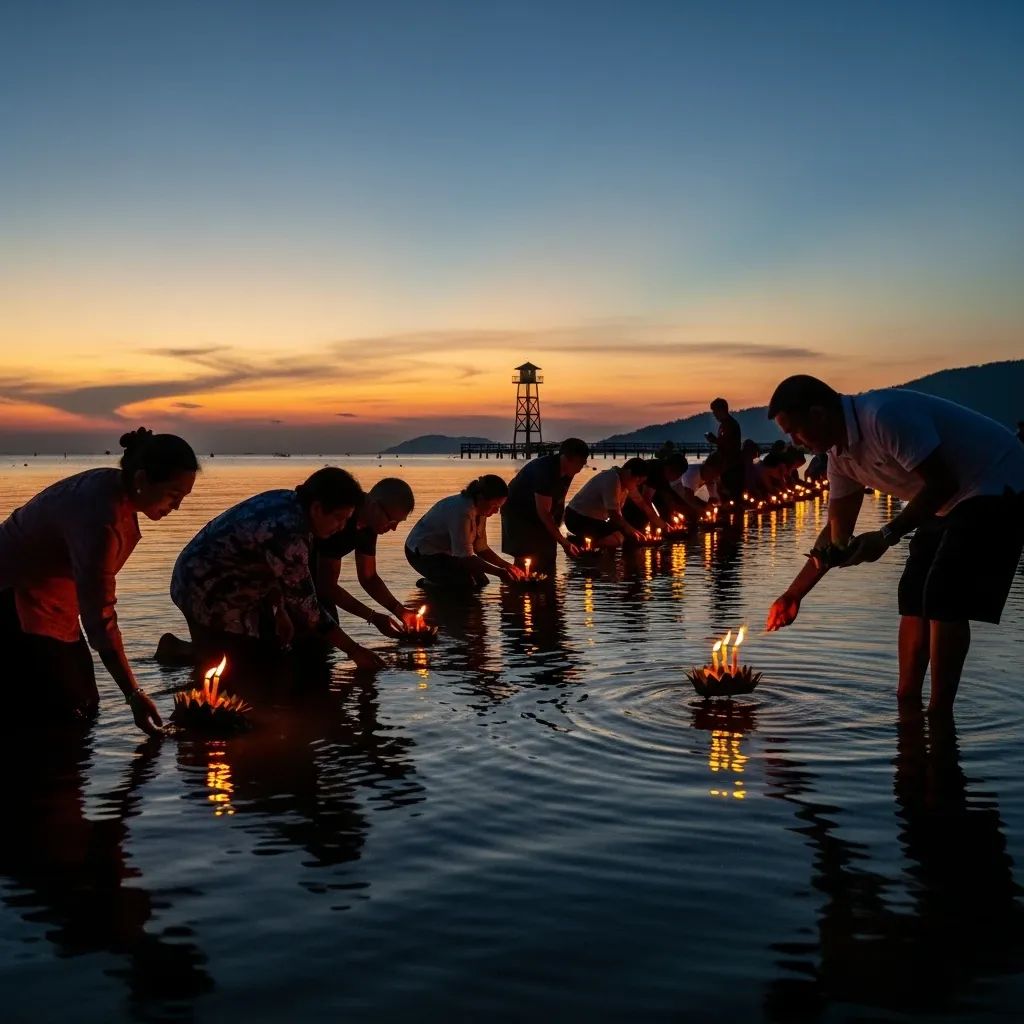
The indigo waters that entice visitors to Thailand’s southern coast each high season also carry a memory that locals refuse to let slip away. Across Phuket, Krabi and Phangnga, communities paused this week to mourn, celebrate survival and—perhaps most urgently—re-commit to staying ready the next time the sea turns against them.
What You Need to Know
• 21 years since the Indian Ocean tsunami struck six Andaman provinces
• Ceremonies blended Buddhist, Christian and Islamic rites along with secular tributes
• Survivors and families of the dead travelled from Russia, Germany, Japan and throughout Thailand
• Officials highlighted upgraded early-warning towers, evacuation routes and school drills now in place
• Tourism operators used the anniversary to reassure visitors of “safe-and-ready” beaches
Echoes Across the Andaman
The 2004 tsunami, triggered by a magnitude 9.1 earthquake off Sumatra, reached Thailand’s shoreline in little more than 2 hours, claiming 5,400+ lives nationwide. In Phuket’s Mai Khao Cemetery—an area once lined with makeshift morgues—monks chanted alongside priests and imams, their voices weaving a tapestry of multi-faith solidarity. Officials noted that the cemetery now doubles as an outdoor classroom where local students study coastal geology, disaster science and community resilience.
Remembering Through Ritual
Along Patong Beach, the mood shifted from sombre to reflective. Jazz ensembles played “Somewhere Over the Rainbow,” children floated candle-lit krathong and resort staff read the names of colleagues who never clocked out on that December morning. On Phi Phi Island, divers descended to an underwater memorial, affixing fresh plumeria wreaths to a twin-sailfish sculpture. The act served as both tribute and reef-clean-up, reinforcing how environmental stewardship and remembrance now go hand-in-hand.
Lessons Carved in Stone and Sand
Ban Nam Khem in Phangnga—once just a quiet fishing village—lost nearly half its residents in 2004. Today its memorial park stands beside a 65-tonne fishing trawler that the waves carried a kilometre inland. Plaques there list disaster hotlines, evacuation maps, and QR codes linking to real-time tide gauges. Local teachers credit the site with cutting annual drowning incidents among children, who practise sprinting to elevated safe zones every semester.
Preparedness, Tourism and the Economy
With tourism contributing over 15% of Thailand’s GDP, keeping visitors confident is vital. The Ministry of Tourism and Sports showcased mobile alert apps that push multilingual warnings, while hoteliers have installed colour-coded stairwell signage guiding guests to rooftops within three minutes. Insurance brokers, meanwhile, report a 40 % surge in business-interruption policies for coastal SMEs since 2020, suggesting owners have absorbed the financial lessons of the past.
Voices From Near and Far
• Sasithorn Pradit, 28, survived as a toddler after a German tourist scooped her from the surf. She now leads weekend CPR workshops in Krabi’s Ao Nang.• Tony Jims, a Russian frequent-flyer to Phuket, laid a white rose for three friends lost in 2004, calling the annual rite “a reunion that hurts but heals.”• Judge Boonchu Chanwong reminded attendees that Thailand’s updated National Disaster Law grants citizens the right to sue agencies that ignore maintenance of warning infrastructure—“a legal shield forged in tragedy,” he said.
Looking Ahead
Engineers from the Asian Institute of Technology will finish upgrading 29 coastal siren towers by mid-2026, replacing analogue parts with satellite-linked beacons tested to withstand cyclones. Yet residents insist that technology is only half the equation. As candle flames bobbed against Andaman breezes and prayers drifted skyward, one could sense a collective pledge: the ocean will always command respect, but the memory of 2004 now commands an even stronger, community-wide culture of readiness.


