
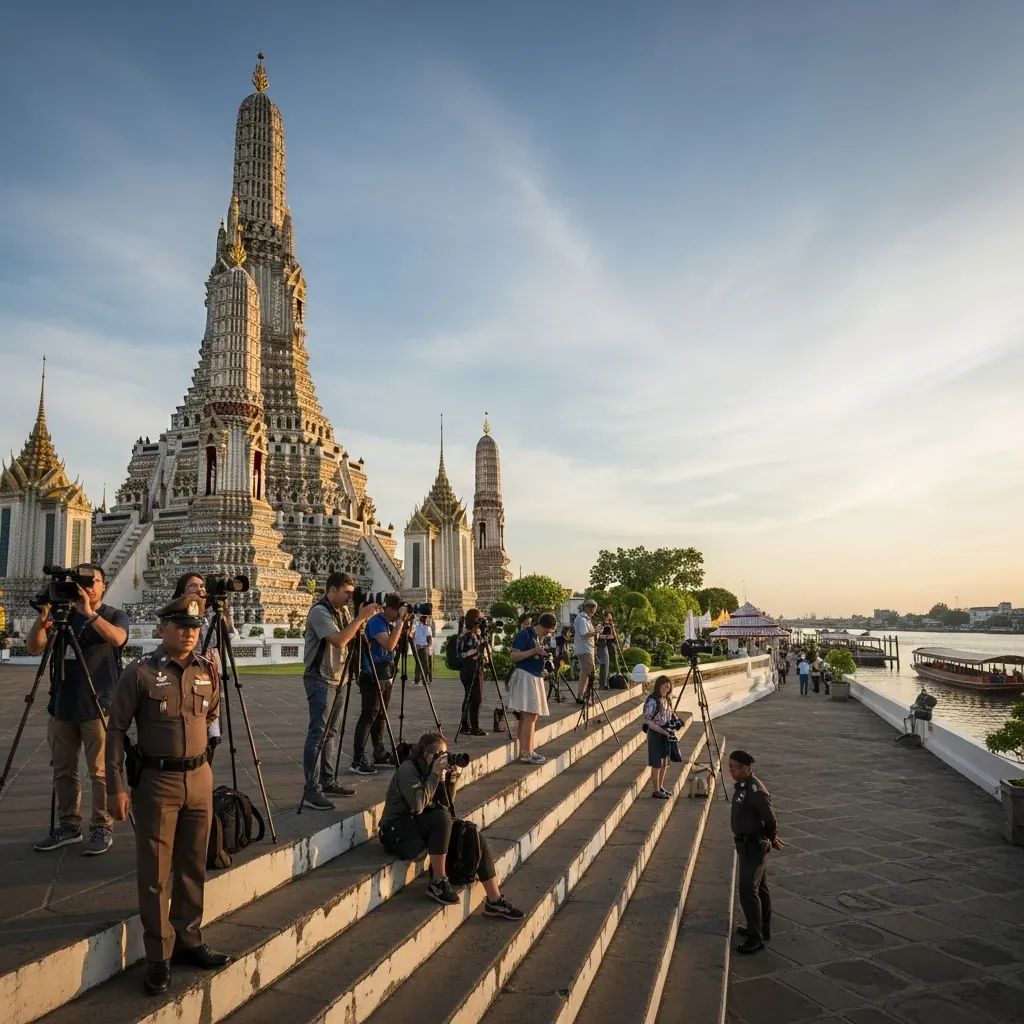
Photographers who muscle their way through the crowds at Bangkok’s Temple of Dawn are about to find the rules have changed. After a viral accusation of heavy-handed behaviour, Wat Arun’s administrators have promised an immediate clean-up designed to protect both the temple’s sanctity and Bangkok’s tourism reputation.
In Brief
• Commercial photographers accused of clearing tourists from prime shooting spots.
• Temple apologises after a viral Facebook post by a Thai tech mogul.
• Bangkok Yai Police drafted in to enforce new etiquette rules.
• Measures part of a wider push to curb overtourism at sacred sites.
Flashpoint at the Temple of Dawn
The trouble began when Krisda Witthayakhajorndet, a high-profile CEO, described how a cluster of pushy photographers ordered sightseers aside so their paying clients could get the perfect shot of Wat Arun’s porcelain-inlaid prang. Even Apo Nattawin, a prime-time actor, was waved off the steps three times. The viral complaint cited blocked vantage points, ignored requests for courtesy, and an atmosphere that left embarrassed Thai visitors apologising to their foreign guests.
Why Cameras Keep Swarming the Riverside Pagoda
Wat Arun’s riverside perch offers sunrise backdrops that look tailor-made for Instagram. The site draws roughly 10,000 visitors a day, and a growing market of pre-wedding shoots, Chinese influencer tours, and fashion catalogues has turned the temple into a photography hotspot. With session fees hovering near ฿3,000 an hour, unlicensed shooters often slip in alongside authorised vendors, turning narrow staircases into catwalks and nudging casual tourists aside. Social-media prestige, TikTok trends, and bride-and-groom packages all fuel the scramble.
Immediate Fixes and Longer-Term Reforms
Temple authorities say they have issued written warnings, created a reservation-only window for large photo crews, and asked Bangkok Yai Police to post officers near bottlenecks. New rules require visible ID badges, tripod-free zones on key terraces, and a limit of five minutes per pose when crowds exceed 200. Management also plans a digital permit system, letting visitors see which areas are reserved before purchasing tickets. Misbehaving photographers, vendors, or staff will face swift expulsion, potential licence suspension, and—if harassment continues—trespass charges.
Visitors’ Code of Conduct
To keep the peace, Wat Arun now urges every guest to follow these commonsense pointers:
Dress respectfully; shoulders and knees covered.
Refrain from posing on altars or railings.
Keep tripods, light stands, and drones outside restricted zones.
Yield space to worshippers before lining up a shot.
Report aggressive behaviour to the nearest uniformed guard or the temple hotline at 02-891-2185.
Sacred Sites Under Strain Across Thailand
Wat Arun’s dilemma is not unique. Wat Phra That Doi Suthep in Chiang Mai, Wat Chalong in Phuket, and even Bangkok’s Grand Palace have struggled with overtourism, noise pollution, and commercial exploitation. Industry analysts warn that failure to act could erode Thailand’s image as a country where spiritual heritage coexists gracefully with modern hospitality. Authorities are exploring a national temple-permit framework, mirroring the ticketed time-slots already used at Spain’s Alhambra and Cambodia’s Angkor Wat.
Voices From the Riverbank
Local vendors selling coconut ice cream, sarongs, and ferry tickets welcome the crackdown—up to a point. “When photographers act like they own the place, customers blame us,” said Somchai, a long-time boat operator. Yet he fears too many restrictions could also “drive away the pre-wedding groups who buy souvenirs and charter boats.” A balanced policy, he argues, must protect the temple while keeping the Chao Phraya economy afloat.
What To Watch Next
Officials will assess the new measures through Songkran, when daily footfall can quadruple. Success could see the permit system extended to other high-traffic shrines, while failure might revive calls for a hard cap on visitor numbers. Either way, the debate underscores a simple truth: for Thai temples to remain tranquil, the click of the camera shutter can’t drown out the quiet of devotion.


