
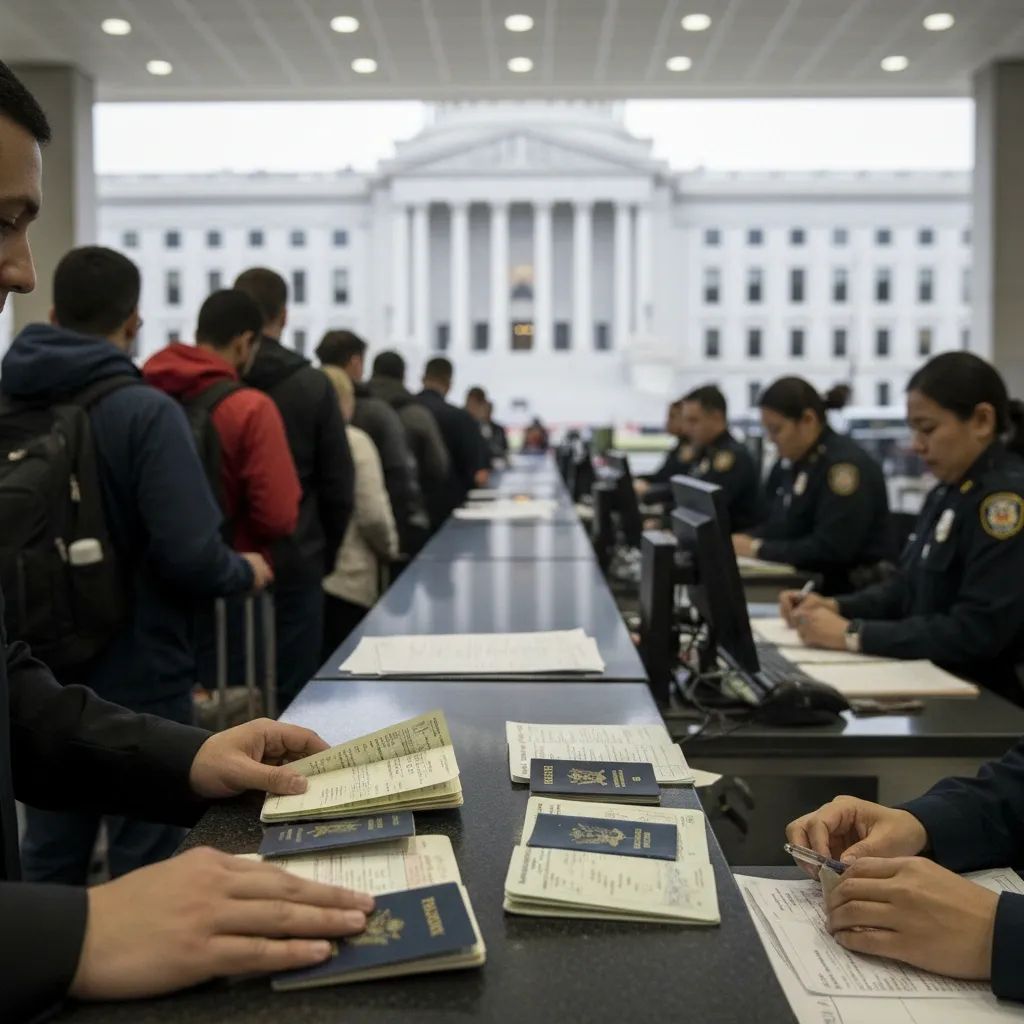
The 2026 FIFA World Cup, set to unfold across North America in fewer than 100 days, is facing a genuine credibility crisis. Frozen federal funds, hardline immigration enforcement, geopolitical warfare, and cartel violence in Mexico are converging to threaten what should be a celebration of global sport. For Thailand-based travelers, investors, and football enthusiasts watching from afar, this is no longer just a logistical story—it's a stress test of American governance and stability playing out on an international stage.
Why This Matters
• $900M security funding frozen by federal government shutdown through March, leaving 11 U.S. host cities scrambling and threatening cancellation of public Fan Fests across the country.
• Visa processing delays and immigration fears as the U.S. bans entry from 75 nations, including World Cup participants Iran, Haiti, Senegal, and Ivory Coast, deterring international visitors.
• Iran's World Cup participation in doubt following U.S.-Israel military strikes, with Tehran's Football Federation openly questioning whether the national team will travel to American soil.
• Mexico play-offs proceed despite cartel concerns as six teams compete March 26–31 in Guadalajara and Monterrey for final two World Cup spots; FIFA tickets starting at $12.
The Federal Funding Vacuum Undermining Decades of Planning
When the Federal Emergency Management Agency (FEMA) announced its FIFA World Cup grant program in November 2025, it promised $625M to 11 U.S. host cities, supplemented by a further $250M for counter-drone capabilities. Today, March 2026, none of that money has arrived. The federal government shutdown, now stretching into its second month, has effectively paralyzed security planning for the tournament's opening on June 11.
The consequences are neither abstract nor theoretical. Miami's World Cup Host Committee issued a stark warning: cancel Fan Fests and public gathering events unless $70M materializes by late March. Kansas City security officials report they lack sufficient personnel to address identified threats, with the federal funding now deemed "critical" rather than merely helpful. In Foxborough, Massachusetts, Gillette Stadium authorities remain uncertain who will absorb an $8M security tab—a burden potentially landing on local taxpayers if Washington remains dormant.
Beyond immediate staffing concerns, the funding freeze has stalled procurement of advanced surveillance systems, counter-drone technology, and cybersecurity infrastructure. The Department of Homeland Security had allocated $115M specifically for drone mitigation, recognizing that unmanned aerial threats represent perhaps the most sophisticated vulnerability facing outdoor mass gatherings. Add human trafficking monitoring and cross-border coordination with Canada and Mexico, and the planning architecture becomes staggeringly complex—all of it currently in limbo.
That architecture was supposed to be unprecedented: over $1B in federal spending, the largest whole-of-government sporting event operation ever attempted by the U.S. Instead, policymakers in Washington have left host cities to improvise, betting that panic and pressure will force a budget resolution by April. For those organizing logistics on the ground, that is no bet at all—it is negligence.
How Immigration Crackdowns Are Reshaping Global Travel Plans
Thailand-based travel agencies and fan clubs are advising clients to prepare for an entirely different experience than previous World Cups. The current U.S. administration has frozen immigrant visas for 75 nations, a list that includes four World Cup qualifiers: Iran, Haiti, Senegal, and Ivory Coast. While tourist visas theoretically remain unaffected, the distinction has become increasingly theoretical in practice.
Consular backlogs are severe. Processing times for World Cup applicants from Asia, Latin America, and Africa have stretched into weeks. Outdated customs technology at major U.S. entry points—Miami, Los Angeles, Dallas, Houston—means even routine visitors face unpredictable delays. Airlines booking data tells a compelling story: reservations from Europe, Asia, and South America to the U.S. for summer 2026 are noticeably down compared to the same period in 2025, a reversal that threatens the tournament's projected $30.5B economic impact and the 5M to 7M international visitors originally forecast.
The climate of enforcement amplifies these concerns. Reports of Immigration and Customs Enforcement (ICE) agents operating near stadiums and fan zones have circulated among international media. The White House Task Force on the 2026 World Cup insists that security and hospitality can coexist, emphasizing legal pathways, but has deliberately avoided ruling out enforcement actions during the tournament itself. For a fan from Ivory Coast or Senegal, even a tourist visa approval now feels conditional—a permission that could be rescinded mid-trip by circumstances beyond their control.
Tourism industry analysts warn that this messaging—aggressive, exclusionary, enforcement-focused—is already dampening demand. A World Cup is supposed to attract optimistic travelers. Instead, the U.S. is signaling complexity, bureaucratic friction, and potential humiliation. That calculus alone is reshaping which fans book tickets and which ones simply watch from home.
Iran's Absence Would Unravel Established Tournament Structure
The escalating conflict in the Middle East has introduced a genuinely destabilizing element. Following recent U.S.-Israel military strikes on Iranian targets, the president of Iran's Football Federation stated publicly that "hope for the World Cup is fading" due to the attacks. Iran qualified through legitimate competition and is scheduled for group-stage matches on American soil. Today, in March 2026, Tehran has not confirmed whether the national team will actually board planes headed west.
This is not hypothetical drama. FIFA officials are preparing contingency plans, including restructuring group compositions into three-team formats or identifying replacement squads. The precedent is limited and uncomfortable. Argentina 1978 unfolded amid state terror; Russia 2018 operated amid boycott threats. But never has the host nation itself been a active party to military conflict with a participating team. The neutrality questions that FIFA has never confronted at this scale are now urgent.
If Iran withdraws or is unable to travel, the economic ripple is significant. Matches involving Iran generate distinctive ticket demand, particularly from diaspora communities in North America. The broadcast rights and advertising value shift. Tournament scheduling tightens. And for global audiences, the tournament becomes compromised—not by sporting failure, but by geopolitical reality.
Mexico's Play-Offs Proceed Amid Simultaneous Security Risks
While U.S. cities grapple with federal dysfunction, Mexico is preparing to host the inter-confederation play-off tournament in Guadalajara and Monterrey on March 26 and March 31. Six teams—Jamaica, Suriname, Iraq, DR Congo, Bolivia, and New Caledonia—will compete for the final two World Cup berths. The tournament is structured as two pathways: Pathway 1 matches New Caledonia against Jamaica, with the winner advancing to face DR Congo. Pathway 2 pits Bolivia against Suriname, with the winner facing Iraq. The two finalists secure their places in June.
FIFA announced that tickets start at $12, an accessible price aimed at filling stadiums and generating revenue. But the venue carries distinct complexity. Jalisco state, where Guadalajara is located, has experienced persistent cartel violence, particularly related to organized crime networks. Both Mexican President Claudia Sheinbaum and FIFA President Gianni Infantino have publicly expressed confidence in Mexico's ability to host safely, yet local media reports suggest ongoing security concerns near match venues remain unresolved.
The tri-national structure of this tournament—spanning the U.S., Canada, and Mexico—presents logistical challenges no World Cup has previously managed at this scale. Coordinating border crossings, harmonizing visa requirements, reconciling labor regulations across three sovereigns, and ensuring consistent security standards while different governments pursue divergent enforcement philosophies—these are not minor details. They are architectural challenges that demand synchronization that, frankly, has not yet materialized.
Infrastructure Continues Forward Despite Political Chaos
Paradoxically, the physical preparations have accelerated even as political dysfunction intensifies. All 16 venues across the three host nations are undergoing renovations to meet FIFA standards. In Los Angeles, the Automated People Mover at LAX is progressing; upgraded customs and baggage infrastructure are nearing completion, doubling as a test run for the 2028 Olympics. Dallas is midway through its $350M stadium modernization, installing the world's largest center-hung video board. Atlanta's MARTA transit system is deploying new railcars and fare technology as part of its largest capital plan in decades.
The Federal Transit Administration allocated $100.3M to host-city transit systems to handle surge demand, though critics reasonably question whether airports and rail networks—especially in Dallas, Houston, Kansas City, and Miami—will actually achieve FIFA's required hourly capacity from airport to downtown. These infrastructure investments will outlast the tournament itself, reshaping urban mobility and tourism competitiveness for years. That is genuine progress and genuine legacy. But it also exposes how much physical preparation can advance while political and security preparation unravels.
What This Means for Residents and Travelers
For Thailand residents planning to attend, the calculus has shifted fundamentally. Those holding tickets should initiate visa applications immediately, allowing extra weeks for consular processing delays. Monitor advisories from the Thailand Ministry of Foreign Affairs regarding U.S. entry requirements; this situation is likely to evolve between now and June.
If you are traveling from any of the 75 countries subject to the immigrant visa freeze, contact the nearest U.S. embassy directly to confirm your tourist visa status. Do not assume approval. Budget extra time at customs; understaffing and outdated technology at major U.S. airports have consistently extended processing times beyond historical norms. Travel insurance that covers trip cancellation due to geopolitical events or security warnings is no longer optional—it is prudent.
For expats and investors based in Thailand observing this situation, the tournament has become a real-time case study in how domestic political volatility cascades into international credibility damage. If the U.S. cannot resolve its funding crisis by late March, cannot harmonize immigration enforcement with hospitality, cannot ensure Iran's participation remains viable, and cannot resolve cartel-related security risks in Mexico, then the credibility damage extends beyond football. Major international event hosting bids become riskier. Perceptions of American logistical competence and political stability shift downward. The economic forecasts of $30.5B and 5M-7M international visitors become increasingly theoretical.
The next 90 days will determine whether the 2026 World Cup becomes a triumph of coordination or a cautionary tale about holding major events during periods of institutional dysfunction.


